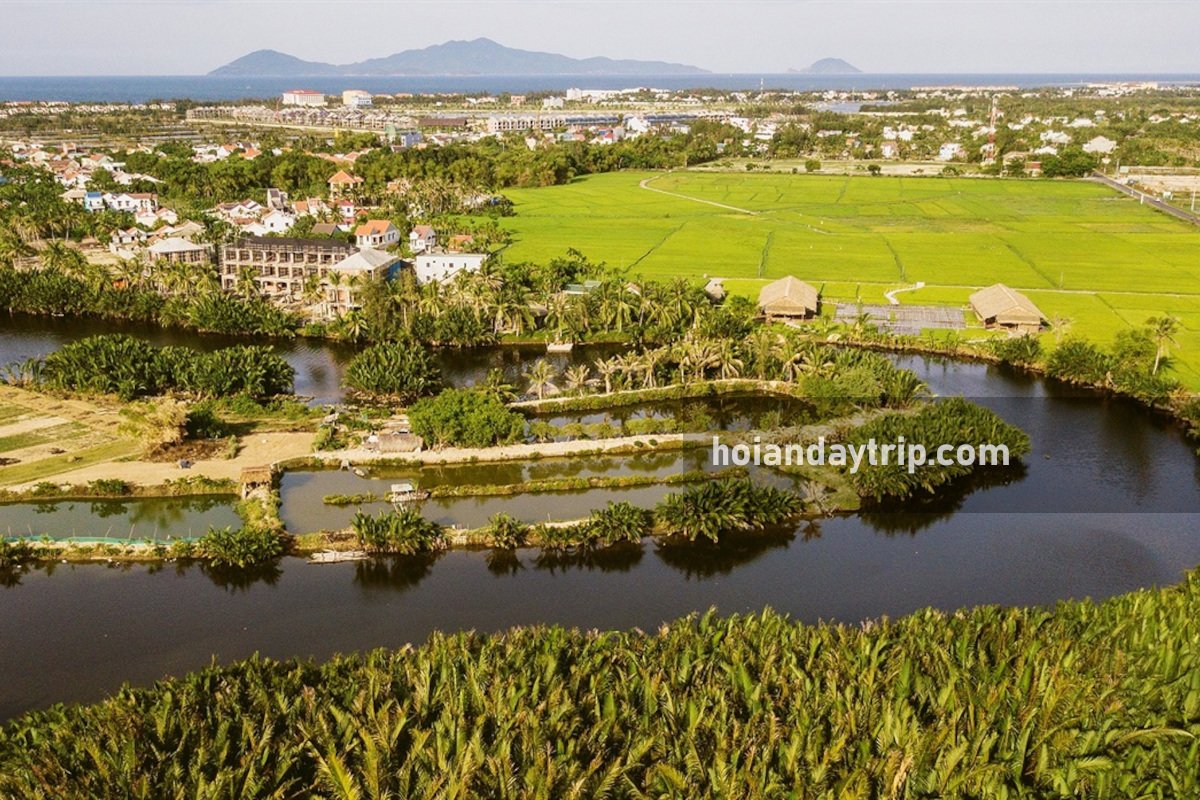
Bay Mau Coconut Forest is a protection area, a historical site, and an ecotourism area in Hoi An. It’s the best sight of Cam Thanh Coconut Village. It lies on the confluence point of De Vong/Co Co River and Thu Bon River, and near the sea. To discover it, visitors go on a ride by basket boat that is unique to the area. In this article, HoiAn Day Trip Company will tell everything which visitors need to know about Bay Mau Coconut Village.
You may also like: Tra Nhieu Nipa Palm Forest
• Content by Tam Le, founder of HOIAN DAY TRIP CO.,LTD
• Designed by Giang Cong Minh, co-founder of LS E&C LTD and his team
• Photo by Dang Cong Loi, Dao Xuan Son, Tam Le & others

Must Knows about Bay Mau Coconut Forest
– Location/address: Thanh Tam village and Van Lang village, Cam Thanh commune, Hoi An, Vietnam
– Other name(s): Bay Mau Nipa Palm Forest, Bay Mau Ecotourism Area, Bay Mau Revolutionary Base, Hoi An Water Coconut Forest, Hoi An Nipa Palm Forest, Cam Thanh Coconut Forest, Cam Thanh Nipa Palm Forest, Bay Mau Coconut Jungle, Hoi An Mangrove
– Name’s meaning: Bay Mau ‘7 acres coconut forest’
– Opening hours: 7 AM to 5 PM daily
– Ticket price: 30,000 VND for adult and children above 1,3m in height (4,26ft), 15,000 VND for children from 1m to 1,3m in height (3,28ft to 4,26ft), free for smaller kids
– Reason(s) to visit: the largest water coconut forest in the region, fun basket boat ride that is unseen anywhere else in the world
– Best time to visit: early morning or late afternoon
– Time to spend: 1-2 hours
– Recognition(s): national nature reserve, world biosphere reserve (2009)
– Travel blog: https://hoiandaytrip.com/bay-mau-coconut-forest-hoi-an
– Tour guide: contact +84968009827 (hotline/whatsapp/line/zalo)
– Food & drink: not available
– Shopping: not available
– Fact: Bay Mau Coconut Forest is hiding place for Vietnamese guerillas during French and American wars
Bay Mau Coconut Village on Map
History of Water Coconut in Hoi An & Local Uses
The water coconut is actually what local people have called ‘nipa palm’ (science name: nypa fruiticans). It’s the only palm adapted to the mangrove biome. And also, is native to coastline and estuarine habitats of the Indian and Pacific oceans. Different from other palm species, this nipa palm’s trunk or stem is under the mud, and its leaf and flower stalk are above the surface. The leaves can be long and tall, up to 7m. The fruit is a globe-like cluster of 40-60 nuts (seen all year round).
Around 200 years ago, some families moved from southern Vietnam to Hoi An to live. They also brought seeds of the nipa palm from there. Because of the very suitable environment, these seeds quickly grew up and became a forest. Until today, we have a vast mangrove area that stretches many hectares. Meaning that before the 18th century, nipa palm or water coconut wasn’t in the area.
Nipa palm is useful for locals. They can eat raw the white flesh of its nuts (fruits) or make a sweet soup (che dua nuoc) or coat it with sugar to make mut dua nuoc. To have the meat, local people will chop the nut into half and then use a spoon to remove it from the shell. The sweet soup is sold around the village.
Residents living around Bay Mau Coconut Forest, have been using palm leaves to make the roof for houses, restaurants, cottages, huts,…That’s why reason they sun dry palm leaves on the side of roads and highways in the village. Yearly, they chop the leaf 2 times: February to April, and August-September. Bamboo is also popularly used by them, to build the frame of houses or furniture or souvenirs. In 2024, this ‘traditional craft of bamboo and coconut’ is inscribed to be Vietnam’s national intangible heritage.

Bay Mau Coconut Forest History
Bay Mau Coconut Forest served as the hiding place for Vietnamese revolutionists and guerillas, in the Anti-French Resistance War (or the First Indochina War) and the Vietnam War (or the Resistance War against American or the Second Indochina War). Advantages of this forest are its isolation from surrounding villages and French or American military bases, difficult access by road (because it’s dense, muddy) but convenience by waterways.
One day in 1948, French soldiers supported by tanks, attacked Bay Mau Coconut Forest. Local guerillas threw grenades then, and forced them to return to Hoi An. French colonists also tried many times to destroy this forest by chopping or using bombs. However, it recovered and lushy quickly after that.
In the beginning of the Vietnam War, harsh anti-communist activities from the South Vietnam Republic’s president Ngo Dinh Diem occurred in the area. Again, local revolutionists and guerillas chose Bay Mau Coconut Forest to hide and build a base. Sure, no other better places than it. Communist leaders of Hoi An also stayed and worked here during the wartime.
In 1964, from Bay Mau Coconut Forest, local guerillas used ‘palm trunk gun’ to attack nearby American stations and bunkers. They captured a platoon over there (with their weapons) and then brought them to the village to judge. The area (Cam Thanh) was declared to be the new liberation area (from communist’s side).
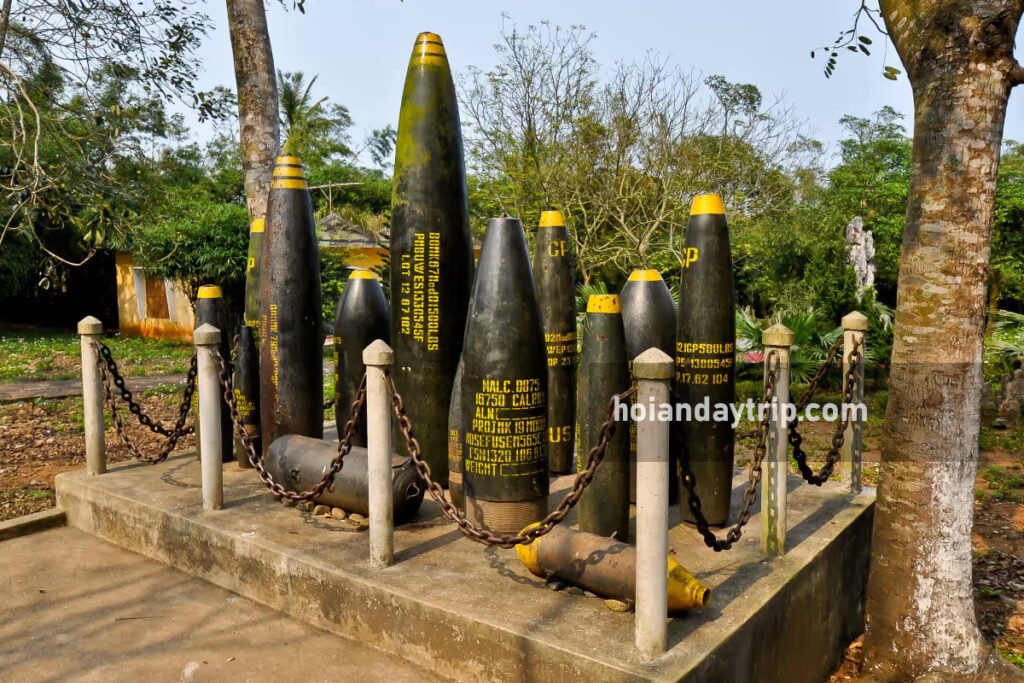
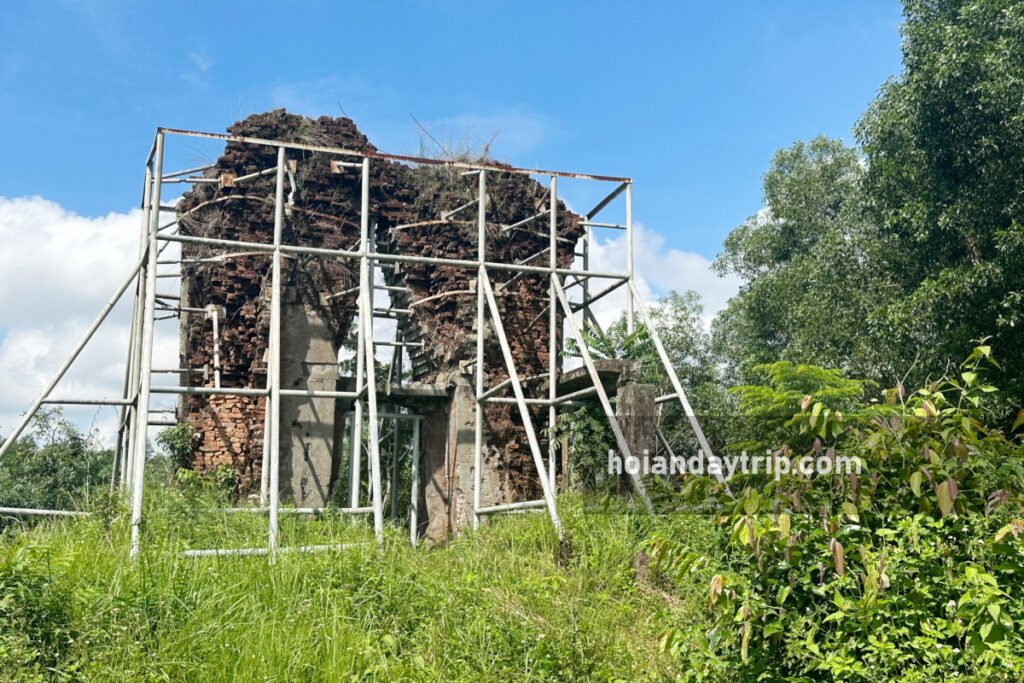
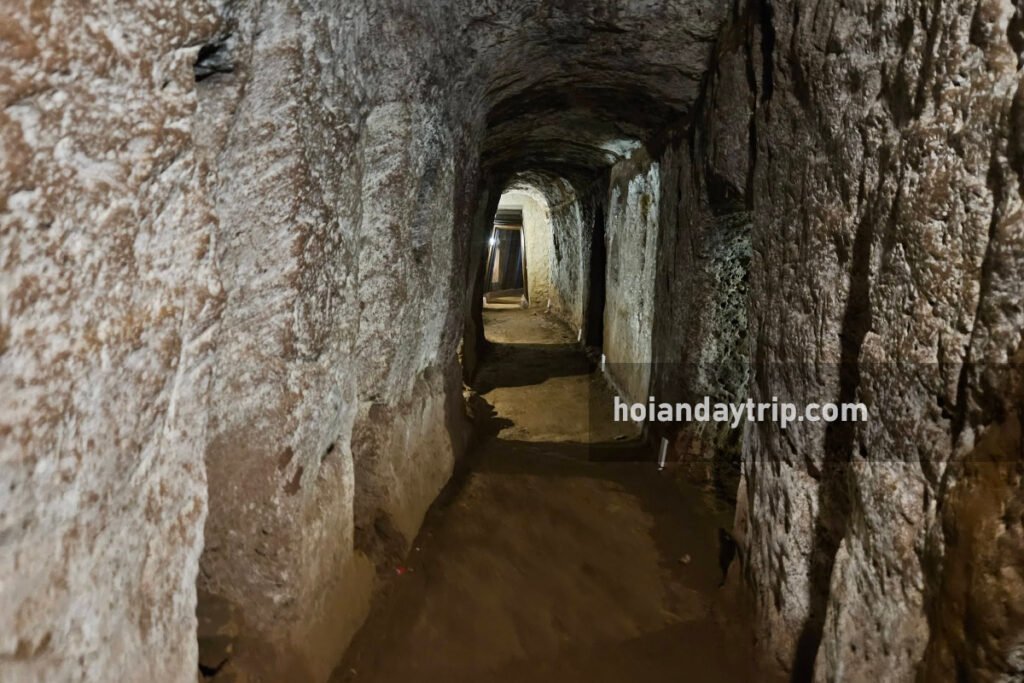
From 1965, in villages around Bay Mau Coconut Forest, local residents and communists built secret tunnels, bamboo piles and traps, moats,…to defense. In 1966 and 1967, the area became one of important targets to control from the Americans. Lots of soldiers, helicopters, and innovative weapons were used in attacks to it, making these years the most challenging and fiercest. Those who hid inside the forest, defended very stubbornly and bravely. When attacks were ‘off’, they catched fishes in its waterways for food. Residents in surrounding villages also supplied rice and other edible things for them too.
From 1967 to 1975 (when the Vietnam war ended), the forest continued to be a safe hiding place for the communists.
On 10th January 2008, Bay Mau Coconut Forest was inscribed as a provincial historical site of Quang Nam. It’s known under the name ‘Bay Mau Revolutionary Base’.
In 2009, Bay Mau Coconut Forest became a part of Cu Lao Cham – Hoi An Unesco World Biosphere Reserve. This biosphere reserve extends to 33,500 hectares, and is home to a high level of coastal/marine biodiversity. For more information about Cu Lao Cham (Cham Islands), browse https://hoiandaytrip.com/cham-islands-travel-guide
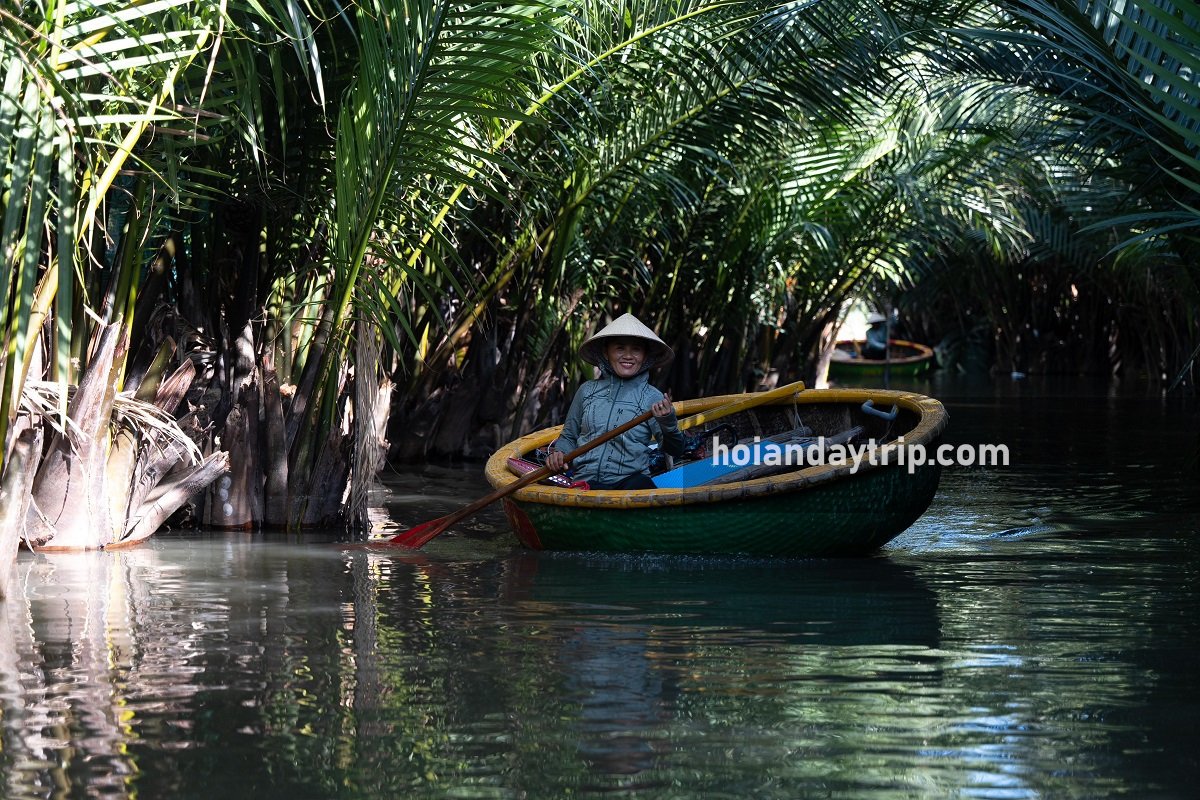
Basket Boat Tour in Bay Mau Coconut Forest
Bay Mau Coconut Forest is known as a maze-like network of small canals and rivers, lined by dense palms. Because of being near the ocean, these waterways are affected by the tide. In the low tide days, they have no water or shallow water (this happens also in the dry season). In the high tide days, the seawater makes them ‘full’ and mixes with fresh water to become brackish water. That’s why nipa palms can grow and different kinds of seafood come here to breed.
Due to a special network of rivers, the basket boat is the best vehicle to enter and go around Bay Mau Coconut Forest. It’s not big, not heavy, and flexible.
A basket boat ride (tour) in Bay Mau Coconut Forest is often 30-45 mins long, including seeing ‘spinning boat performance’. Around Cam Thanh Coconut Village, there are many families and locals who can organize this activity. One basket boat can carry 3 adults, including 1 local rowing the boat, and 2 visitors. If traveling with kids, depending on their age and size, they can join parents or will need a separate boat. In every boat, passengers will see life vests, conical hat to wear for pictures, and umbrellas to use when it rains. The price is usually 200,000-300,000 VND for one boat. Visitors should avoid scammers and their overpriced tours. See more information & details
Contact us by +84968009827 (hotline/whatsapp/line/zalo) if need a basket boat tour alone or with transfer from Hoi An/Da Nang. Thank you very much!


Tips to Visit Bay Mau Coconut Forest in Hoi An
– In the dry season, visitors should bring sun cream, sun glasses, hat/cap or umbrella (available in the boat to use);
– In the rainy season, visitors should bring rain poncho/jacket, umbrella, waterproof shoes or sandals, easy dry clothes;
– It’s better to visit Bay Mau Coconut Forest with a local guide; Contact us by whatsapp +84968009827 to book;
– Bay Mau Coconut Forest is a protection area, part of Unesco world biosphere reserve, so visitors should NOT break the twig or the leaf of the palms.
– Using the palm leaf to make souvenirs or leaves is prohibited in Bay Mau Coconut Forest, so visitors should refuse buying them or say no when locals want to do it.
– Booking the basket boat tour from local families, to give them a direct income, and refuse the ones from scammers (it’s more expensive from scammers as well)
– If possible, visitors should give a tipping for those who row the boat in the boat tour. And, especially ‘the spinner’ if want to join him for an adventurous spinning ride.
– Visitors can refuse going crab fishing to avoid making the crabs hurt or die (actually, after catching crabs, people will return them to nature and don’t eat or sell).
– The fresh sweet soup with palm is okay to try because local people may chop the nuts from their farms, not from the protected area.

Guided Tours to Bay Mau Coconut Forest
Here are guided and self-guided tours to Bay Mau Coconut Forest in Hoi An:
– Bay Mau Coconut Forest Tour – Hoi An Basket Boat Tour
– Hoi An Coconut Forest Tour from Da Nang
– Hoi An Coconut Village Tour: Basket Boat & Cooking Class
– Hoi An Day Tour from Da Nang – Ancient Town & Coconut Forest
– Marble Mountain & Bay Mau Coconut Forest Tour
– Marble Mountain, Coconut Village & Hoi An Tour from Da Nang
– Hoi An City Tour – From Old Town to Countryside
– My Son Sanctuary & Coconut Village Tour from Hoi An
– Golden Bridge/Ba Na Hills & Coconut Village Tour from Hoi An
– Hoi An 3 Village Tour by Electric Car
– Hoi An Countryside Bike Tour – Vegetable to Coconut Village
Places to Visit near Bay Mau Coconut Forest
Near Bay Mau Coconut Forest, visitors can go to these places: Cua Dai Bridge (distance: 500m), Duy Hai Fish Market (distance: 3km), Vinwonders Nam Hoi An Theme Park (distance: 10km), Cua Dai Beach (distance: 3,5km), Tra Que Vegetable Village (distance: 6km), Hoi An Ancient Town (distance: 6km), An Bang Beach (distance: 5,5 km), Tan Thanh Beach (distance: 5 km), Hidden Beach (distance: 4,5 km).
How to Get to Bay Mau Coconut Forest
Bay Mau Coconut Forest is in Cam Thanh commune, Hoi An city, Quang Nam province, Vietnam. It’s about 7 kilometers east of Hoi An centre.
If staying in Cam Thanh commune, visitors can walk or cycle to Bay Mau Coconut Forest and enjoy watching rural scenery on the way.
From Hoi An city centre, visitors can go to Bay Mau Coconut Forest by bicycle, motorcycle, taxi/car, electric bus, bus/minivan. It takes cyclists about 20-30 minutes to get there, while it’s just 15 minutes for motorbike riders. Car drive is often 15-30 minutes, depending on the location of pick up place and traffic on the day. Because visitors anyway will do the basket boat ride, so just park in the house of the family providing the tour.
From Da Nang, the distance to Bay Mau Coconut Forest in Hoi An is some 30 kilometers, to the south. Visitors often choose a car or ride the motorbike by themselves. It takes them around 1 hour to get there. The best motorbike route is the coastal road Vo Nguyen Giap Street/Truong Sa Street and then Vo Chi Cong Street. Contact us by +84968009827 (hotline/whatsapp/zalo/line) to book a private roundtrip transfer by car.
HOIAN DAY TRIP CO.,LTD daily organizes transfers to Hoi An and Da Nang. Contact us by +84968009827 (hotline/whatsapp/line/zalo) or browse www.hoiandaytrip.com to see tours and make a reservation. Thank you very much!

Photos, Videos about Bay Mau Coconut Forest
Here are beautiful photos and videos about Bay Mau Coconut Forest in Hoi An: