List of Specialty Foods in Hoi An Vietnam
Cao Lau Noodles – Signature Dish of Hoi An
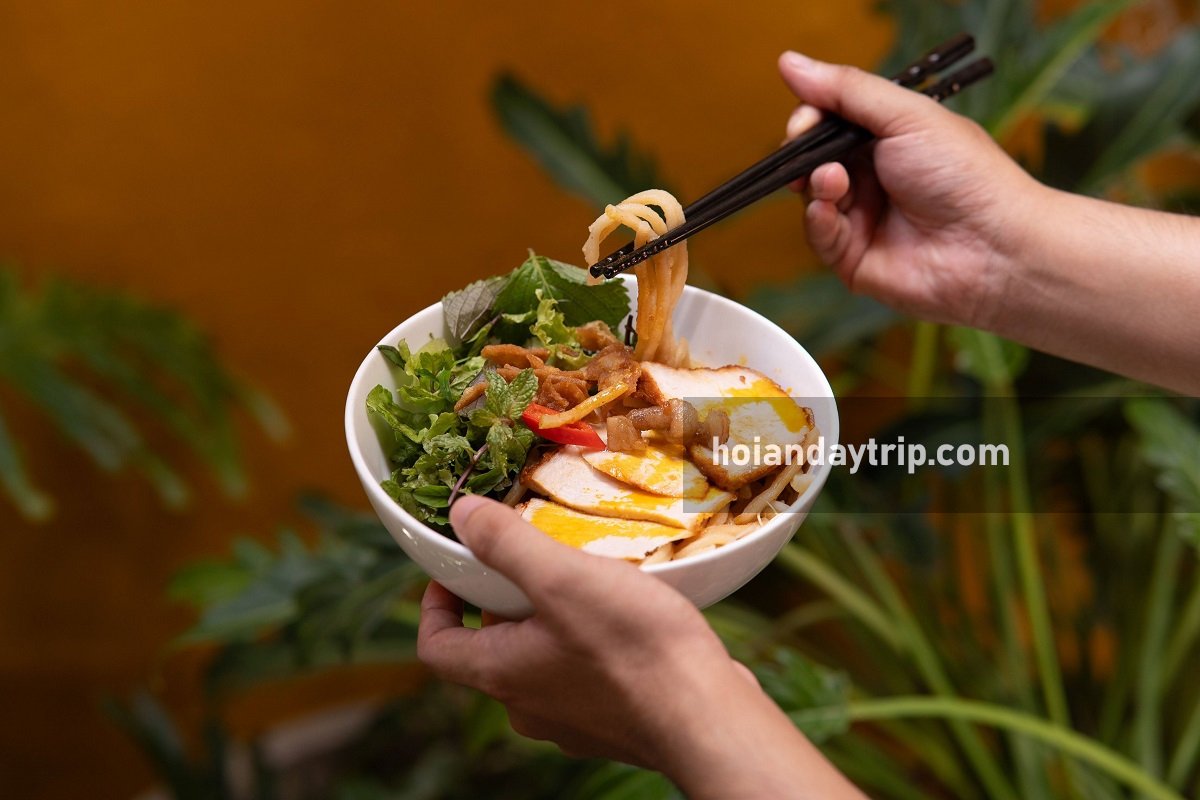
Cao Lau (noodles) definitely is the signature food of Hoi An. It’s found only around Hoi An Ancient Town, a historic international trading port. A bowl of Cao Lau has ‘cao lau’ noodle sticks, slices of char siu pork, fried crackers, raw vegetables, herbs, and a bit of savoury sauce. Because of special techniques and ingredients to make noodle sticks, only a few local families now have been producing them. Cao Lau means ‘(on the) high floor’ as it’s only served on the upper stories of restaurants in the past, showing how special it is. This fish is thought to be a fusion between Vietnamese, Chinese, and Japanese cuisines. See more information & details
Price: 30,000 to 60,000 VND per bowl
Best places to eat: Cao Lau Thanh (26 Thai Phien Str), Mi Quang Ong Hai (6A Truong Minh Luong Str)
Serve for: lunch, dinner
Mi Quang Noodles
Mi Quang (noodles) is the specialty food of Quang Nam province (including present-day Quang Nam province and Da Nang city). Its name means ‘Quang Nam noodles’. A bowl of Mi Quang includes rice noodles (white or yellow), meats (most popularly pork, chicken, shrimp, quail eggs), and savoury broth. Raw vegetables, fresh herbs, and some pieces of crispy rice cracker are also served as side dishes. To eat, local people will mix up all ingredients and add up fish sauces or spices (line, fresh chilli, chilli sauce, chilli powder), to personalize the flavours. When the noodle sticks are not anymore in the bowl, they break the rice cracker and dip into the broth left. See more information & details
Price: 30,000 to 60,000 VND/bowl
Best places to eat: Mi Quang Ong Hai (6A Truong Minh Luong Str), Mi Quang Hat (pavement of Hoang Dieu Street, by Hoi An Cloth Market)
Serve for: breakfast, lunch, dinner

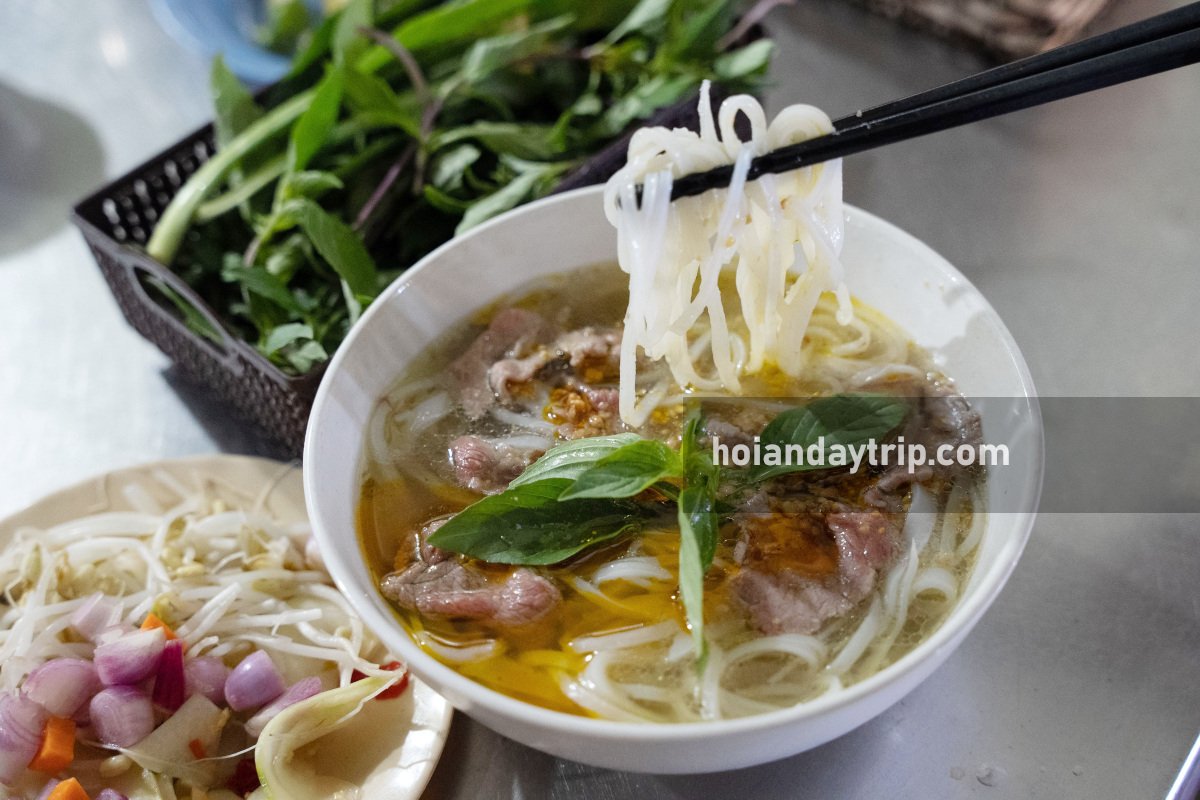
Hoi An Style Pho (Noodle Soup)
Pho noodle soup is the national food of Vietnam, and known across the world. A bowl of Pho includes rice noodles (soft, fresh, white), beef, spring onions, and a rich broth (made from pork bones stewed slowly in many hours with spices). It’s suitable for all ages, genders, and times of the day.
However, as a melting pot between different cultures, Pho noodle soup in Hoi An also has some differences (but the recipe is similar). The rice noodles here are more chewy because locals use dried noodle sticks and then blanch them into hot water before eating. Besides shredded spring onion, peanut is also topped with the noodles. Like other noodle dishes in central and southern Vietnam, a side dish of raw vegetables and herbs is a must have. In Hoi An, this dish has extra blanching bean sprouts and pickled papaya slices. See more information & details
Price: 30,000 to 60,000 VND per bowl
Best places to eat: Pho Tung (51/7 Phan Chu Trinh Str), Pho Lien (2B La Hoi Str, near Hoi An Night Market or 165 Le Hong Phong Str, near Hoi An Bus Station), Pho Tien (133 Tran Hung Dao Str)
Serve for: breakfast, dinner
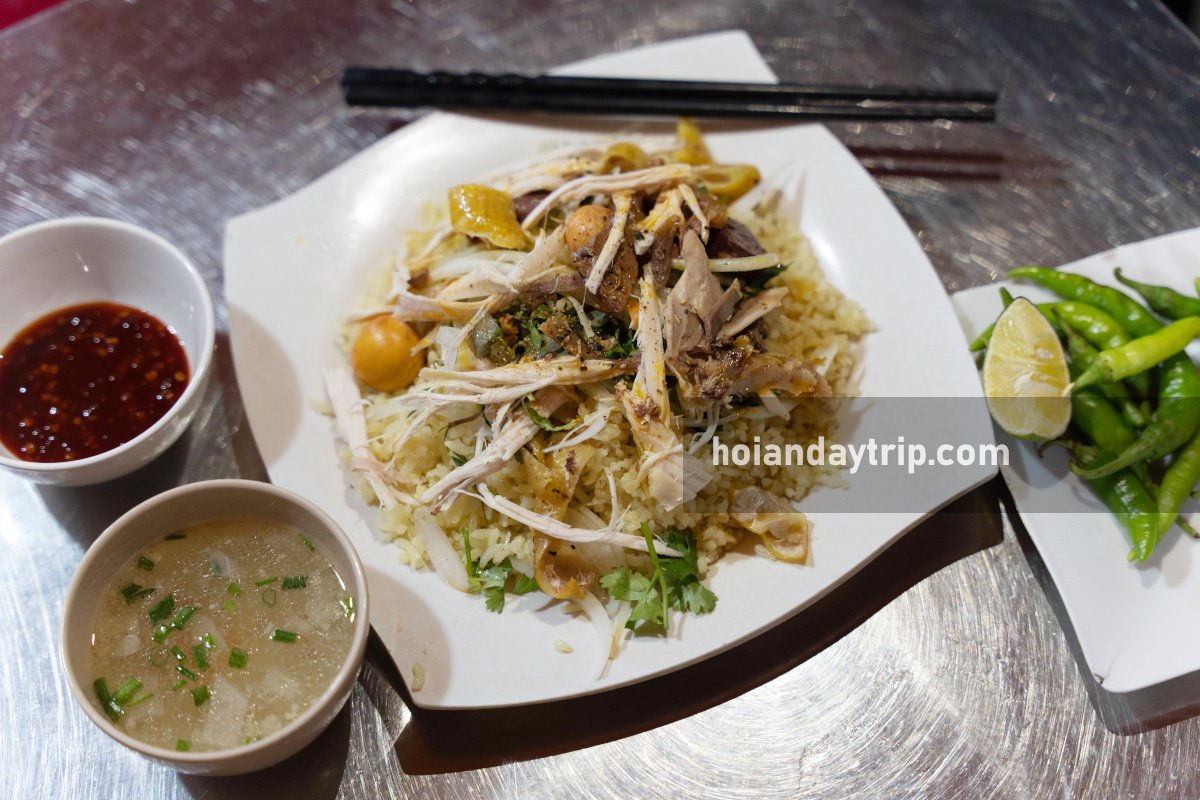
Hoi An Style Chicken Rice (Com Ga)
Hoi An chicken rice is one of tourist’s favourite dishes in Hoi An. Unlike others in the country, it has yellow steamed rice (rice cooked with the water after boiling chicken and a little bit of turmeric powder), shredded chicken, shredded green papaya, and peppermint (rau ram). This food is served with a small bowl of chicken blood curd & organ soup. To eat, local people mix everything together, and add up lime, local style chilli sauce or soy sauce to personalize the taste. If want to eat more chicken, customers will call for an extra plate of chicken salad (chicken, green papaya, peppermint & pepper salt). See more information & details
Price: 30,000 to 100,000 VND per plate
Best places to eat: Com Ga Hien (593 Hai Ba Trung Str), Com Ga Ba Buoi (22 Phan Chu Trinh Str)
Serve for: lunch, dinner
Hoi An Style Banh Mi (Sandwich)
Banh Mi (sandwich) is a bread filled with pork liver pate, meats, raw vegetables, herbs, and homemade savoury sauce. It’s popular across Vietnam, but each region has its own differences. In Hoi An, local bakers use both rice and wheat flours to make the bread (originally French baguette). This mixture allows the bread to have a crunchy crust and airy inner. Raw veggies and herbs for sure are taken from Tra Que Vegetable Village where farmers use old-fashioned techniques to grow them. The meats are really diverse, including char siu pork belly, grilled pork, chicken, beef, eggs, bacon, sausage, Vietnamese sausage (cha lua), etc. Many travelers think that the best banh mi sandwich in Vietnam is in Hoi An. See more information & details
Price: 20,000 to 70,000 VND per bread
Best places to eat: Madam Khanh (115 Tran Cao Van Str), Banh Mi Phuong (2B Phan Chu Trinh Str), Banh Mi Sum (149 Tran Hung Dao Str), Phi Banh Mi (88 Thai Phien Str)
Serve for: breakfast, lunch, dinner

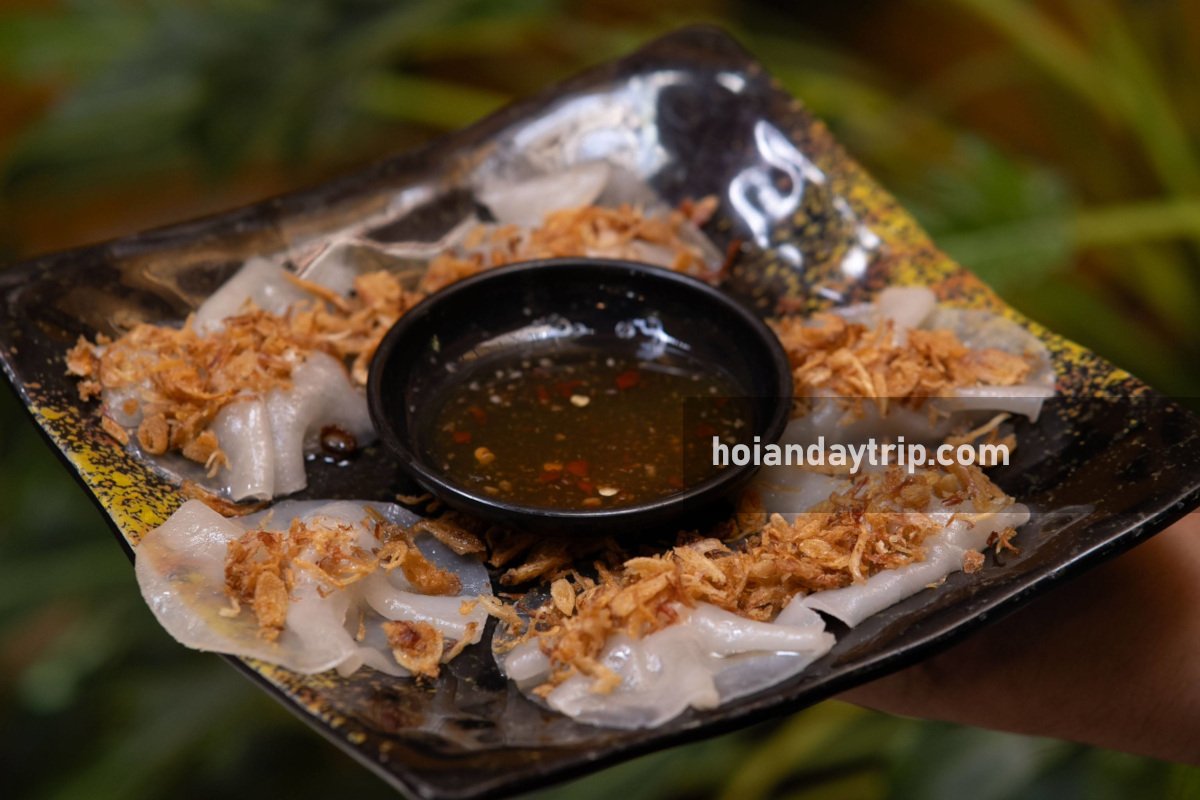
White Rose Dumplings
White rose dumplings (Banh Bong Hong Trang, Banh Quai Vac) is the specialty food of the Hoi An Ancient Town. It’s made by a few families today because its recipe is still a secret. Generally, people use a mix of rice and tapioca powders for the cake, and lean pork, shrimp & spices for the filling. This dumpling is steamed, served on a plate with fried shallots and fish sauce. According to local stories, it looks like a white rose flower because the first makers (living in Hoi An) wanted to have something different for their traditional cake banh quai vac (a kind of Chinese dumplings). See more information & details
Price: 40,000 to 100,000 VND per plate
Best places to eat: White Rose Restaurant (533 Hai Ba Trung Str), Quan Thang Ancient House (77 Tran Phu Str)
Serve for: anytime of the day
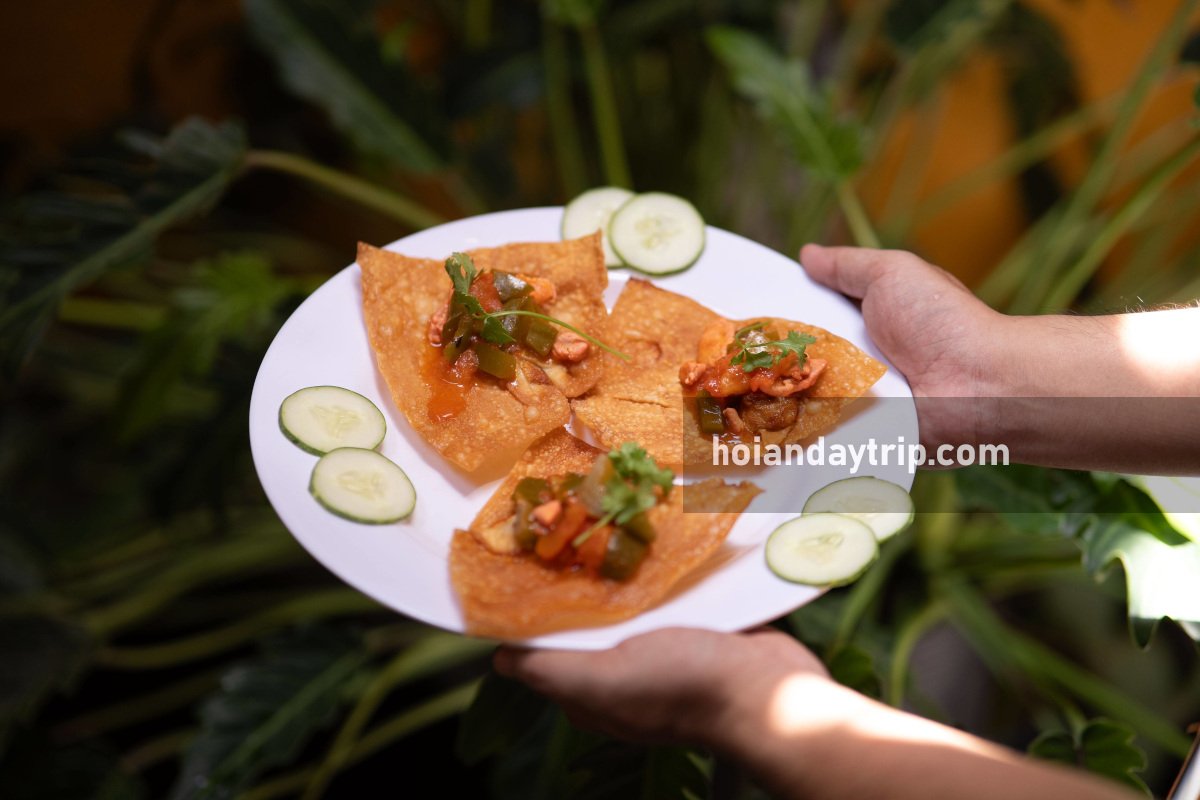
Hoanh Thanh Chien (Fried Wonton)
Introduced by Chinese people who moved to Hoi An at least 500 years ago, fried wonton (hoanh thanh chien) is a crispy wheat cake topped by shrimp and tomato sauce. It’s served on a plate, together with tomato slices, cucumber slices, and coriander leaves to garnish. People will use the hand to pick one wonton cake and then use the mouth to eat. No chopsticks are needed! See more information & details
Price: 30,000 to 60,000 VND per bowl
Best places to eat: White Rose Restaurant (533 Hai Ba Trung Str)
Serve for: lunch, dinner
Hoi An Mango Cake (Banh Xoai)
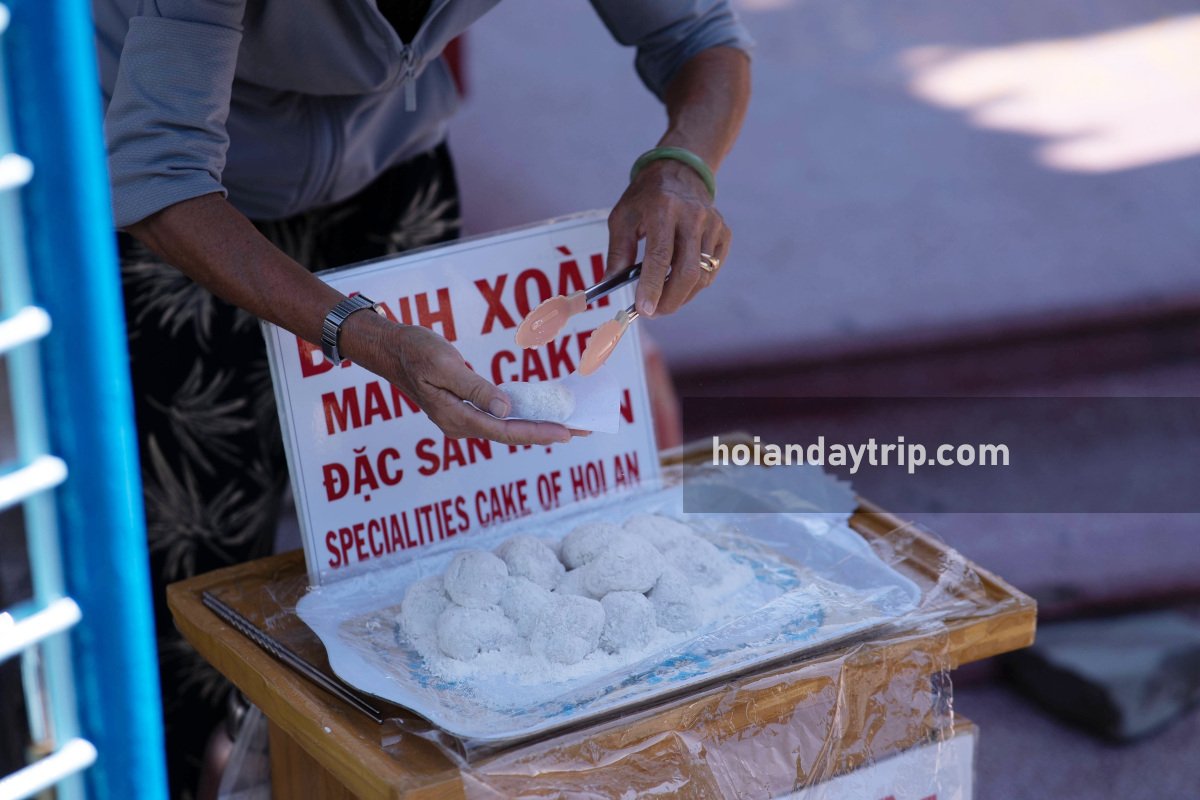
Banh Xoai (mango cake) is one of the foods that visitors can see only in Hoi An Ancient Town. It’s made of roasted glutinous rice powder, and roasted peanuts, sesame seeds, and sugar as fillings. So, it has no mango! Local people explain that because its shape looks like a mango, so it’s named ‘mango cake’. To be not sticky when eaten, rice flours are used to cover around this cake. See more information & details
Price: 10,000 to 20,000 VND per cake
Best places to eat: Hoi An Ancient Town
Serve for: anytime because it’s a snack
Banh Dap (Smashing Rice Paper)
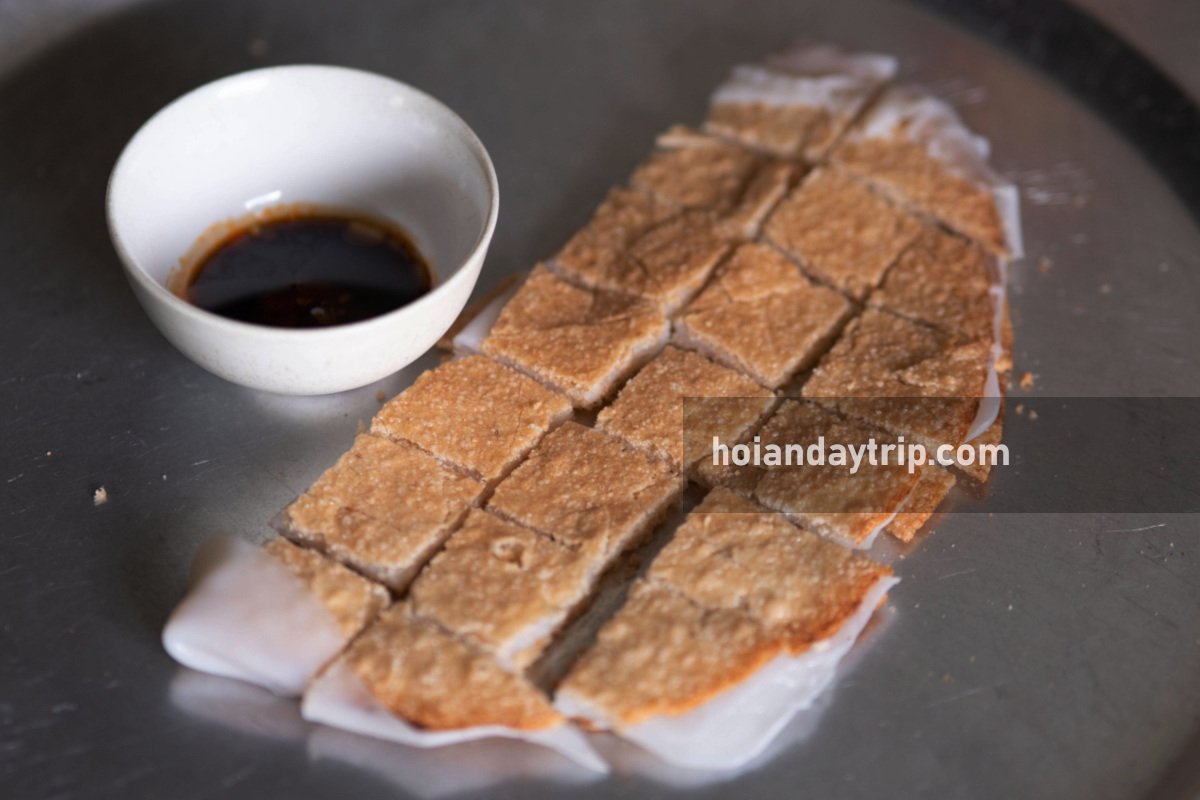
Banh Dap (smashing rice paper) is a simple specialty food in Hoi An Vietnam. It’s made by two crispy grilled rice paper with a layer of wet, soft rice paper between. To eat, local people will use hand to smash it into smaller pieces and then dip them into mam nem (fermented anchovy fish sauce). See more information & details
Price: 30,000 to 40,000 VND per plate
Best places to eat: local restaurants selling stir-fried baby clams in Cam Nam Island
Serve for: before dinner
Stir-fried Baby Clams (Hen Xao Cam Nam)
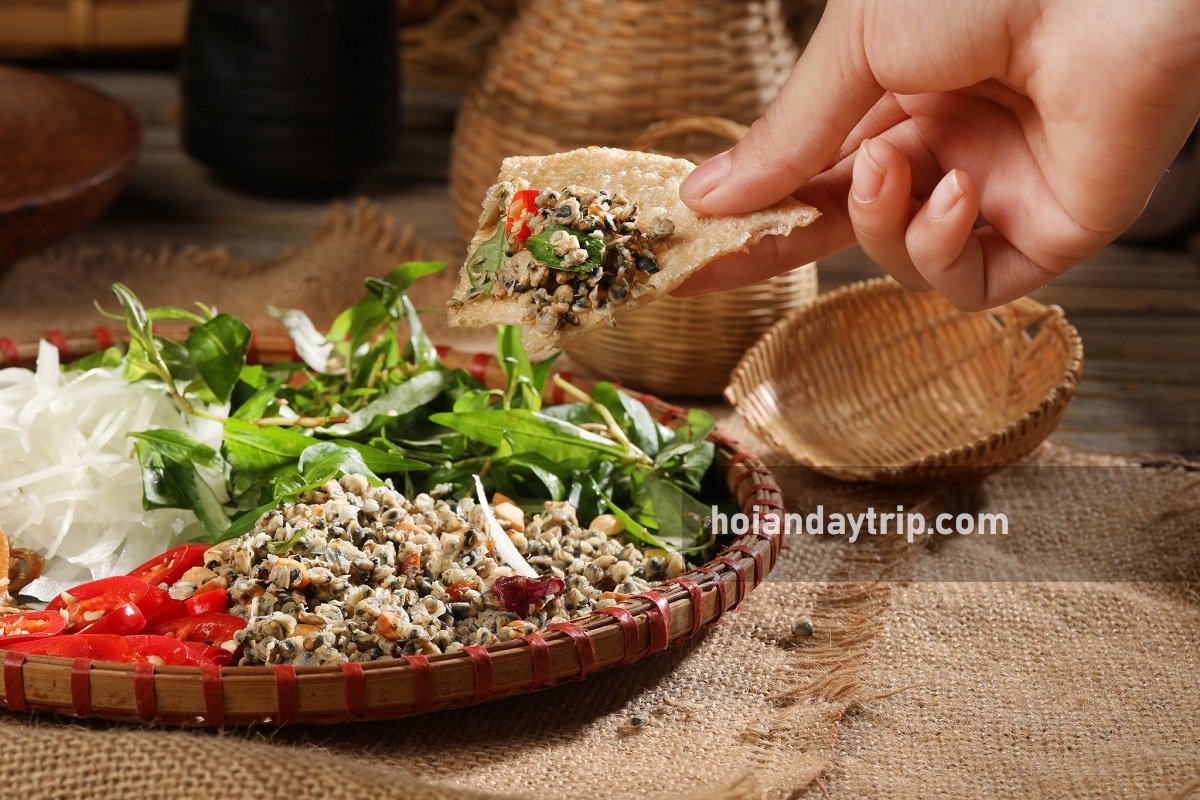
Hen Xao (stir-fried baby clams) is a dish of stir-fried baby clams with onion, spices, rau ram (peppermint), and eaten with crispy rice crackers. It is popular across the central Vietnam region. In Hoi An, the best place to eat this food is in Cam Nam Island (just right southeast of the Hoi An Ancient Town). The island is embraced by the Thu Bon River, and its surrounding waters are rich in clams. Visitors can see local inhabitants here rowing boats and collecting clams everyday. To eat, let’s take a small piece of rice cracker and then spoon stir-fried baby clams. See more information & details
Price: 30,000 to 60,000 VND/plate
Best places to eat: local restaurants on Nguyen Tri Phuong street, Cam Nam Island
Serve for: anytime of the day
Black Sesame Soup (Che Xi Ma Phu)
Che Xi Ma Phu (black sesame soup) is brought to Hoi An by Cantonese people who moved to the town some hundreds of years ago. It’s made by roasted black sesame (me den), cane sugar, sweet potato (khoai lang), kudzu or arrowroot powder (bot san day) pennywort or centella asiatica (rau ma), paederia lanuginosa or ‘dream leaf’ (la mo), and water from Ba Le Well. It’s referred to as a snack to eat on hot days or before dinner. It’s served in small ceramic bowls, when it’s still warm. See more information & details
Price: 20,000 to 30,000 VND per bowl
Best places to eat: Black Sesame Soup Demonstration (45/17 Tran Hung Dao Str)
Serve for: anytime of the day

Tam Huu (Tra Que Fresh Roll)
Tam Huu (meaning: ‘three brothers’) is the specialty food of Tra Que Vegetable Village, 3 km north of Hoi An Ancient Town. It’s a roll of boiled pork belly, boiled shrimp, and herbs grown right in the village (locals use spring onion to wrap all of them). This dish is simple, healthy, and shows the pride of local farmers about the veggies they produce.
Learning how to make Tam Huu is on the menu of some cooking classes at Tra Que Vegetable Village (or at request).
Cam Nam Sweet Corn Soup (Che Bap)
Cam Nam sweet corn soup (che bap) is the specialty dish at Cam Nam island, the island on Thu Bon River close to the Hoi An Ancient Town world heritage site and Hoi An Memories Land Theme Park. It’s made by young corn grown right in fertile areas here. Other ingredients are sugar, ginger, and coconut milk. Local people like eating this food with ice in the dry season and without ice in the rainy season. See more information & details
Price: 20,000 to 30,000 VND/cup
Best places to eat: local restaurants in Cam Nam Island (along Nguyen Tri Phuong Street)
Serve for: anytime of the day
Hoi An Chili Sauce
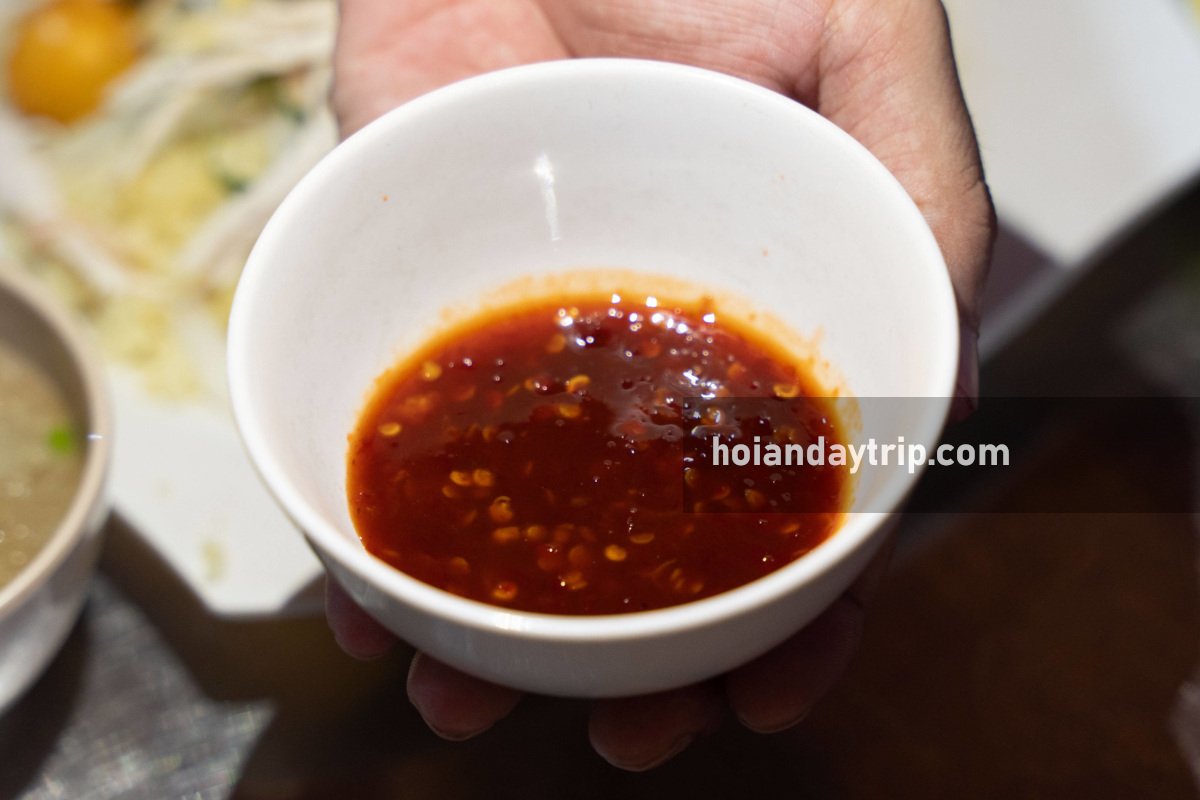
Hoi An style chili sauce is made with fresh chillies, tomato, and garlic. Local people will use it to mix with noodles or season the soup or mix with sauces.
Price: free (often served in all local dishes in Hoi An)
Best places to eat: any local restaurants in Hoi An
Serve for: anytime of the day
Mot Herbal Drink
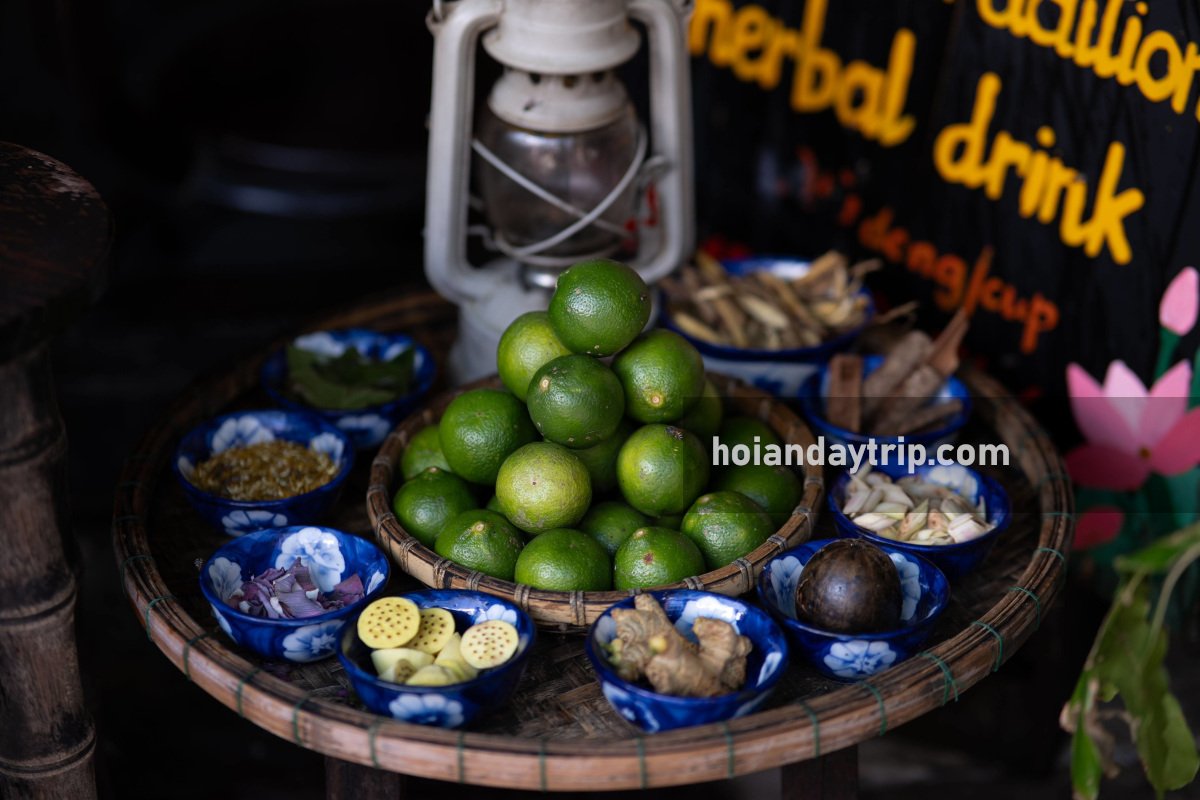
Mot herbal drink (or Mot water) is the most famous beverage originating from Hoi An Vietnam. It’s made with tea, lemongrass, lime, Chinese liquorice root, monk fruit, rock sugar, etc with a secret recipe kept by one local family in the town. Its taste is refreshing and cool when served with ice. During the day, a long queue is often seen in the flagship store selling this special drink. Lotus petals and fresh tea leaves are used to garnish it. See more information & details
Price: 15,000 to 20,000 VND/cup
Best place to buy: the store at 150 Tran Phu Street, Minh An ward, Hoi An Old Town