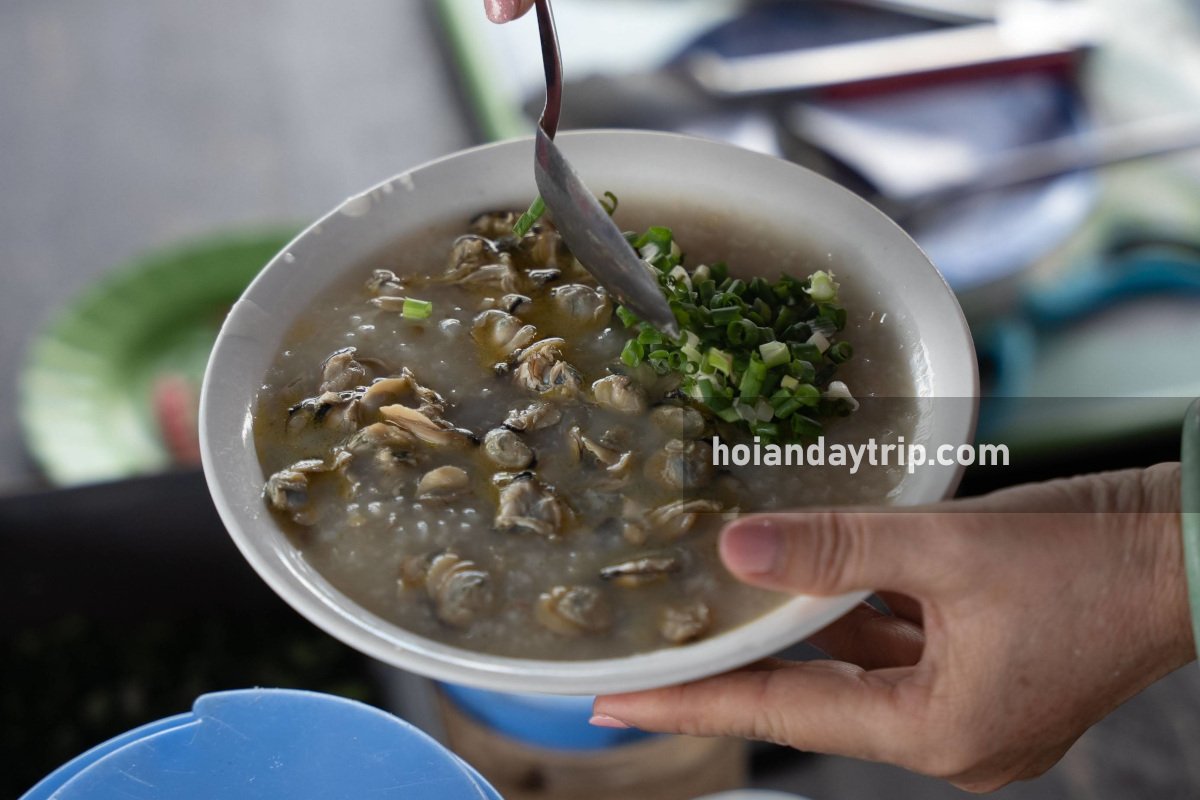
Clam Porridge (Chao Ngheu) is a must try food in An Bang Beach, the best beach in Hoi An Vietnam. It’s simply made with rice, clams and mung beans but very delicious and nutritious. Local people who go swimming or visit the beach will definitely want to eat it (for dinner or not). Now, HoiAn Day Trip Company will tell you everything that you need to know about clam porridge at An Bang Beach.
You may also like: Duck Porridge (Chao Vit), Jasmine Rice Porridge (Chao Gao Do)
• Content by Tam Le, founder of HOIAN DAY TRIP CO.,LTD
• Designed by Giang Cong Minh, co-founder of LS E&C LTD and his team
• Photo by Dang Cong Loi, Dao Xuan Son, Tam Le & others
Must Knows about Clam Porridge (Chao Ngheu) in Hoi An
– Location: An Bang Beach, Hai Ba Trung St, Hoi An city, Vietnam
– Origin: central Vietnam
– Ingredients: rice, clams, pork bones, fried shallot, ground black peper
– Time: 12 PM to 6-6:30 PM daily (except 1st and 14th days of lunar months/vegetarian days)
– Price: 25,000-50,000 VND/bowl
– Calories:
– Travel blog: https://hoiandaytrip.com/clam-porridge-an-bang-beach-hoi-an
Ingredients & How to Make Clam Porridge (Chao Ngheu)
The clam porridge at Hoi An, particularly An Bang Beach, is made of rice (gao), clams (con ngheu), mung beans (hat dau xanh), fried shallot, black pepper.
The pork bones are washed carefully by tap water, after buying them from local markets in the early morning. Then, put them into a large pot and fill it with fresh water (with/without spices, depending on eateries). To have a delicious broth, the people in Hoi An cook the bones slowly for a couple of hours. The clam porridge is served in late afternoon/evening, therefore the makers will need to prepare the broth right in the morning of the same day.
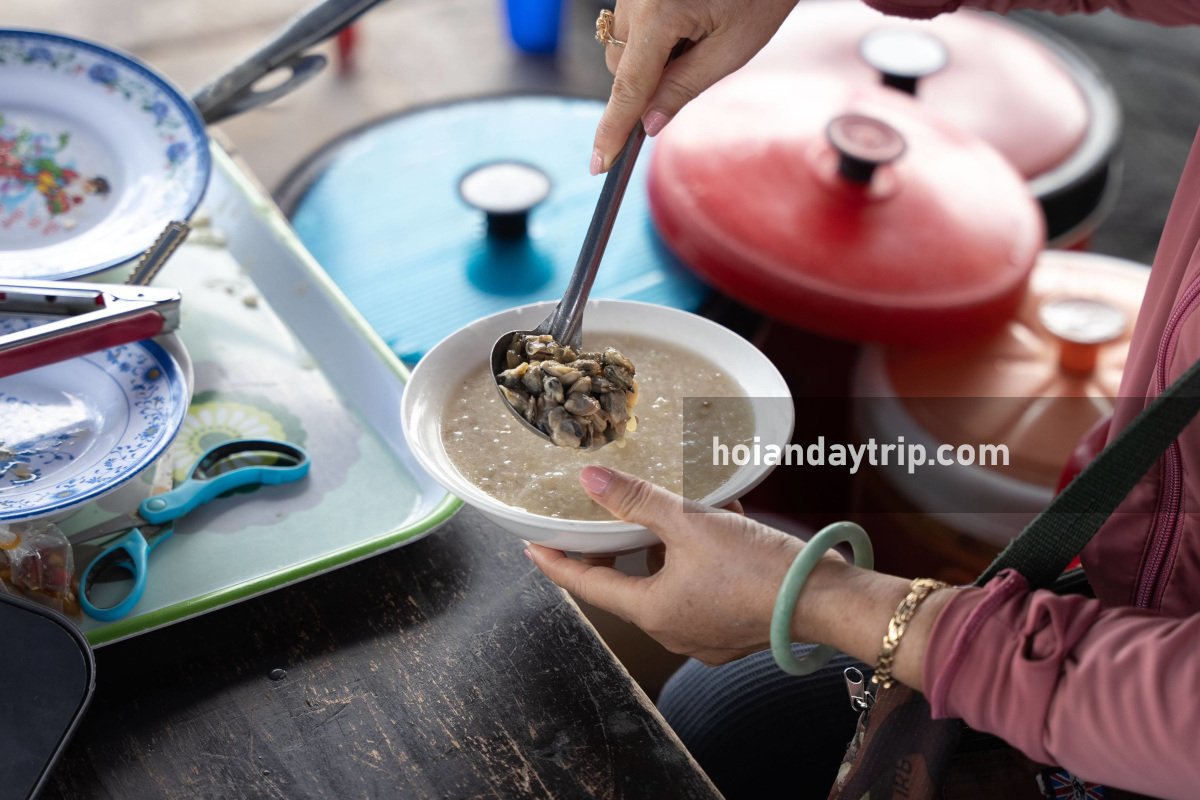
Clams in Hoi An style clam porridge are not cooked too much or with any spices. Local makers aim to keep the freshness and sweetness of clams. They buy living clams from fishermen who collect them in nearby Co Co/De Vong River (the season is from March to September). At home, they soak these clams in a fresh water pot for at least 1/2 day (better if do longer), to allow clams to spit out soils and grass. In Vietnam, Vietnamese people often use chilli or some other plants, to let them open their mouths quicker. After the clams are clean, local people boil them for a while, and then pick up their meat by hand. In Hoi An, these clam meats are put inside a tight box, to keep them warm for a long time. The boiling water left is continued using to cook with the rice later (mixed with pork bone broth).
The rice to cook the clam porridge is bought at local markets. People must use ‘rice to make porridge’, instead of common rice that is steamed and served in Vietnamese daily meals or fried rice dishes. Within the delta of Thu Bon River, Hoi An has rice fields in the north, east and south sides. See more information & details
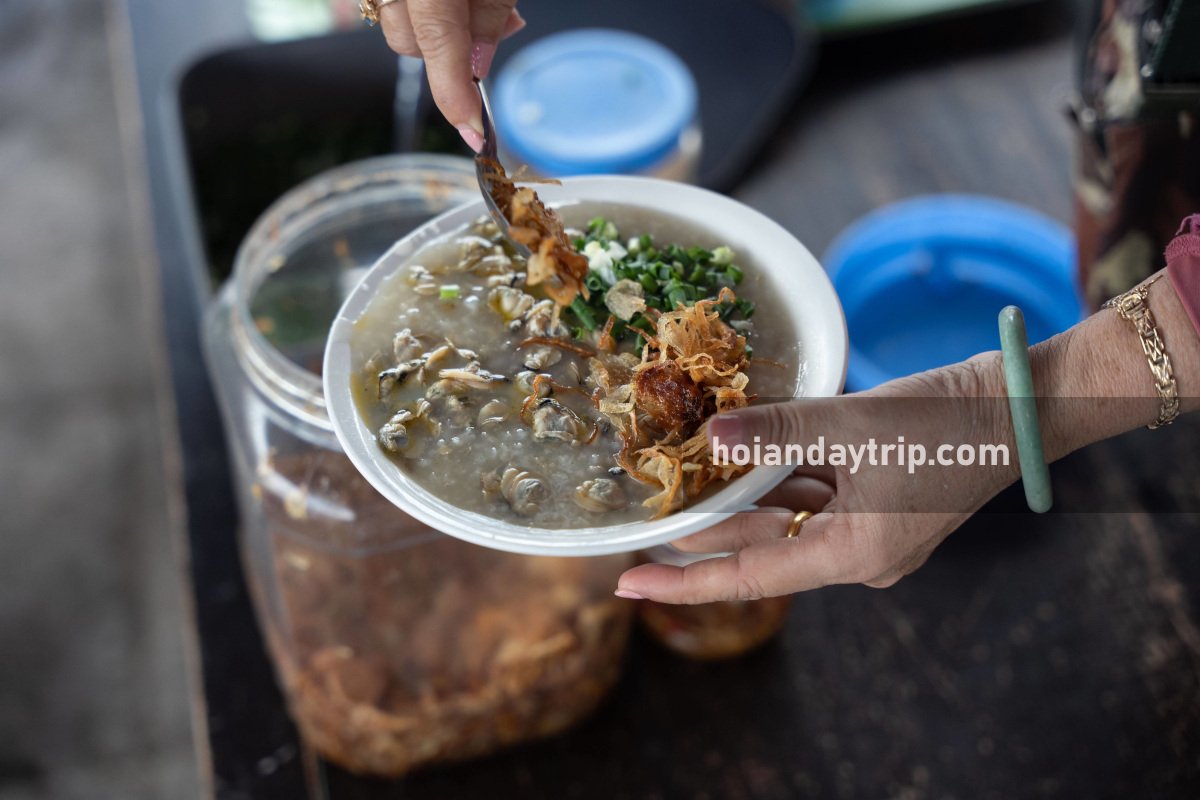
Clam porridge at Hoi An has fried shallots as topping. To have the best fried shallots, local people will make it by themselves. Firstly, they buy shallots from fresh markets (if possible, from farmers in Ly Son Island or ‘Kingdom of Garlics and Onions’), and then peel their dried skins. Before frying, they thinly slice the shallots.
Ground black pepper (hat tieu xay) is bought at local markets; It originates from farms in mountains of the Annamite Range; In recent year, Vietnam is one of the largest pepper producer in the world;
How to Eat Clam Porridge Like a Local
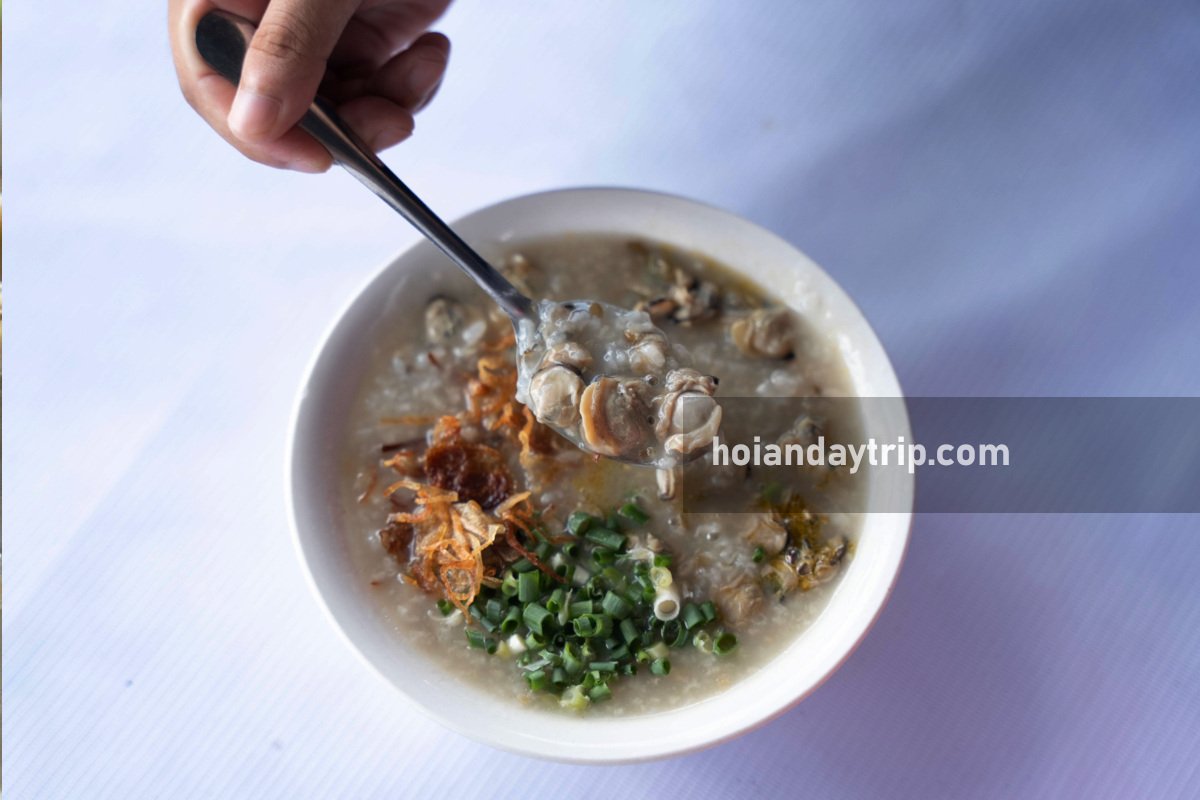
Before eating the clam porridge at Hoi An, local people will use papers to clean the spoon. After that, we recommend tasting the porridge first, and add sauces or spices to have the best personal flavour (fish sauce, black pepper, chilli powder, lime). Please stir everything.
Many locals in Hoi An like eating banh trang nuong (grilled rice paper) with the clam porridge. They will break the rice paper into small pieces, and then put them into the bowl. Combination of the crunchiness of the rice paper and softness of the porridge is awesome. Locals eat this like in the case of Mi Quang Noodles.
The Best Clam Porridge in Hoi An
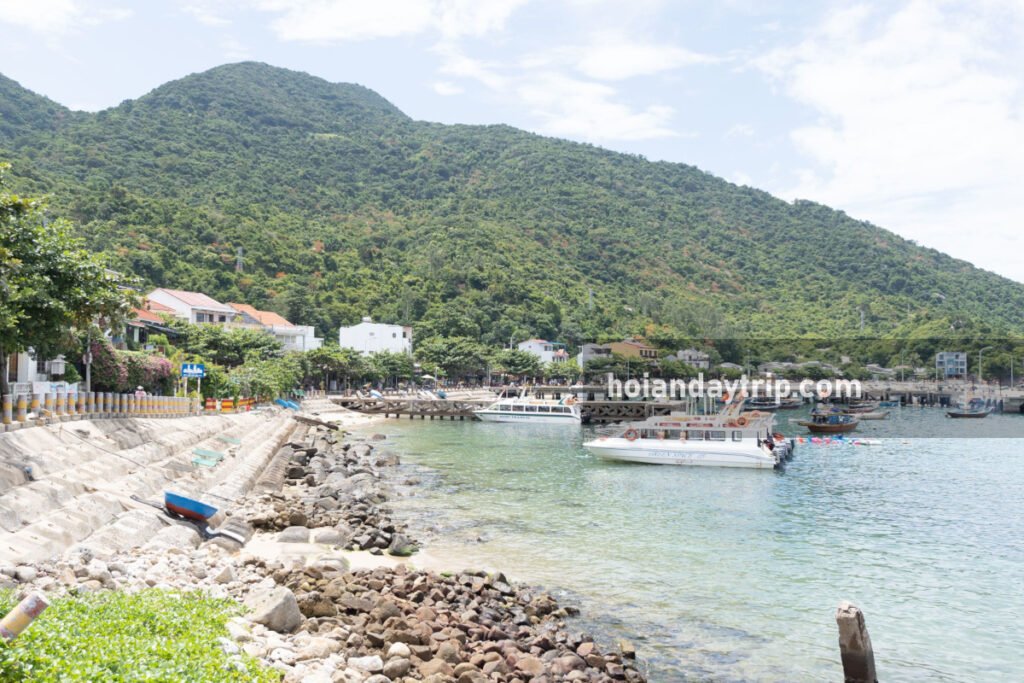
The most popular place for locals to eat clam porridge in Hoi An is An Bang Beach. This food is sold on the beach or inside the fishing village. The busiest eatery is ‘Chao Ngheu Co Gio’ on Hai Ba Trung street (between Hai Ba Trung-Lac Long Quan crossroad and Hai Ba Trung-Nguyen Phan Vinh crossroad). The owner, Ms Gio (meaning ‘wind’) has opened and run her family eatery for more than 20 years. She learnt how to cook clam porridge from her mother. Today, she sells some hundreds of bowls a day. Her porridge will be sold out quickly on the weekends or holiday times (she says around 1,000 bowls in these days). Each bowl at her eatery has soft rice soup with mung beans and a full big spoon of fresh clams.
Better to Know about Eating Local in Hoi An
– Local family-run restaurants always serve better local foods than tourist restaurants. Places inside small alleyways potentially are hidden gems. The price is even more affordable at these lesser known spots.
– Restaurants where you can see a queue or crowds, food or drinks there are absolutely better or safer than others. Vietnamese people also avoid places without people eating, such as roadside eateries.
– Hot foods are often safe to eat for non-Vietnamese people. Refuse cold food (especially ones sold on the street, markets) or things you don’t see people cooking.
– Make sure that you learn some basic Vietnamese words or sentences to order foods, such as xin chao (hello, hi), cho toi mot (something) (I want one…), toi an chay (I am vegetarian), khong cay (no spicy), cam on (thank you), tam biet (goodbye) or numbers (mot/one, hai/two, ba/three, bon/four, nam/five, sau/six, bay/seven, tam/eight, chin/nine, and muoi/ten).
– Ask any local people you know (tour guide, driver, hotel receptionists, bellmen, etc) to receive their recommendation for good places to eat local.
– Raw vegetables are popularly used in local dishes, such as noodles or noodle soup or sandwich. They are often washed by tap water or unwashed. If can not drink tap water, remove or refuse them. Likewise, in most iced drinks (such as coffee or herbal tea), people add ice made by tap water also.
– On the 1st day and 14th-15th days of each lunar month, Hoi An citizens eat vegetarians. Many local restaurants and street businesses will be closed by that.
– If you don’t eat pork or beef, due to diet or religious restrictions, be careful when want to try local food here, if don’t see the ingredient description. Pork and beef are very popular meats, so they will be in numerous dishes. Street vendors may say ‘no pork’ or ‘no beef’ for better business, but please check before buying!
– Consider joining a food tour guided by locals who know much better about dishes in the city, including things never mentioned in guidebooks or on the internet.
– If have an allergy (milk, egg, peanut, wheat,…), ask anybody you know before trying or search for ingredients on the internet. By the way, fish sauce is popularly used to marinate Vietnamese foods, so make sure that you know this information if you’re fish allergic.
– Food portion (or size) here is often not really big (locals prefer eating with their family at home). You may try double or some different dishes for main meals.
– If don’t see the price on the menu, please ask in advance to avoid overcharging, especially when you are not a local. In Vietnamese, how much is bao nhieu.
– Most popular cutleries are chopsticks and spoons. To know how to use it, browse here