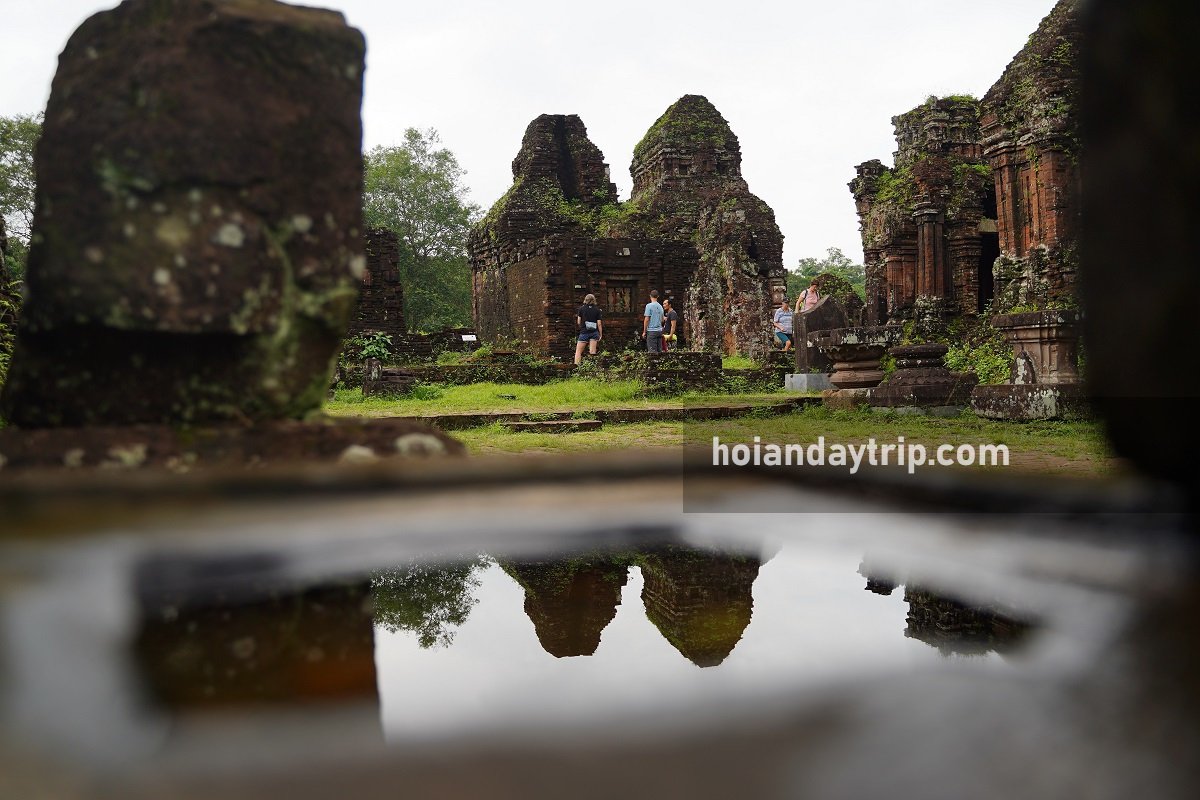
The ancient Hindu temples of My Son Sanctuary were constructed between the 4th and 14th centuries by the skilled architects and builders of the Champa Kingdom. Successive Cham monarchs, beginning with King Bhadravarman, commissioned these intricate red-brick towers to worship the deity Shiva and serve as a sacred imperial burial ground. In this article, HoiAn Day Trip Company will provide more information about the people who built My Son and why.
You may also like: How to Visit My Son Sanctuary to Avoid the Heat or/and the Crowds
• Content by Tam Le, founder of HOIAN DAY TRIP CO.,LTD
• Designed by Giang Cong Minh, co-founder of LS E&C LTD and his team
• Photo by Dang Cong Loi, Dao Xuan Son, Tam Le & others

Must Knows about My Son Sanctuary Vietnam
– Location/address: My Son village, Duy Phu commune, Duy Xuyen district, Quang Nam province, Vietnam
– Name’s meaning: My Son means ‘beautiful mountain’, not ‘my son’
– How to pronounce: /mee son/
– Other name(s): My Son Ruins, My Son Holy Land, My Son Site, My Son Ancient Ruins, My Son Temples, My Son Cham Towers
– Area: 142 hectares
– Age: 4th to 13rd centuries
– Number of buildings: 71
– Opening hour(s): 6 AM to 5 PM everyday (latest 5:30 PM)
– Ticket price: 150,000 VND for foreign adults and children older than 15. It’s free for small ages, but parents still have to pay 30,000 VND for the transfer service.
– Reason(s) to visit: ancient Hindu temples amid dense jungles, a Unesco world heritage site, performances of Cham people
– Best time(s) to visit: early morning, late afternoon, sunny days
– Time to spend: 1,5-3 hours
– Recognition(s): national heritage, special national heritage, Unesco world heritage site (1999)
– Travel blog: https://hoiandaytrip.com/my-son-sanctuary-travel-guide
– Food & drink: yes availables
– Shopping: yes available
– Tour guide: contact us by +84968009827 (hotline/whatsapp/line/zalo)
– Fact: My Son Sanctuary is one of the most visited attractions in the region
My Son Sanctuary Vietnam on Map
Which Kings Built My Son Sanctuary’s Temples?
Bhadravarman I (Pham Ho Dat)
Who is Bhadravarman I?
King Bhadravarman I (Pham Ho Dat in Vietnamese) was one of the most influential and powerful rulers of the early Champa Kingdom, an ancient civilization of seafaring people that ruled what is now central and southern Vietnam.
Ruling during the late 4th century and into the early 5th century (roughly around 380–413 AD), he is remembered as a visionary warrior-king, diplomat, and religious innovator.
Founding the first temple
In the late 300s AD, Bhadravarman I established the very first temple at Mỹ Sơn. Unlike the enduring brick and stone structures you see standing today, his original temple was constructed primarily of wood. Though that initial wooden structure was later destroyed by a massive fire around the 6th century, it established the valley as the definitive spiritual center for Champa royalty.
The birth of “Bhadresvara” (the God-King)
Bhadravarman I revolutionized Champa politics and religion by introducing the concept of Devaraja (Divine Kingship). He erected a sacred linga—the phallic symbol representing Shiva’s raw creative power—and named it Bhadresvara.
By blending his own name (Bhadra) with the name of the supreme god Shiva (Isvara), he created a singular identity. This sent a clear message to his rivals and subjects: attacking the king was a direct attack on Shiva himself.
Creating the sacred valley boundaries
Bhadravarman I didn’t just build a temple; he mapped out the valley’s sacred geography. He dedicated the entire amphitheater of mountains surrounding Mỹ Sơn to the service of the Bhadresvara deity. The stone stele inscriptions he left behind declare that the land, its villages, and its agricultural yield were forever property of the temple, establishing a wealthy, self-sustaining religious estate.
The architectural legacy
While Bhadravarman I’s original wooden temple is gone, every brick tower erected by subsequent Cham kings over the next 900 years was built on the precise foundations of his religious and political philosophy.
HOIAN DAY TRIP Company daily organizes tours and transfers to My Son Sanctuary. Contact us by +84968009827 (hotline/whatsapp/line/zalo) or hoiandaytripcompany@gmail.com or browse www.hoiandaytrip.com to see tours and make a reservation. Thank you very much!

Bhadravarman (Pham Phan Chi)
Who is King Sambhuvarman?
King Sambhuvarman (translated in Vietnamese texts as Phạm Phạn Chí) was a powerful ruler of the early Champa Kingdom during the late 6th and early 7th centuries (roughly 572–629 AD).
He reigned during a turbulent era of intense geopolitical conflict, yet he remains one of the most critical figures in the history of the My Son Sanctuary because he effectively saved the holy site from disappearing into history.
Resurrecting the sanctuary in brick
Two centuries before Sambhuvarman took the throne, the sanctuary’s founding king, Bhadravarman I, had built the very first central temple out of wood. Sometime during the mid-6th century, a catastrophic fire tore through the valley, reducing that original wooden shrine to ashes and leaving the holy land without its core monument.
Upon his ascension, Sambhuvarman made it his royal mission to rebuild the heart of the sanctuary. He chose to abandon wood entirely and reconstructed the central temple using enduring red brick and stone. This brilliant architectural shift created the structural blueprint that allowed the towers of My Son to survive the elements for centuries.
The legacy of “Sambhu-Bhadresvara”
When Sambhuvarman finished rebuilding the central shrine in 577 AD, he did not just restore the physical walls; he re-consecrated the supreme deity of the kingdom.
He took the name of the original state god installed by the founder (Bhadresvara) and combined it with his own royal name, naming the new deity Sambhu-Bhadresvara. He erected a famous stone inscription in the valley praising this god as the divine soul “who brought prosperity to the land of Cham,” binding his own royal authority to the indestructible new brick temple.
Defending and cleansing the holy land
In 605 AD, the Chinese Sui Dynasty launched a massive invasion into Champa, using war elephants to defeat Sambhuvarman’s armies, capture his capital, and plunder the royal archives.
Despite this crushing defeat, Sambhuvarman survived by retreating into the mountains. As soon as the invading forces withdrew, he immediately returned to reclaim his land. He led a massive effort to repair the war damage, spiritually cleanse the valley, and restore the temples of My Son, ensuring that the spiritual pulse of the Champa people remained unbroken.
HOIAN DAY TRIP Company daily organizes tours and transfers to My Son Sanctuary. Contact us by +84968009827 (hotline/whatsapp/line/zalo) or hoiandaytripcompany@gmail.com or browse www.hoiandaytrip.com to see tours and make a reservation. Thank you very much!
Simhavarman III (Che Man)
Who is King Jaya Simhavarman III?
King Jaya Simhavarman III, historically known in Vietnamese lore as Che Man, ruled the Champa Kingdom from roughly 1288 to 1307 during a turbulent but culturally rich era. He is widely remembered for two major achievements: leading a fierce guerrilla resistance that successfully repelled the Mongol armies of Kublai Khan, and orchestrating a historic political marriage to the Vietnamese Princess Huyen Tran in exchange for northern border territories.
The final master builder
The temple complex at My Son was not built all at once; it evolved over a thousand years as subsequent kings added their own monuments. Chế Mân was the last great monarch to commission major temple constructions and restorations at the sanctuary. The structural work completed during his era represents the absolute final evolution of the classic Cham architectural style before the kingdom’s center of power permanently fractured and moved further south.
Protecting the sacred site from invasion
Before Che Man could dedicate new shrines to the gods, he had to ensure the holy valley wasn’t destroyed. In the late 13th century, the unstoppable Mongol Empire launched massive naval and land invasions into Champa. Che Man brilliantly evacuated his cities and used the mountainous terrain to wage successful guerrilla warfare, ultimately forcing the Mongols to retreat and directly saving the priceless heritage of My Son from being looted or burned to the ground.
Fulfilling the thousand-year royal duty
By traveling to the hidden valley to make offerings, construct monuments, and worship the state deity Shiva, Che Man kept the torch alive for a tradition started nine centuries earlier by King Bhadravarman I. He used the sanctuary to perform state rituals that legitimized his crown after his military victories, making him the historic bookend to an unbroken, millennium-long lineage of royal temple builders in the holy valley.
HOIAN DAY TRIP Company daily organizes tours and transfers to My Son Sanctuary. Contact us by +84968009827 (hotline/whatsapp/line/zalo) or hoiandaytripcompany@gmail.com or browse www.hoiandaytrip.com to see tours and make a reservation. Thank you very much!
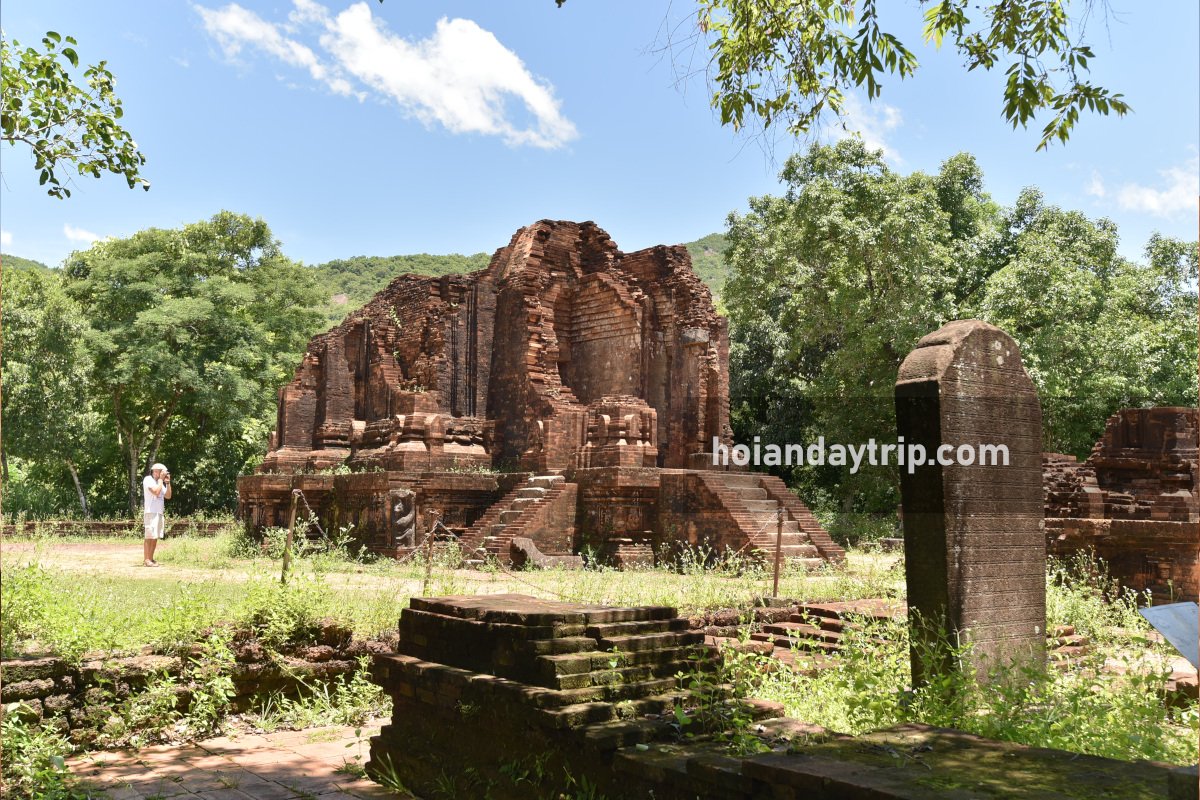
Why was My Son Sanctuary in Vietnam Built?
Here are reasons why Champa kings and Cham people constructed My Son Sanctuary:
Reason 1: devotion to Shiva god
The primary purpose of the complex was religious worship. The Cham people practiced a form of Hinduism heavily influenced by Indian traders and priests. They dedicated the vast majority of the temples at My Son to the god Shiva, whom they regarded as the protector and founder of their state. The temples housed sacred lingas (phallic representations of Shiva’s divine energy) where rituals were performed to ensure cosmic balance and prosperity for the kingdom.
Reason 2: a hiding place for kings and royal family during the war
My Son Sanctuary was built just a short distance from the political capital of Simhapura (Tra Kieu) and the thriving trading port of Hội An. The surrounding mountains formed a natural fortress, making it a highly secure, hidden retreat where the royal court could conduct sacred rituals away from the threat of foreign invasions.
Reason 3: a sacred royal burial ground (necropolis)
Beyond being a place for the living to pray, the sanctuary served as a sacred burial site and memorial ground for Champa’s elite. When kings, queens, and high-ranking spiritual leaders passed away, their spirits were anchored to these temple structures. Successive monarchs built new towers or heavily renovated older ones to honor the spirits of their ancestors, invoking their blessings to ensure a prosperous and stable reign.
HOIAN DAY TRIP Company daily organizes tours and transfers to My Son Sanctuary. Contact us by +84968009827 (hotline/whatsapp/line/zalo) or hoiandaytripcompany@gmail.com or browse www.hoiandaytrip.com to see tours and make a reservation. Thank you very much!
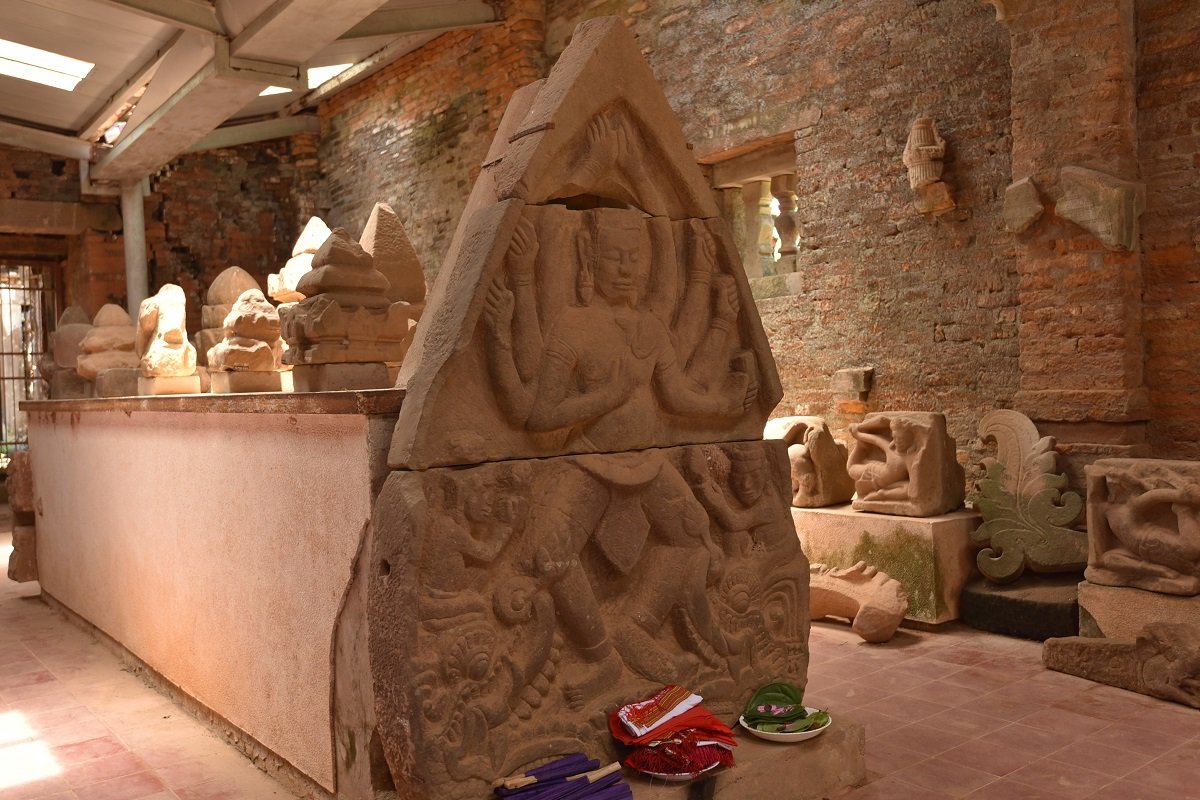
Guided Tours to My Son Sanctuary Vietnam
Here are popular guided tours to My Son Sanctuary:
– My Son Sanctuary Half Day Tour with Traditional Art Performance
– My Son Sanctuary Private Tour with Local Expert Guide
– My Son Sanctuary Early Morning Tour to Beat the Crowds
– My Son Sanctuary Afternoon Tour with Traditional Art Performance
– My Son Sanctuary Morning Tour with Thu Bon River Cruise
– My Son Sanctuary Afternoon Tour with Boat Trip on Thu Bon River
– My Son Sanctuary Sunset Tour to Avoid the Crowds
– My Son Sanctuary & Marble Mountain Tour
– My Son Sanctuary Tour with Chinese Speaking Guide
– My Son Sanctuary & Golden Bridge/Ba Na Hills Tour
– My Son & Hoi An Tour – World Heritage Site Tour
– My Son & Thanh Ha Pottery Village Tour from Hoi An
– My Son Sanctuary & Hoi An Coconut Village Tour
– My Son Sanctuary & Golden Bridge/Ba Na Hills Tour
– My Son Sanctuary & Tra Que Vegetable Village Tour
– My Son Sanctuary & Lady Buddha Tour from Da Nang
HOIAN DAY TRIP Company daily organizes tours and transfers to My Son Sanctuary. Contact us by +84968009827 (hotline/whatsapp/line/zalo) or hoiandaytripcompany@gmail.com or browse www.hoiandaytrip.com to see tours and make a reservation. Thank you very much!
Photos, Videos about My Son Sanctuary Vietnam
Here are beautiful photos and videos about My Son Sanctuary in Vietnam: