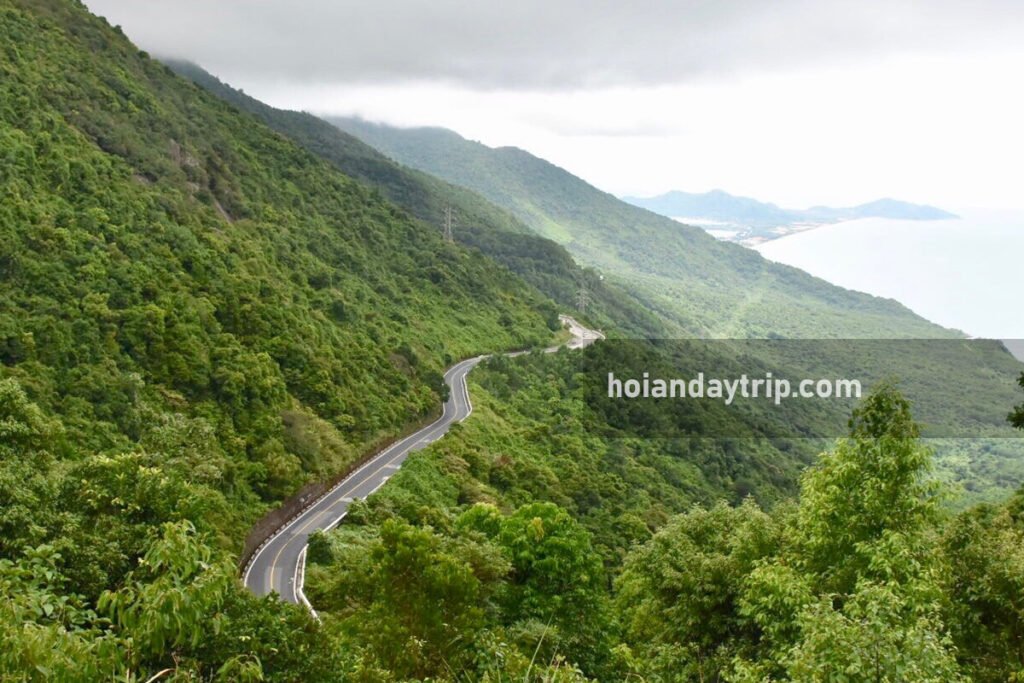
The best time to visit the Hai Van Pass is during the dry season months from February to August. Specifically, the spring months from March to May offer the most ideal weather, featuring mild temperatures, dry roads, and minimal rainfall. Traveling during this window ensures crystal-clear visibility for breathtaking panoramic views of the coastline and safe, comfortable conditions for a motorbike ride.
You may also like: Best Time to Visit Cham Island Vietnam
• Content by Tam Le, founder of HOIAN DAY TRIP
• Designed by Giang Cong Minh, co-founder of LS E&C LTD and his team
• Photo by Dang Cong Loi, Dao Xuan Son, Tam Le & others
Must Knows about Hai Van Pass in Vietnam
– Location/address: Hoa Hiep Bac ward, Lien Chieu district, Da Nang city and Lang Co town, Phu Loc district, Hue city, Vietnam
– Name’s meaning: Hai Van means ‘ocean cloud’ in Vietnamese
– How to pronounce:
– Other name(s): Lang Co Pass, Deo Hai Van
– Opening hours: sunrise to sunset
– Ticket price: free
– Length: 20 kilometers
– Height/elevation: nearly 500 meters (approx 1,640 ft)
– Reason(s) to visit: one of the most beautiful mountain passes in Vietnam and Southeast Asia, striking views, Hai Van Gate
– Best time to visit: early morning, late afternoon
– Time to spend: 30-60 mins
– Travel blog: https://hoiandaytrip.com/hai-van-pass-vietnam
– Recognition(s): the best coast road in the world (2008)
– Food & drink: yes available
– Shopping: yes available (on the top)
– Tour guide: contact us by +84968009827 (hotline/whatsapp/line/zalo)
– Fact: Hai Van Pass is one of the most dangerous passes in Vietnam
Hai Van Pass Vietnam on Map
Hai Van Pass Vietnam Weather by Month
January
January brings a cool and transitionary climate to the Hai Van Pass as the northeast monsoon gradually weakens. Temperatures range from an average low of 19°C to a high of 24°C. While the torrential downpours of late winter begin to taper off, the chance of rain remains moderate with roughly 90mm to 180mm of precipitation, often arriving as light drizzles or persistent mountain mist. Skies can be frequently overcast, and the summit often experiences chilly drafts, making a light jacket essential for motorbike riders.
February
February is widely considered one of the most pleasant months to traverse the Hai Van Pass. Weather conditions stabilize significantly as the dry season takes hold. Temperatures hover comfortably between 20°C and 26°C. The chance of rain drops sharply, making it a much drier month with rainfall averaging only about 35mm to 50mm. Visitors are treated to clearer blue skies, brilliant sunshine in the afternoons, and crisp air, offering wonderful visibility for sightseeing and photography.
March
March offers exceptional spring weather for exploring the mountain pass. Temperatures begin to rise gently, ranging from a comfortable 22°C at night to a warm 29°C during the afternoon. Rainfall stays remarkably low, averaging roughly 25mm to 40mm for the entire month. The chance of rain is minimal, presenting mostly dry roads, ample sunshine, and gentle breezes. This makes it an ideal time for travelers looking to ride a motorbike across the summit without battling adverse weather conditions.
April
April marks a stable, warm period across central Vietnam. Daytime temperatures climb further, moving between a pleasant 23°C low and a warm 31°C high. The chance of rain remains quite low, with precipitation averaging around 30mm. Skies are generally bright and clear with reliable sunshine, giving travelers optimal panoramic views of both Lang Co Bay and Da Nang. Humidity is relatively comfortable, ensuring smooth driving conditions across the pass before the peak summer heat arrives.
May
May introduces the early onset of intense summer heat to the region. Temperatures jump noticeably, stretching from a warm 25°C up to 33°C or higher. Rainfall begins a gradual upward trend, averaging around 60mm to 70mm as convective heat builds up. While the majority of days are sun-drenched and clear, brief afternoon showers or isolated localized thunderstorms can occasionally occur, helping to temporarily cool down the mountain slopes.
June
June is one of the hottest and sunniest months of the year at the pass. Temperatures routinely peak between 25°C and 34°C, sometimes feeling even hotter under direct midday sun. Precipitation averages around 85mm, characterized mostly by brief, sudden afternoon showers or passing clouds that offer temporary relief from the heavy humidity. Visibility is generally fantastic during the mornings, though riders should protect themselves against strong sun exposure and high UV indexes during midday trips.
July
July shares similar climatic patterns with June, maintaining peak summer heat. Average temperatures range from a warm 25°C to a blistering 34°C. Rainfall increases slightly to about 90mm, usually arriving via short-lived, late-afternoon thunderstorms. Despite the occasional downpour, the chance of prolonged bad weather is low, and the daytime skies are mostly blue. Early mornings provide the best window to cross the pass to avoid both the intense heat and afternoon cloud build-ups.
August
August acts as a transition month bridging the dry season and the upcoming wet period. Temperatures remain high, fluctuating between 25°C and 34°C. However, the atmosphere grows more humid and unpredictable as rainfall increases to roughly 100mm to 150mm. You can expect a higher frequency of intermittent cloud cover, sudden localized showers, and shifting mountain mists, particularly toward the latter half of the month, making it wise to monitor forecasts before riding.
September
September marks the official onset of the heavy rainy season in central Vietnam. Temperatures begin to cool slightly, ranging from 24°C to 31°C. However, rainfall spikes dramatically, often exceeding 300mm for the month. The chance of rain is high, driven by early tropical depressions and monsoon influences that bring prolonged overcast skies, heavy downpours, and frequent fog banks that can rapidly obstruct visibility across the hairpin turns.
October
October is statistically the wettest and most volatile month of the year on the Hai Van Pass. Temperatures range more comfortably between 23°C and 30°C, but precipitation peaks intensely, often surging past 500mm to 600mm. Severe storms, heavy downpours, and high winds are frequent, creating a very high risk of slippery roads and mountain landslides. Traveling across the pass during this month is strongly discouraged due to hazardous driving conditions and severely limited visibility.
November
November continues the heavy monsoon pattern, keeping the pass wet and cool. Temperatures drop into a range of 22°C to 27°C. Rainfall remains dangerously high at roughly 360mm to 400mm. The mountain is frequently enveloped in thick, damp fog and persistent rain, drastically cutting down visibility. Outdoor activities and motorbike tours are heavily disrupted during this time, and the landscape stays deeply shrouded in grey, wintry cloud cover.
December
December sees a slight decrease in rainfall compared to October and November, but precipitation remains significant at around 200mm. Temperatures reach their lowest annual levels, fluctuating between a chilly 19°C and 25°C. The weather maintains a cool, wintery feel with lingering mist, cloudy intervals, and occasional damp spells. While traffic and tourism numbers are low, unpredictable weather patterns mean that clear panoramic views are rare, and riders must navigate damp, winding roads with caution.