Water buffalo is one of the typical images of the Vietnamese countryside. It’s raised to help farmers to work in the rice field, carry goods and other things. It’s popularly known as ‘the best friend of Vietnamese farmers’. In rural areas of Hoi An, visitors have the chance to see, photograph, and interact with them. To do what locals do, someone even rides them, having unforgettable memories. In this article, HoiAn Day Trip Company provides information about the water buffalo and water buffalo ride in Hoi An’s countryside.
You may also like: Rice Paper Making in Hoi An, Mat Weaving in Hoi An
• Content by Tam Le, founder of HOIAN DAY TRIP CO.,LTD
• Designed by Giang Cong Minh, co-founder of LS E&C LTD and his team
• Photo by Dang Cong Loi, Dao Xuan Son, Tam Le & others

Must Knows about Water Buffalo in Vietnam
– Other name(s): domestic water buffalo, Asian water buffalo
– Name in Vietnamese: con trau, con trau nuoc
– Science name: Bubalus bubalis
– Type: mammals, swamp-type or river-type
– Height: 120-130 centimeters
– Weight: 680 to 1,200 kilometers (1,500 to 2,500 pounds) when mature
– Age: up to 25 years
– Reproduction: female buffalos will be pregnant from 9 to 11 months
Water Buffalo in Vietnamese Life & Culture
Firstly, the water buffalo is the best friend, one of the most valuable properties of Vietnamese farmers who have cultivated rice for thousands of years. According to some historians, Vietnamese people domesticated it about 5,000 years ago. The one in Vietnam is swamp type. It’s used to plow the soil in flooded fields, before seeding. In recent decades, local farmers chose plough to save time and labour, but in the mountains or small & far fields, the buffalo is still the only way. When the rice has been growing, farmers can use its dung as fertilizer. After harvesting, it’s used to carry packs of rice, and dry straw is used to feed it when fresh grass is not enough, especially in the winter. It can carry other things when needed thanks to its strength.
Because of its important role in agriculture, Vietnamese kings banned eating or killing the water buffalo (from 11st to 15th centuries).
Water buffalo is one of six most popular animals raised by Vietnamese people. 5 other animals are dog, horse, pig, cow, and goat.
Vietnamese people eat buffalo meat, and have some delicious dishes, such as smoked buffalo meat (thit trau gac bep), buffalo meat stir fried with betel leaf (thit trau xao la lot). However, this kind of meat is not too popular in Vietnamese daily meals (beef is more used).
Water buffalo’s horn is used to make flutes in Viet communities as well as tribal communities in Vietnam’s mountainous regions. If seeing the Teh Dar show or Vietnamese bamboo circus, visitors can watch performances or hear the music from buffalo horn flutes. Lots of people decorate the horns in their houses or tombs.
Water buffalo’s leather is used to make drums in Vietnam. The first drum was created in 986 when Le Dai Hanh king did ‘Field-ploughing ceremony’ or Tich Dien ceremony at Doi Tam village, Ha Nam province. He aimed to encourage local agriculture to grow. Know-how of making drums is passed down from father to son, and the boys start learning from age of 10. Today, there are about 62 workshops and 500 persons continuing this long-standing craft.
Water buffalo is one of 12 zodiac animals in Vietnamese culture (called ‘Suu’). Those who are borned in the year of the buffalo, have a persistent, hard-working, diligent, and strong personality. Famous ‘buffalo’ persons are Le Loi (a king and founder of Le dynasty in 15th century), Ly Thuong Kiet (a military general, author of Nam Quoc Son Ha poem or Vietnam’s first declaration of indepence in 11st century), Le Hoan (king of Vietnam in 10th century), so on. In the zodiac calendar, the buffalo is the second, after the rat (1st zodiac animal) and before the tiger (3rd zodiac animal).
In Vietnamese traditional timekeeping, the period from 1 to 3 am is called ‘the buffalo hour’, after ‘the mouse hour’ from 11 pm-1 am, and before ‘the tiger hour’ from 3 to 5 am. Personality of those who are borned in this hour will be hard-working, consistent, friendly, and lucky.
Kim Nguu or ‘Golden buffalo’ is one of 28 mansions in traditional Chinese/Vietnamese constellations.
There is a Vietnamese folk story about the presence of water buffalo in the country. Once upon a time, people did not have enough food to eat. To help, the Heaven God sends two bags, the red one with rice seeds and the green one with grass seeds to a god. He also reminds that man that the rice is planted for humans, and the grass is for animals. However, because of lots of beautiful and interesting things on the way descending to the Earth, the man forgets the note and use grass seeds to plant in the fields. To punish, the Heaven God turns him into a buffalo which has to work hard to help people to cultivate rice, and has to eat the grass to live.
Water buffalo fighting festival was held in some places in northern Vietnam during the year. The most well-known one is in Do Son district, Hai Phong. According to local people, it firstly occured in 11st century, in the reign of Ly Thanh Tong king’s reign. The festival date is the 9th day of the 8th lunar month. The origin of this festival is that a very long time ago, local people saw two buffalos fighting in a temple for worship of god waters. Since then, they have organized it to pray for good weather and safe travels on the sea. To fight, the buffalo must be strong and have a good look. After the final match, all buffalos are killed, and their meat will be used to sacrify.
Water buffalo is one of three most special animals to sacrifice to the gods in Vietnamese culture. Two others are a pig and a goat.
Water buffalo is thought to be Vietnam’s national animal. In 2003, ‘golden buffalo’ was chosen to be mascot for the 22nd Southeast Asian Games (SEA Games) that first ever took place in Vietnam.
Where to See Water Buffalos in Hoi An?
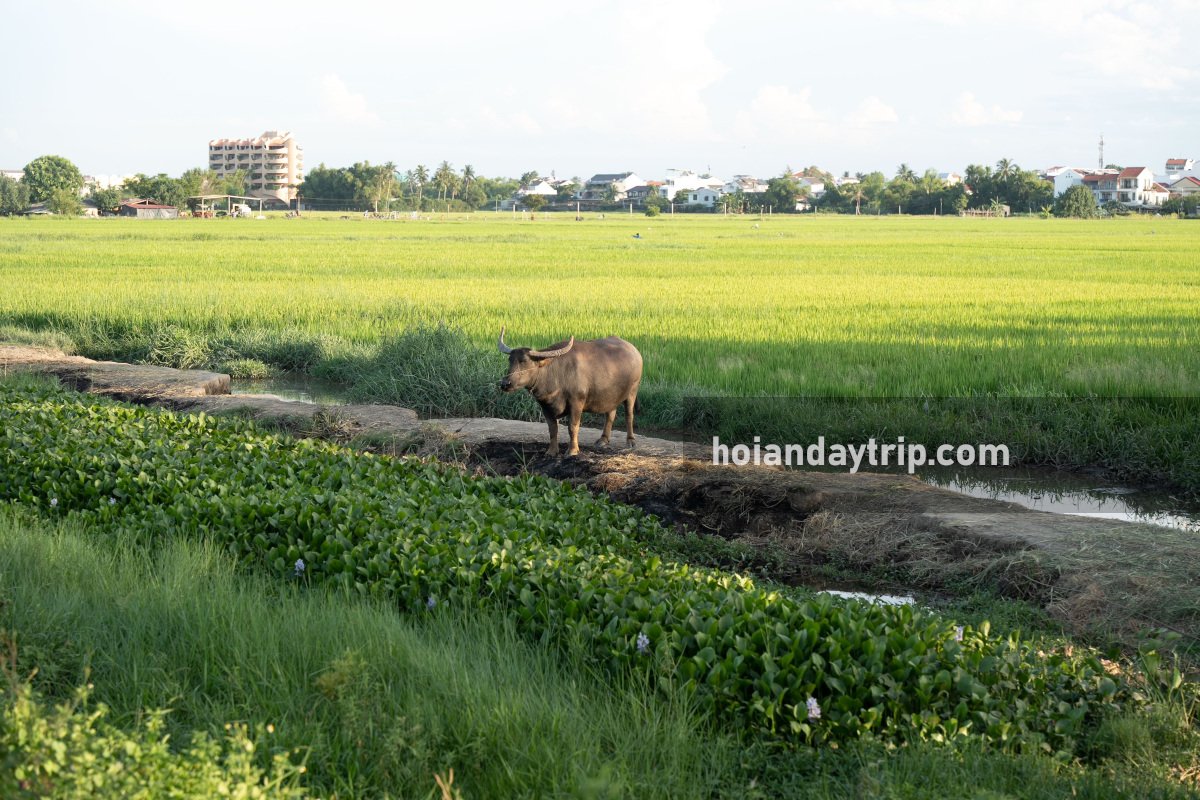
To see water buffalos in Hoi An, visitors need to go to rural areas, especially rice fields or swamps. On hot days or midday, they often soak in the mud or water, to feel cooler and protect the skin. It’s easy to see white storks around buffalos too, because these birds want to seek insects on their skin, or just want to stand on them. Most buffalos in Hoi An’s country are not wild, usually belonging to inhabitants in nearby villages. In the early morning (before the owner goes to work), they are taken to a swamp or muddy fields, and then have ‘free time’. All of them have a ring in the nose, and the farmer uses the rob to tie it, to pull and train his buffalo. To avoid . During the day, they can eat grass, drink water from rivers, and go swimming or soaking there. In the late afternoon, the owners return and take them home. At night, they sleep in the barn.
Here are places you may see water buffalos in Hoi An:
– Rice fields along Hai Ba Trung St, between the city centre and Tra Que Vegetable Village
– Swamps, rivers to the southwest of Tra Que Vegetable Village
– Swamps, rice fields along Vo Chi Cong street, between De Vong Bridge and Cua Dai crossroad
– Rice fields, swamps along Tong Van Suong St
– Grassy lands or beaches along Thu Bon River
Water Buffalo Ride: Rural Activity in Hoi An
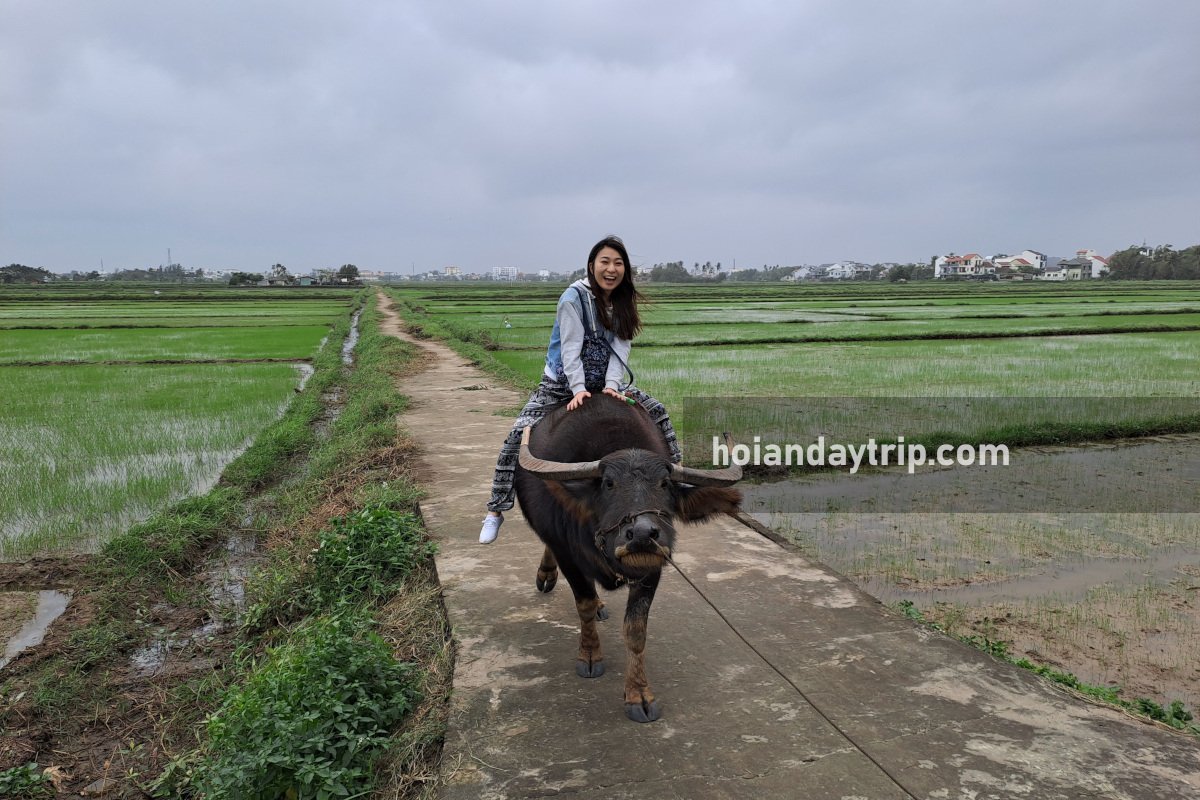
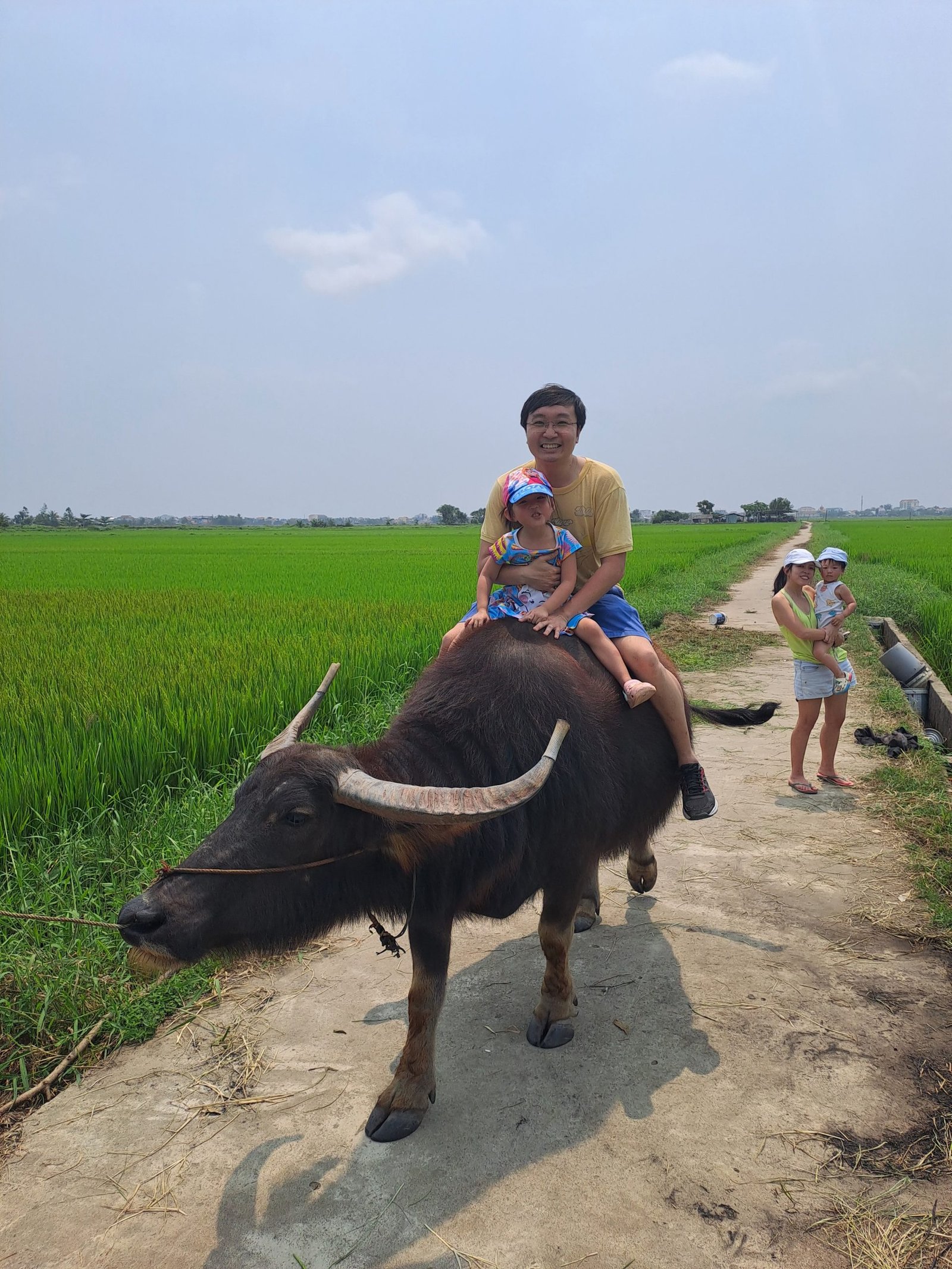
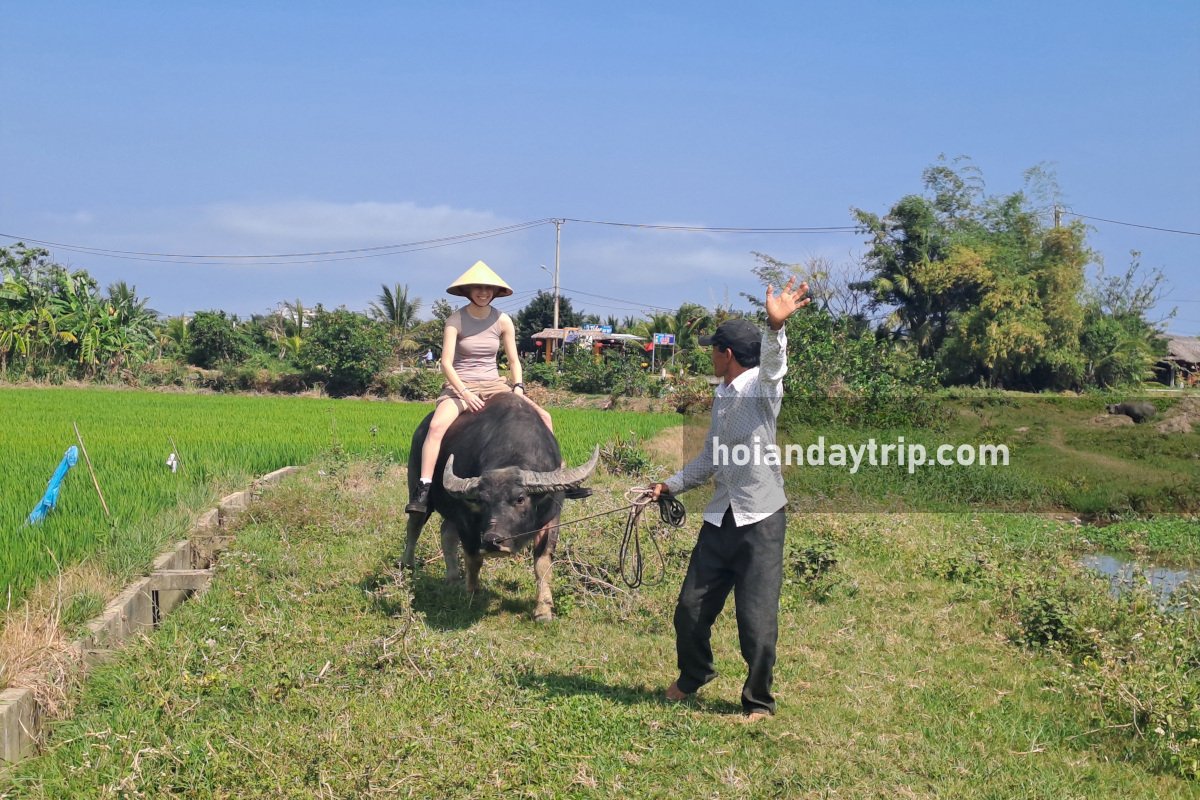
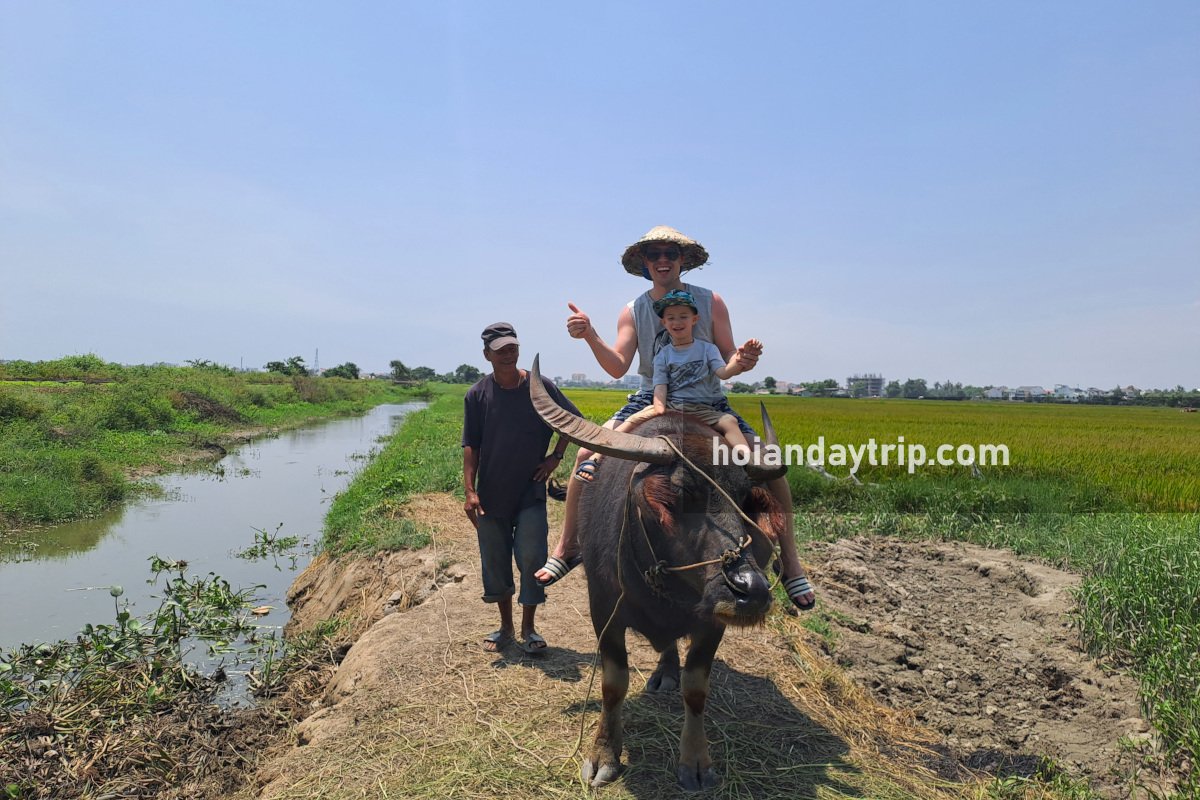
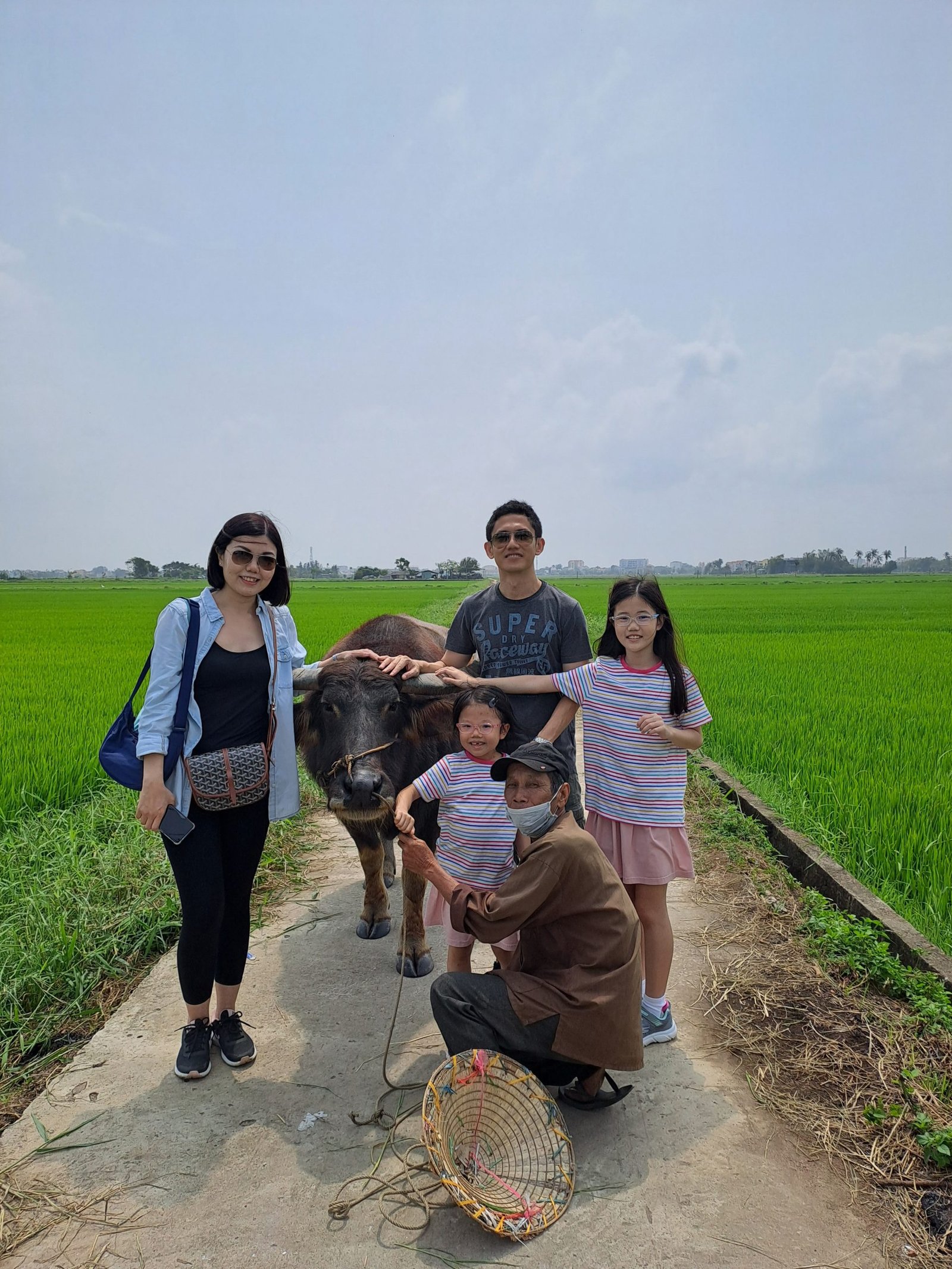
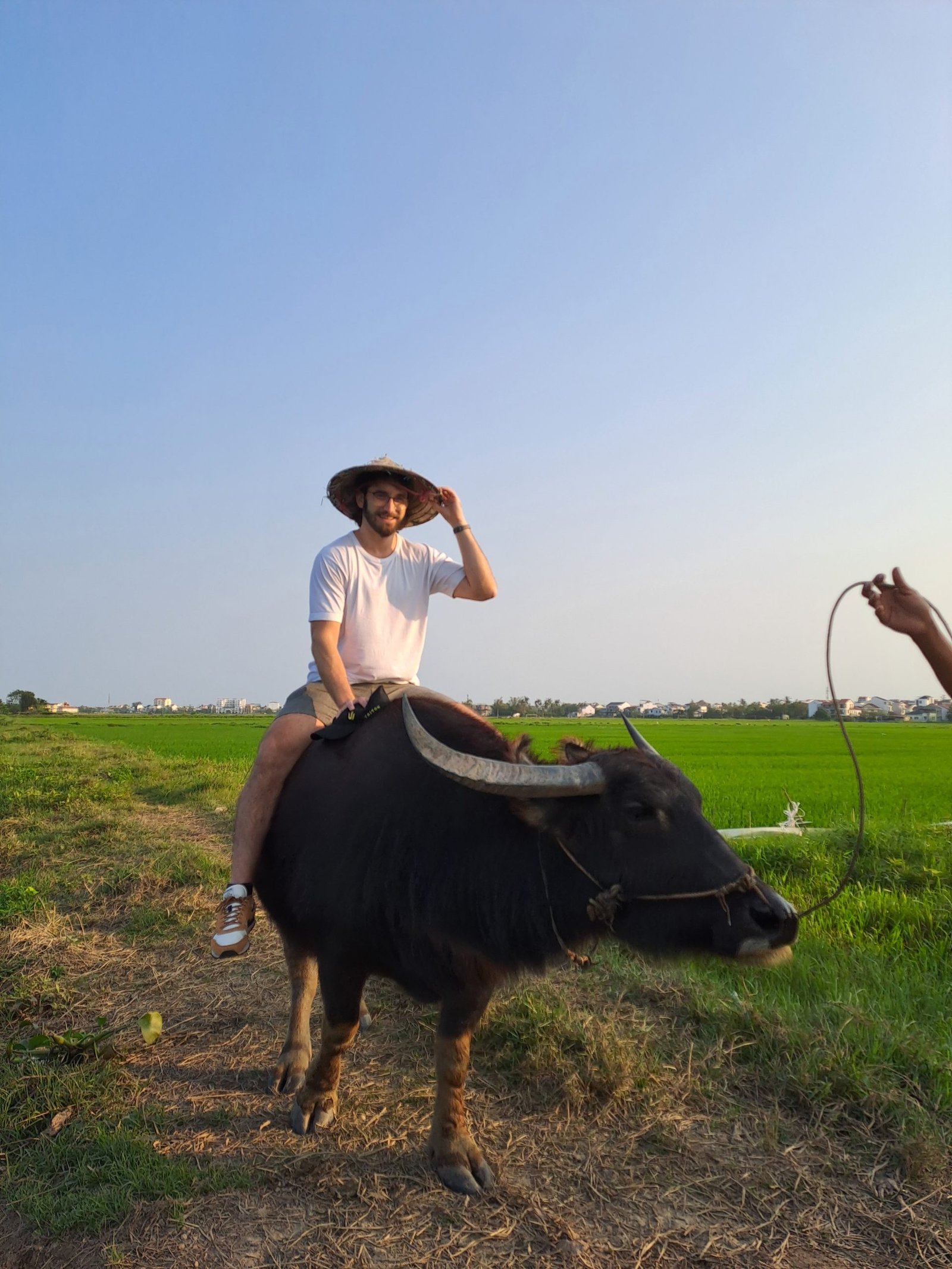
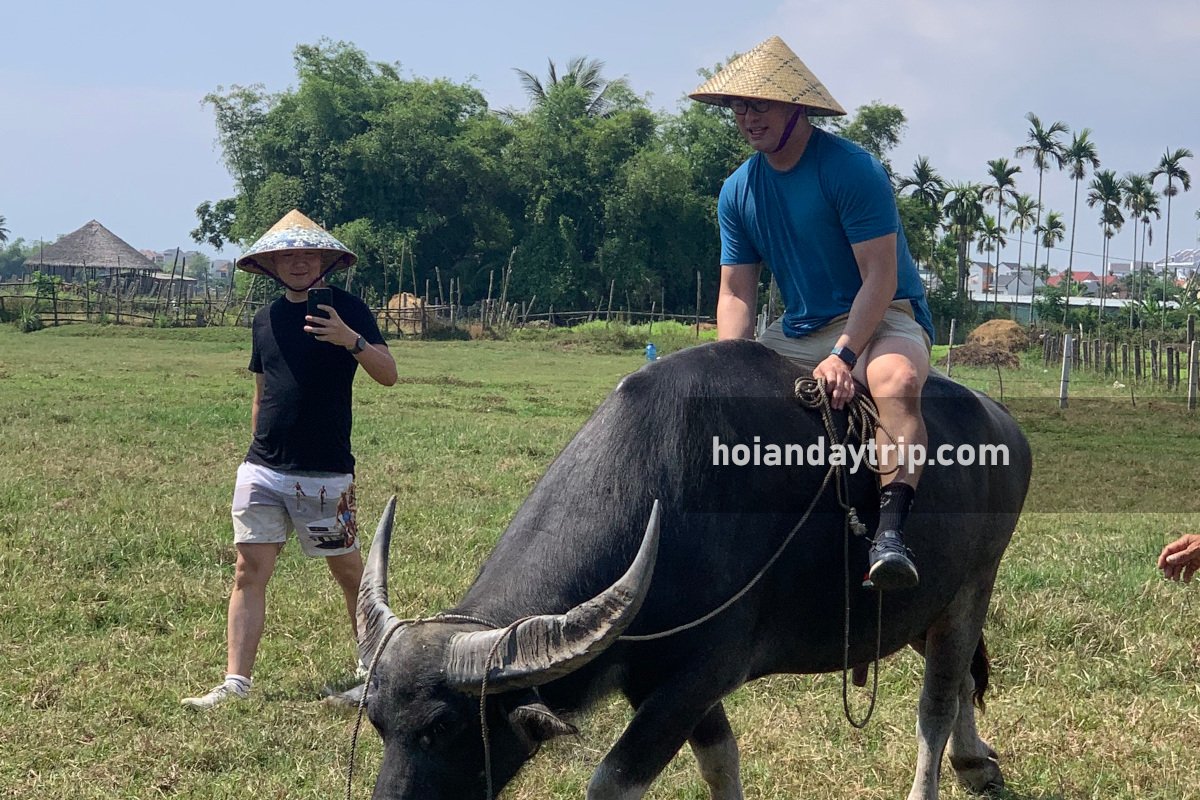
Riding the water buffalo is a popular and fun activity in rural areas of Hoi An. Visitors can not find it anywhere else in the region (unless directed by locals). It’s much easier if booking a guided tour, and then do it. If going to places where it’s possible to see water the buffalos (see the list above), don’t forget that it’s dangerous and too wrong to ride a buffalo, without its owner’s permission. Riders should give a small tip to the buffalo’s owner to buy food or medicine for his/her animal. The pictures may look more fantastic if riders wear a conical hat and have some fun posings. Adventure lovers can request having a ride across a swamp or rivers, instead of a short-distance walk. Some farmers have a cart, and they are happy to arrange a buffalo cart if somebody are interested.
If love animals, visitors can meet, photograph, and interact with the buffalo (such as feeding him/her, walking together). Sure, will say no to sit on its back and ride it.
Water buffalo riding is a popular topic in Vietnamese folk paintings, such as the ones in Dong Ho village, northern Vietnam.
When ride a water buffalo, visitors should do:
– keep sitting and touching hands slightly on buffalo’s back to ensure that it’s safe, stable, and the buffalo can walk easily
– listening to instructions from the owner because he knows its buffalo very well
– tell friends/family members to take many photos/videos
– kids must sit with parents
– visitors need an instruction from the buffalo’s owner to climb on its back. It’s more difficult for the buffalo to lie down, allow somebody to sit on, and then stand up.
When ride a water buffalo, visitors should NOT do:
– touching hands on buffalo’s eyes
– pulling buffalo’s tail
– holding buffalo’s horn
– do not ride the water buffalo if without its owner presence
– do not pat on buffalo’s butt
HoiAn Day Trip Company daily organizes tours to Hoi An’s countryside and rural areas. Contact us by +84968009827 (hotline/whatsapp/line/zalo) or browse www.hoiandaytrip.com to see tours and make a reservation. Thank you very much!
Reasons Why You Should & Should Not Have Buffalo Riding Experience
Here are reasons why visitors should have an experience of water buffalo riding:
– Water buffalo is typical to Vietnamese countryside and traditional agriculture;
– Great opportunity to take pictures or make videos; Don’t forget thinking some creative poses for your own photos;
Here are reasons why visitors should NOT have an experience of water buffalo riding:
– Water buffalo somehow doesn’t like somebody riding it or sitting on its back;
– Without the owner, the water buffalo is still dangerous to ride; It’s trained by locals since very young and only follows the request of its owner;
Hoi An Tours with Water Buffalo Ride Experience
Water buffalo ride is an included activity in some countryside tours in Hoi An. Those who don’t want to ride the buffalo and just want to see it, this local experience is .
Here are Hoi An countryside tours which visitors can participate:
– Hoi An countryside tour by bicycle/motorbike/electric bus
– Hoi An Coconut Village tour
– Golden Bridge & Hoi An Coconut Village tour
– My Son & Hoi An Coconut Village tour
– Marble Mountains & Hoi An Cococonut Village tour
– My Son & Hoi An countryside tour
HoiAn Day Trip Company daily organizes tours to Hoi An’s countryside and rural areas. Contact us by +84968009827 (hotline/whatsapp/line/zalo) or browse www.hoiandaytrip.com to see tours and make a reservation. Thank you very much!
Photos, Videos about Water Buffalo Ride in Hoi An
Here are beautiful photos and videos about water buffalo ride in Hoi An: