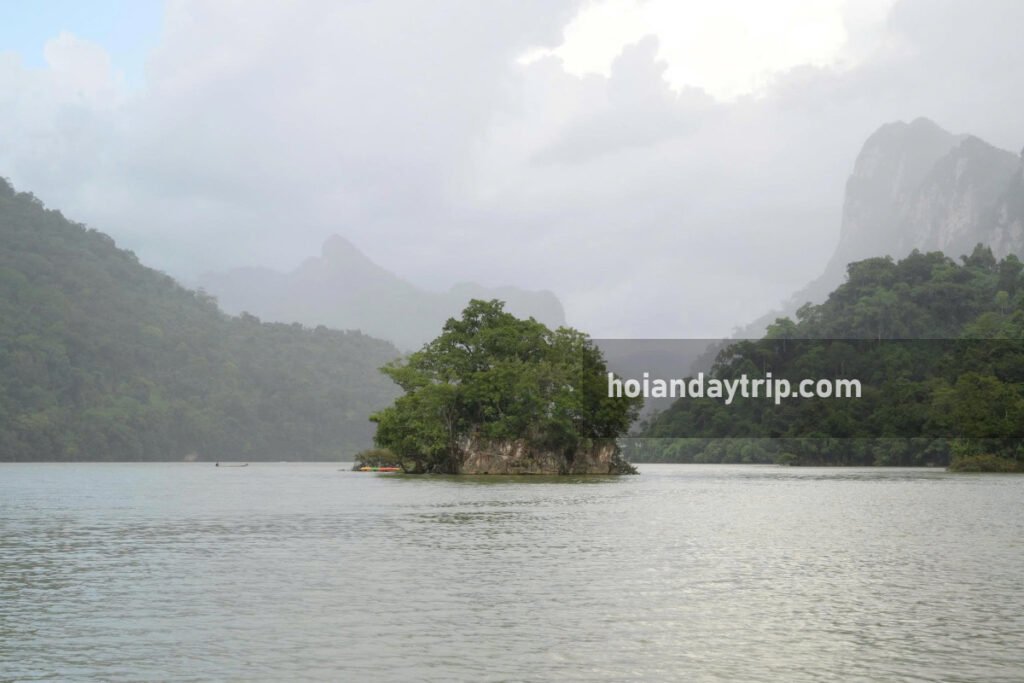
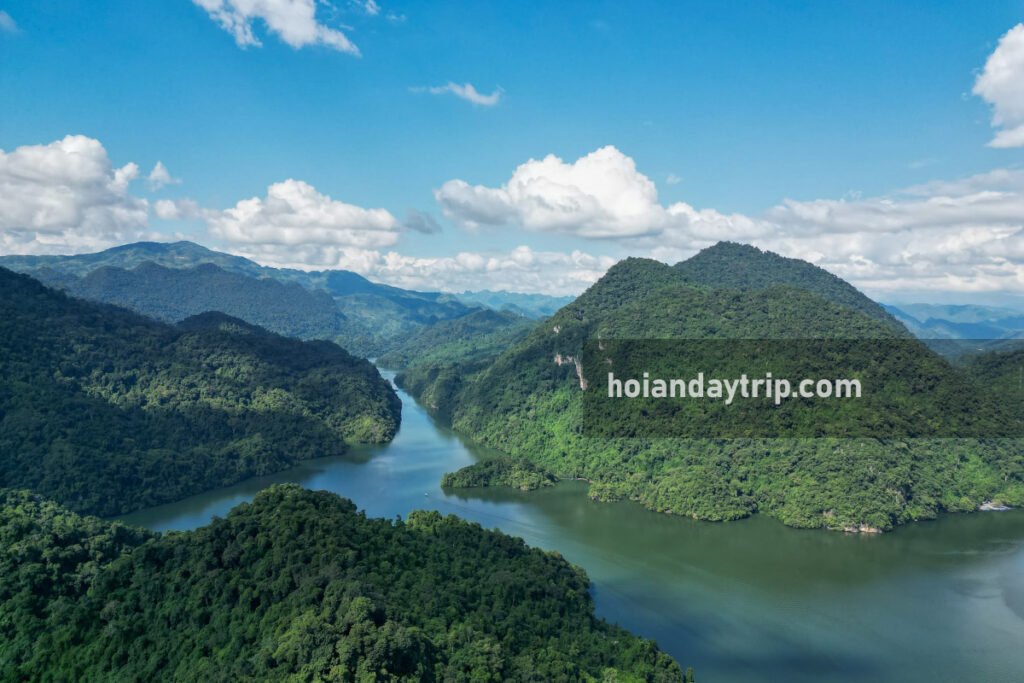
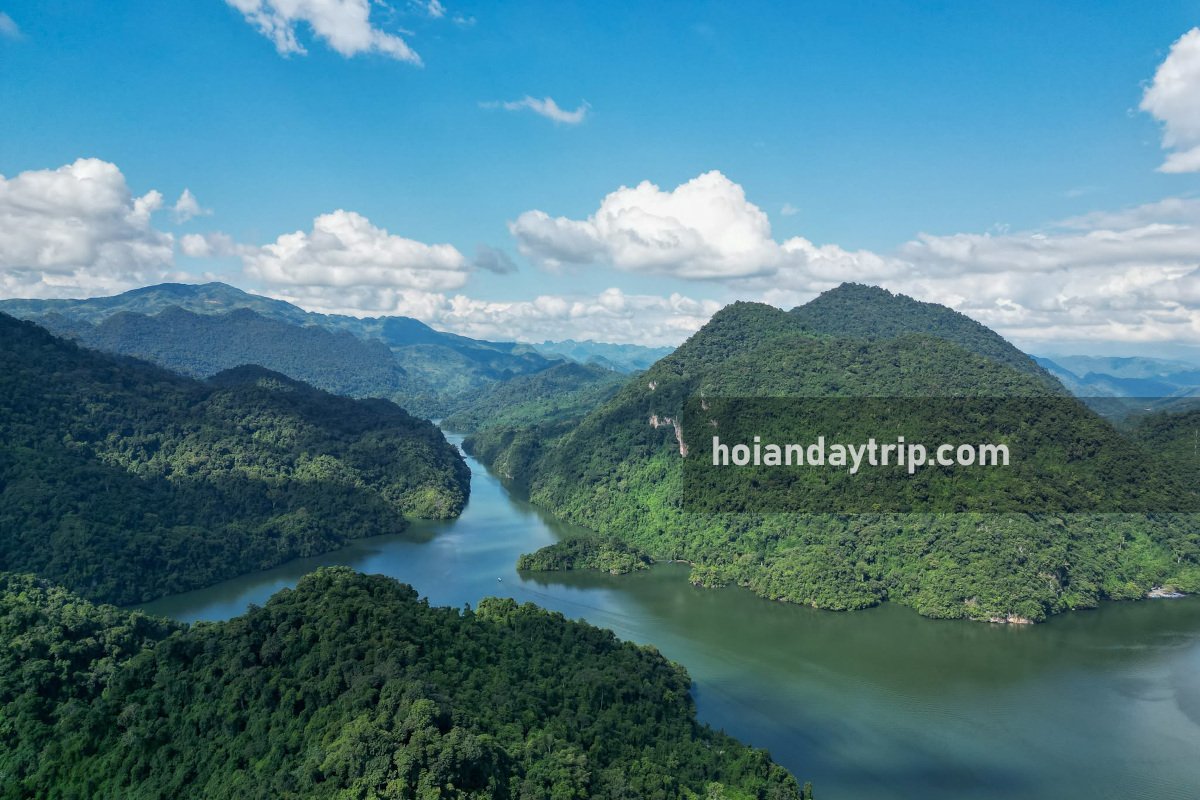
Ba Be Lake, the sparkling centerpiece of Ba Be National Park, is the largest natural freshwater lake in Vietnam, situated amidst northern limestone mountains. Formed over 200 million years ago, the lake consists of three connected bodies of water—Pe Lam, Pe Lu, and Pe Leng—spanning around eight kilometers in length. Framed by dense tropical rainforests and towering karsts, its calm, emerald-green waters create a peaceful haven for boating, kayaking, and taking in nature. The lake also sustains a vibrant ecosystem and supports traditional Tay ethnic villages scattered gently along its scenic shores.
You may also like: Best National Parks to Visit in Vietnam
• Content by Tam Le, founder of Hoiandaytrip.com
• Designed by Giang Cong Minh, co-founder of LS E&C LTD and his team
• Photo by Dang Cong Loi, Dao Xuan Son, Tam Le & others
Must Knows about Ba Be Lake Vietnam
– Location/address: Ba Be National Park, Ba Be commune, Thai Nguyen province, northern Vietnam (formerly Nam Mau commune, Ba Be district, Bac Kan province, Vietnam)
– Other name(s): Ba Be Lake National Park, Ba Be – Na Hang Natural Heritage Area
– Name meaning: Ba Be comes from the Tày ethnic language term Slam Pé, which translates literally to “three lakes” (Pe Lam, Pe Lu, Pe Leng)
– Opening hour(s): 24hrs a day, 7 days a week (boat tour on Ba Be Lake available from 7 am to 5 pm)
– Age: formed 200 million years ago (Ba Be National Park was established on November 10, 1992)
– Maximum length: 8 km (5.0 mi)
– Maximum width: 100–600 m (330–1,970 ft)
– Surface area: 6.5 km2
– Average depth: 15–17 m (49–56 ft)
– Maximum depth: 29 m (95 ft)
– Surface elevation: 145 m (476 ft)
– Ticket price: from 60,000 VND (to enter Ba Be National Park)
– How to get there: car/van/bus, motorbike (no flight)
– Travel blog: https://hoiandaytrip.com/ba-be-lake-vietnam
– Recognition: One of the World’s 20 Exceptional Freshwater Lakes — 1995, National Historical and Cultural Relic Site — 1996, ASEAN Heritage Park — 2004, Ramsar Site (Wetland of International Importance) — 2011, National Special Relic (Important National Landscape Site) — 2012
– Fact(s):
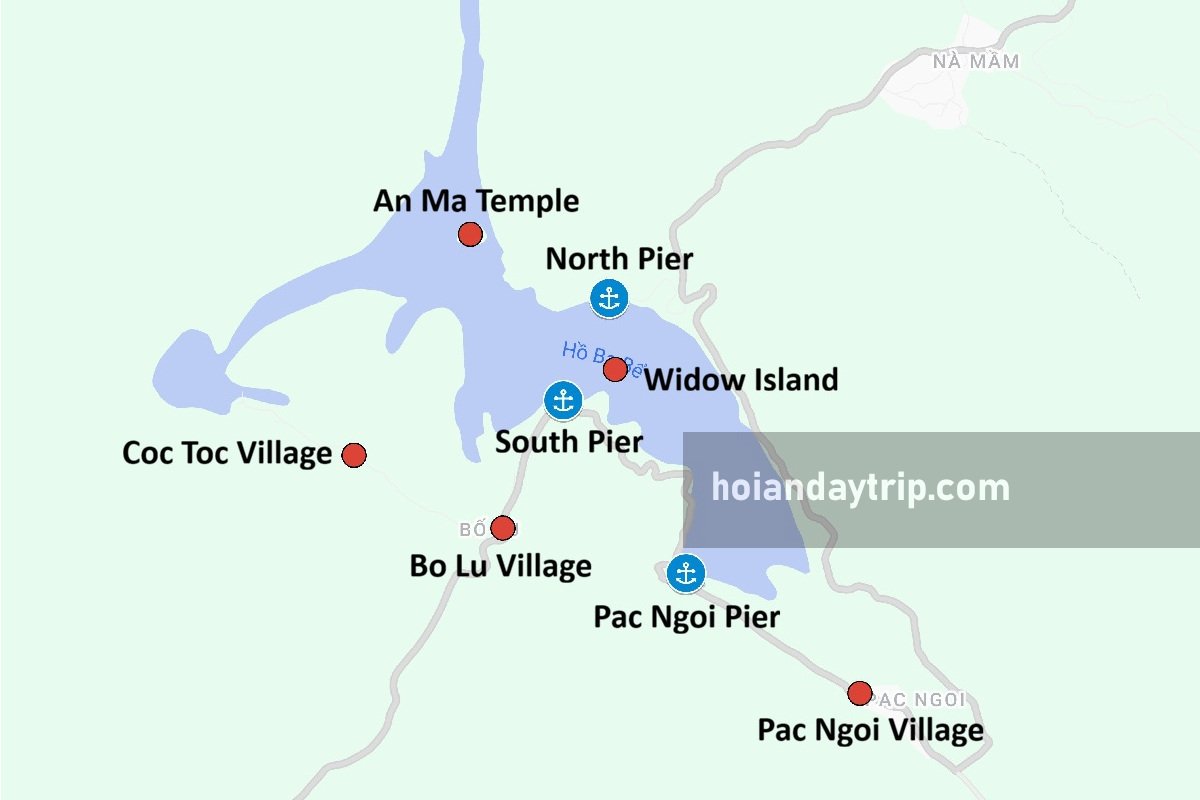
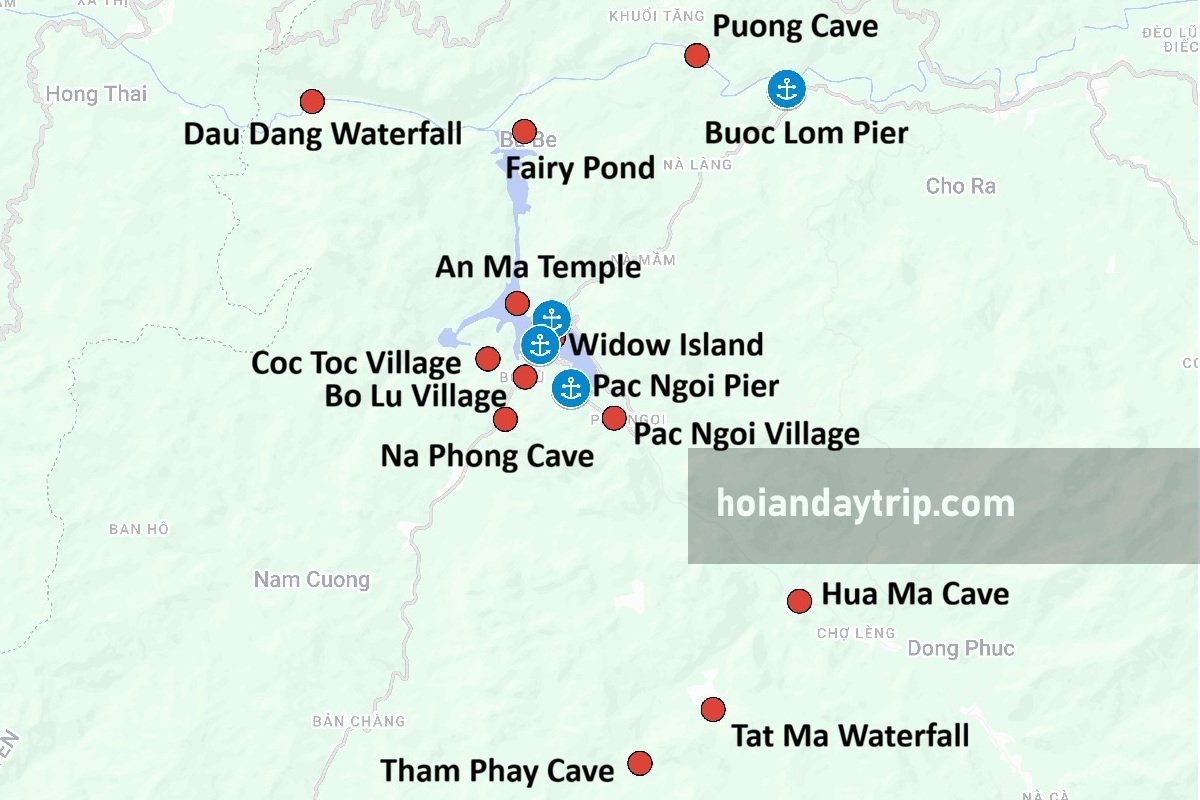
Ba Be Lake Vietnam on Map
Legend of Ba Be Lake Vietnam
According to legend, Ba Be Lake was created when a heavenly fairy tested the kindness of the local villagers. Disguising herself as an old, withered beggar covered in sores, she visited the Nam Mau festival to see if anyone would show compassion. However, everywhere she went, people turned her away with disgust. Only a poor, kind widow and her son took pity on her, inviting her into their humble home to eat and stay overnight.
That night, the beggar transformed into a giant dragon, casting a strange, radiant light throughout the hut. The next morning, before departing, the fairy revealed her true form and warned the widow of an impending cataclysmic flood. She gave them a packet of ash to scatter around their house for protection and two rice husks to help save others.
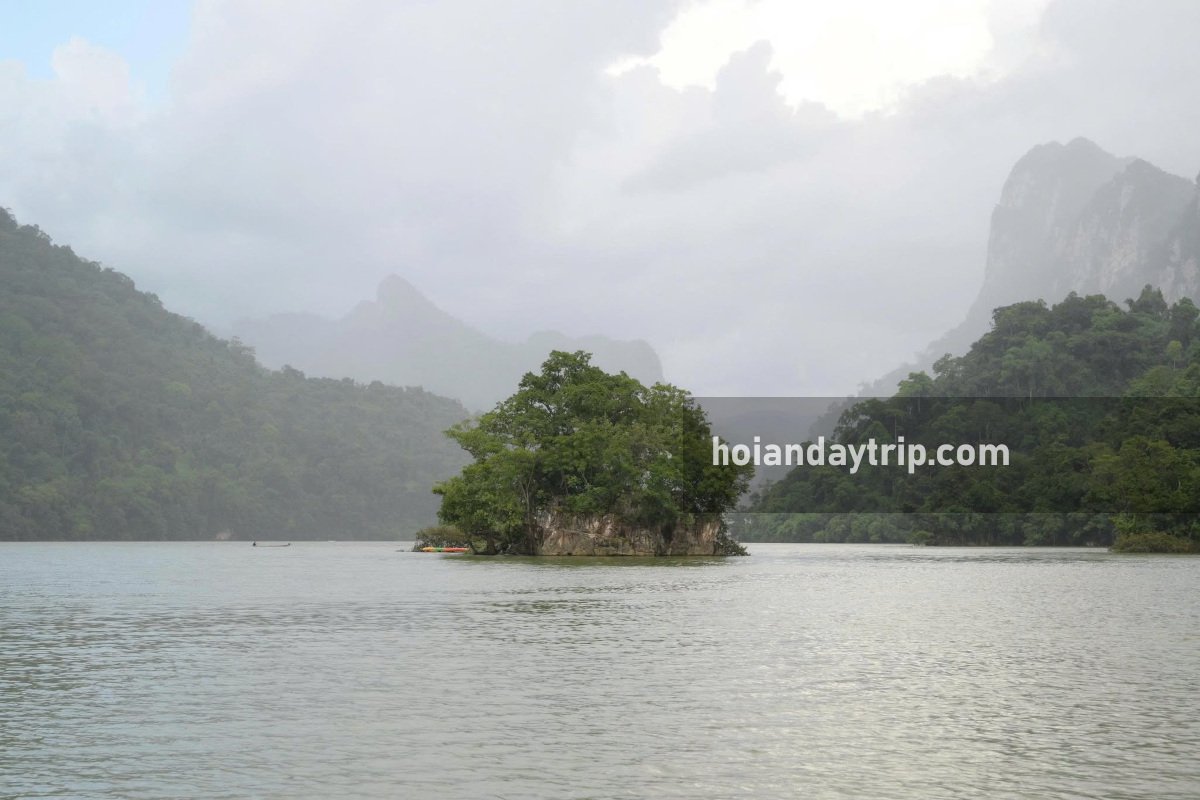
Soon after, a torrential storm struck, causing the ground to collapse and swallowing the entire village in rising waters. Miraculously, the widow’s home rose above the floodwaters, and the rice husks turned into two wooden boats, which the mother and son used to rescue drowning villagers. The submerged land became the vast Ba Be Lake, while the widow’s safe home was transformed into Widow Island (Đảo Bà Góa), which still stands peacefully in the center of the lake.
Best Time to Visit Ba Be Lake Vietnam
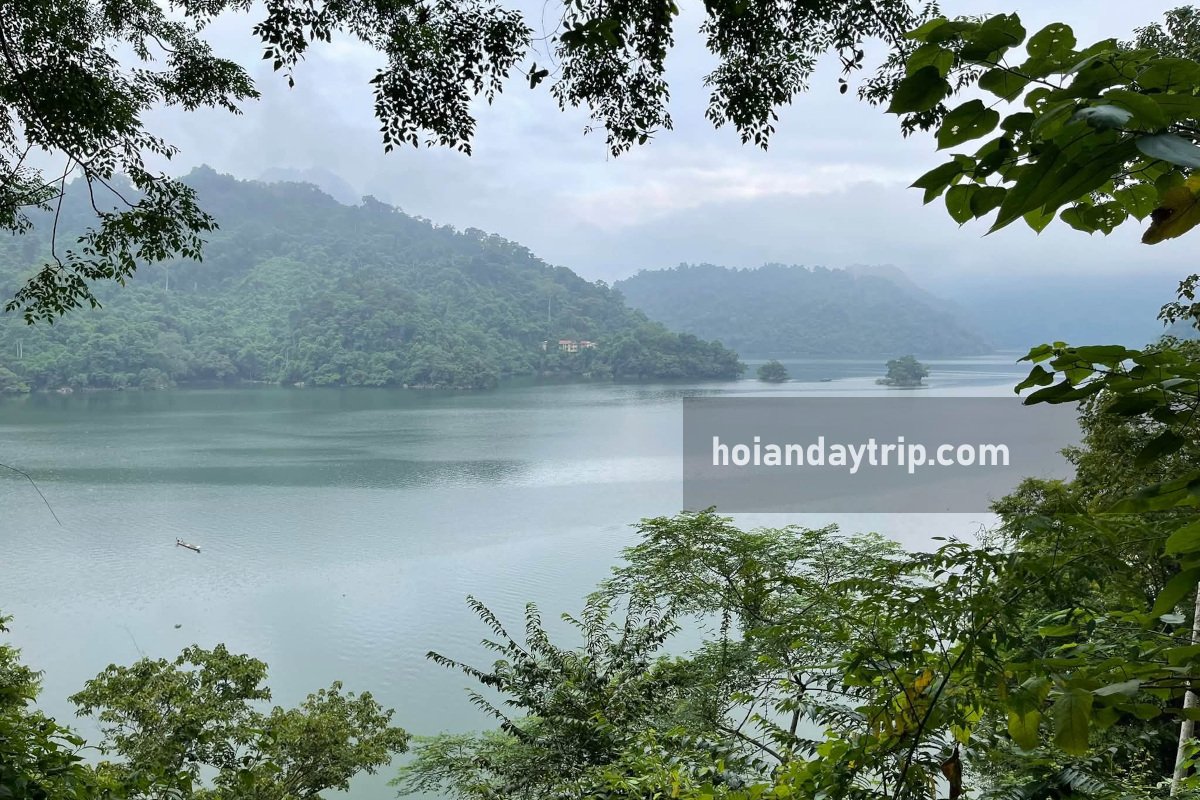
The best months to visit Ba Be Lake are from October to April, which spans the region’s dry season. During this period, the weather is comfortably cool, crisp, and mostly dry, providing ideal conditions for outdoor exploration, boat tours, and jungle trekking.
In particular, February to April is widely considered the peak window. Spring brings pleasant temperatures, clear skies, and vibrant natural scenery. Visiting around January or February also allows travelers to experience lively traditional cultural events like the Long Tong Festival held by local ethnic minority communities.
Conversely, the rainy season from May to September brings heavy downpours and higher humidity, which can make forest trails slippery and river travel more difficult.
Boat Tours on Ba Be Lake Vietnam
Boat Stations on Ba Be Lake Vietnam
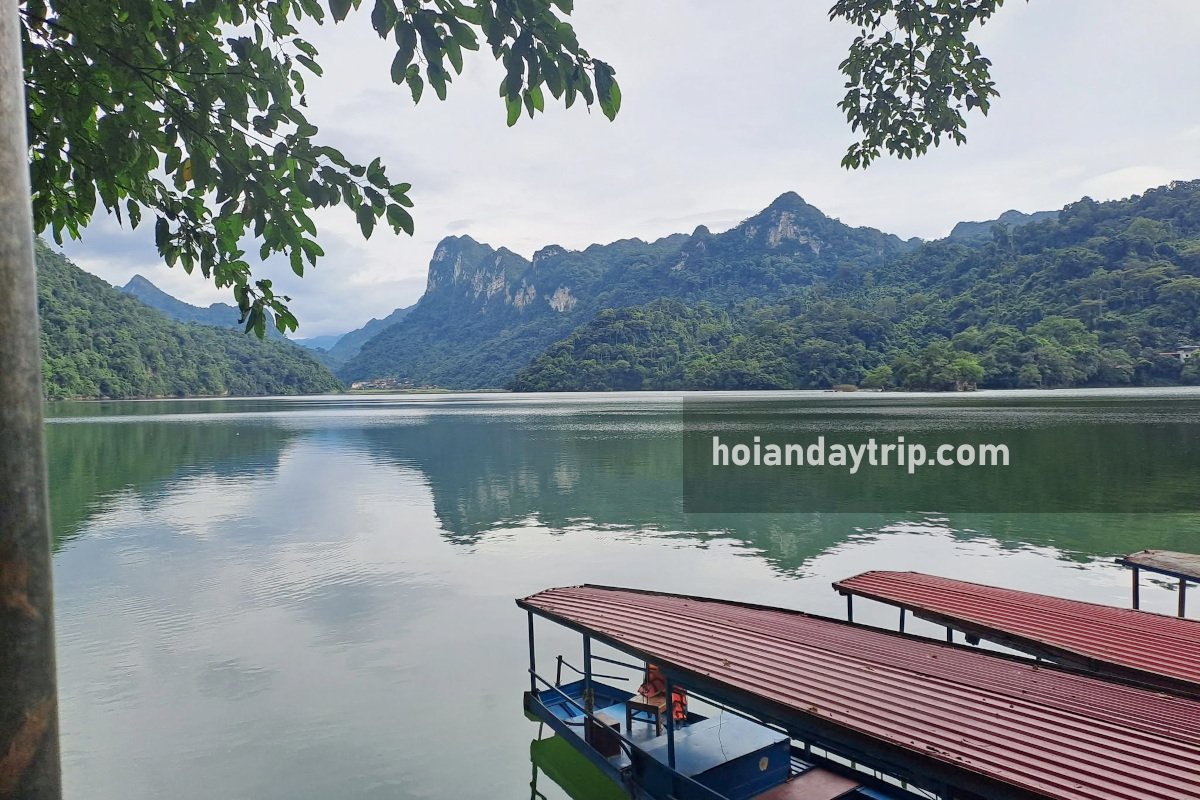
There are 3 boat stations on Ba Be Lake today:
– North pier (on the shore of Ba Be Lake, near DT254): 22°24’31.9″N 105°37’22.0″E on Google maps
– South pier (on the shore of Ba Be Lake, near Bo Lu and Coc Toc ethnic villages): 22°24’12.6″N 105°37’11.7″E on Google maps
– Pac Ngoi pier (on the shore of Ba Be Lake, near Pac Ngoi ethnic villages): 22°23’41.2″N 105°37’36.2″E on Google maps
To see Ba Be Lake, visitors also can take a boat tour from Buoc Lom station (22°27’14.5″N 105°40’29.0″E on Google maps). This station lies between Cho Ra town and the lake, near the ticket office of Ba Be National Park. If go from Cho Ra town, it’s on the right hand side.
What is the best station for Ba Be Lake boat tour?
👉 If you stay in Bo Lu and Coc Toc villages, the South pier is the best station.
👉 If you stay in Pac Ngoi village, the Pac Ngoi pier is the best station.
👉 If you stay in Cho Ra town or in villages between Cho Ra and Ba Be Lake, the North pier or Buoc Lom pier is the best station. If like to see Puong Cave, Buoc Lom pier is more convenient. If don’t see Puong Cave, the North pier is better.
👉 If you stay in Bac Kan city (or even Hanoi city) and have a day trip to Ba Be Lake, the Pac Ngoi pier is the best station because it’s nearest.
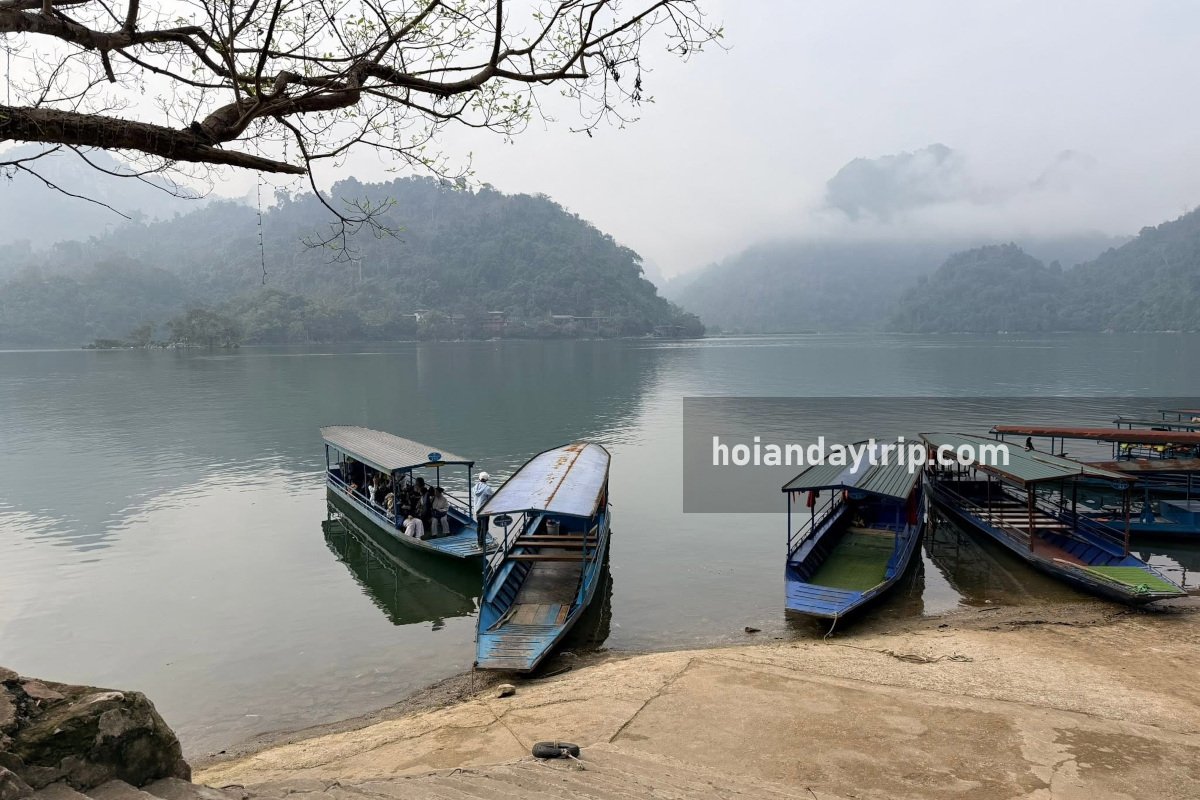
Boat Tours on Ba Be Lake Vietnam
*Below prices are fixed/public prices and will be surcharged 20% during the national holidays in Vietnam such as Independence Day.
The boat tours from all stations on Ba Be Lake:
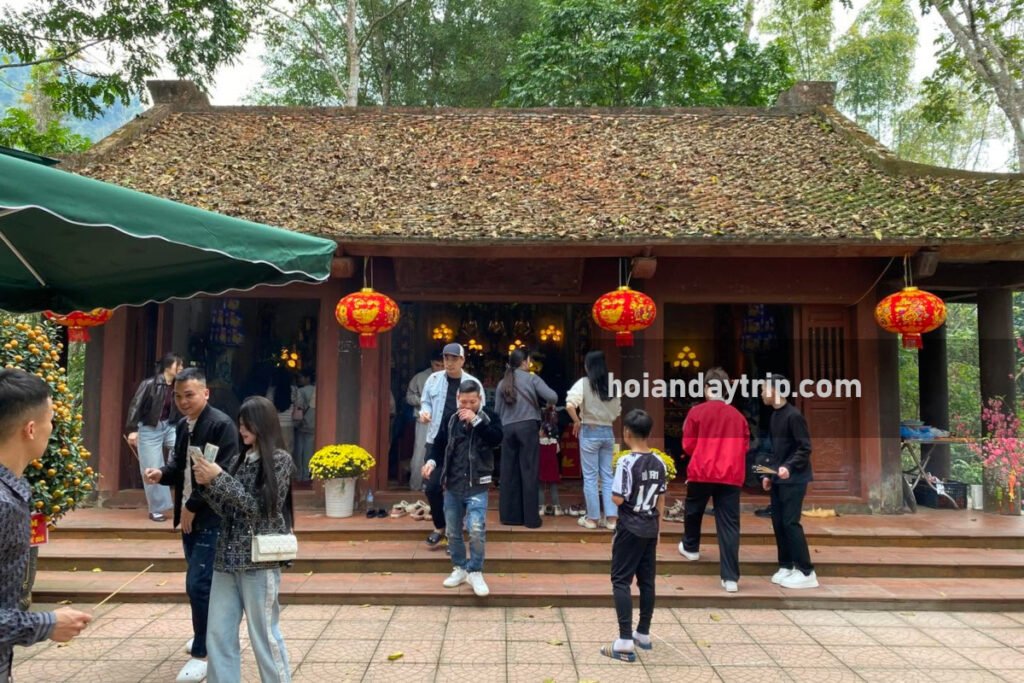
Tour 1: Pier → An Ma Temple → Ba Goa Island (Widow Island) → Pier
Duration: 1.5 – 2 hours
Price: 600,000 VND
Tour 2: Pier → Dau Dang Waterfall → An Ma Temple → Ba Goa Island (Widow Island) → Pier
Duration: 2.5 – 3 hours
Price: 800,000 VND
Tour 3: Pier → Puong Cave → An Ma Temple → Ba Goa Island (Widow Island) → Pier
Duration: 3.5 – 4 hours
Price: 1,000,000 VND
Tour 4: Pier → Puong Cave → Dau Dang Waterfall → An Ma Temple → Ba Goa Island (Widow Island) → Pier
Duration: 4.5 – 5 hours
Price: 1,200,000 VND
The boat tours from Buoc Lom Pier
Tour BL1: Buoc Lom Pier → Puong Cave → Dau Dang Waterfall → An Ma Temple → Ba Goa Island (Widow Island) → Buoc Lom Pier
Duration: 4.5 – 5 hours
Price: 1,200,000 VND
Tour BL2: Buoc Lom Pier → Puong Cave → An Ma Temple → Ba Goa Island (Widow Island) → Buoc Lom Pier
Duration: 3.5 – 4 hours
Price: 1,000,000 VND
Here are important information about boat tours on Ba Be Lake to know:
1. Ticket offices at the piers open from 7 am to 5 pm. However, we recommend coming by 2:30 pm to have the fullest journey. Since a standard boat tour takes about 2 to 4 hours, starting past 2:30 PM means you will still be out on the water when the sun goes down (around 5:00 PM – 5:30 PM). As a mountainous lake surrounded by dense rainforest and limestone cliffs, it gets dark very quickly, temperatures drop sharply, and heavy mist can roll in, making it cold, windy, and limiting your visibility.
2. Boat tour price doesn’t include entry fee to Ba Be National Park. It will be 70.000 VND per adult.
3. If you’re solo traveler or couple and want to share with others, come to the piers in the morning between 8 am and 10 am. 12 people (passengers) is maximum on each boat per tour.
4. There is no taxi or grab in Ba Be National Park. So, we recommend booking a place to stay near the pier (meaning you can walk or take a short motorbike ride from there).
5. Visitors can find local restaurant(s) at the piers to eat, especially around the South pier.
6. Tour guide is not included yet.
7. Tipping to boat rider is not compulsary.
Eating in Ba Be Lake Vietnam
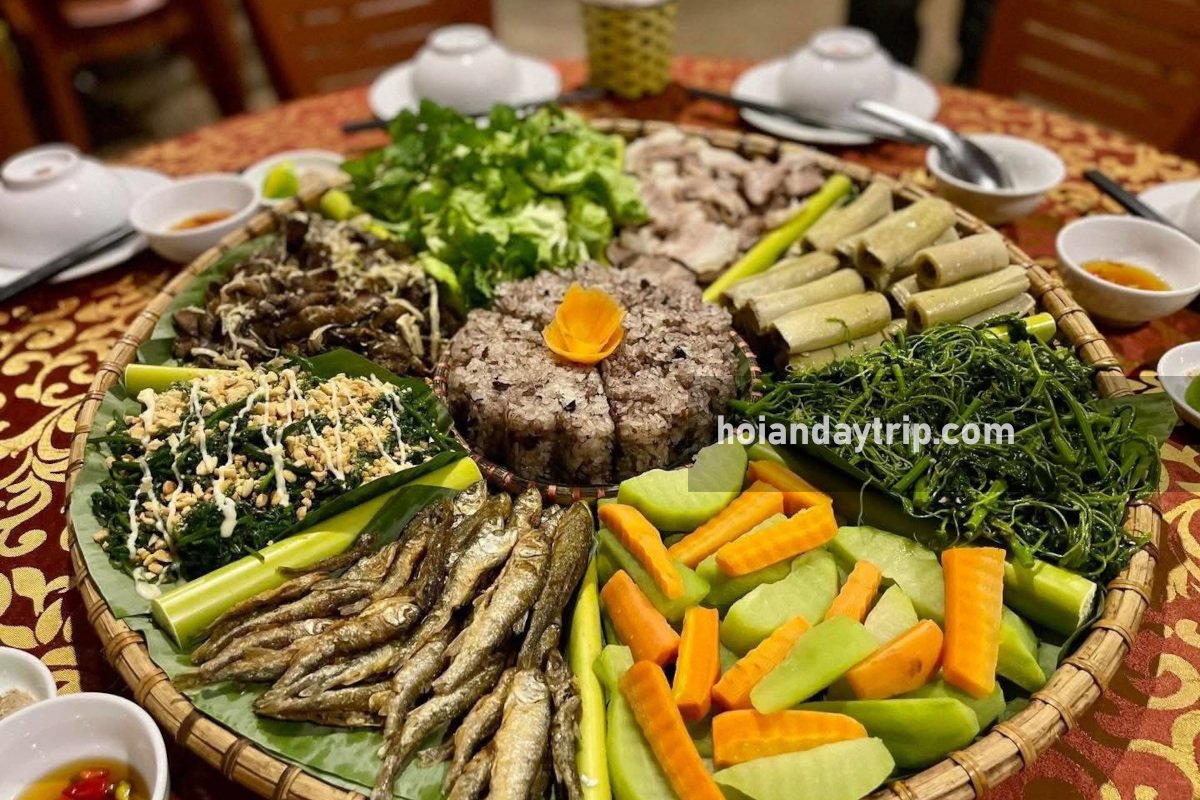
Here are the top local food specialties to try when visiting Ba Be Lake:
Grilled Lake Fish (Ca Nuong): Small freshwater fish caught directly from Ba Be Lake, cleaned, skewered on bamboo sticks, and grilled over charcoal. They are eaten whole, offering a crispy texture with sweet, tender meat.
Bamboo-Cooked Sticky Rice (Com Lam): Glutinous rice mixed with coconut milk or water, stuffed into bamboo tubes, and slow-roasted over embers. It yields a fragrant, slightly sweet sticky rice with a delicate woodsy aroma.
Smoked Pork (Thit Lon Gac Bep): Pork from local free-range pigs seasoned with mountain spices and hung above the traditional wood-burning stilt-house stoves for weeks. The smoking process infuses it with a deep, savory, and rich flavor.
Sour Pork (Thit Lon Chua): A traditional Tay dish where pork is fermented with cooked rice, salt, and forest leaves inside a tightly sealed container, resulting in a tangy, appetizing taste.
Peng Poc Cake (Banh Peng Phoc): A traditional Tay pastry made from glutinous rice flour and taro, fried or steamed, often enjoyed during local festivals and family gatherings.
Wild Forest Vegetables (Rau Rung): Seasonal wild greens harvested from the surrounding jungles—such as rau bò khai and rau ngót rừng—typically stir-fried with garlic or boiled into refreshing soups.
Corn Wine (Ruou Ngo): A potent local spirit fermented from homegrown corn using traditional yeast made from forest herbs, frequently served during home-cooked meals at village homestays.
The best place to eat in Ba Ba Lake is at your homestay if you plan to stay in Pac Ngoi village or Bo Lu village or Coc Toc village.
After spending a half day boat tour on the lake, you can go back to homestay for lunch (like a home-cooked meal).
At night, food option is limited, so eating at homestay is still good idea (even together with the host family).
Tour companies can help to arrange a good lunch with local dishes if you book a trip with one of them.
Is Ba Be Lake Vietnam Worth Visiting?
Here are 5 top reasons why Ba Be Lake in Vietnam worth visiting:
1. Breathtaking Natural Scenery and Tranquility
Ba Be Lake is Vietnam’s largest natural freshwater lake, nestled deeply within the rugged limestone landscapes of Bac Kan Province. The expanse of water consists of three interconnected lakes spanning over eight kilometers, enveloped by dense primeval rainforests and towering mountain peaks. Unlike more commercialized water bodies, Ba Be retains a remarkably peaceful, undisturbed atmosphere. The mirror-like surface of its emerald-green waters continuously reflects the dramatic karsts and drifting mist, creating a serene, postcard-worthy setting. Whether you are gliding across the calm waters on a traditional wooden boat or simply watching the sunrise over the water, the sheer natural beauty and silence offer a refreshing escape from the hustle and bustle of city life.
2. Fascinating Geological Wonders and Diverse Ecosystems
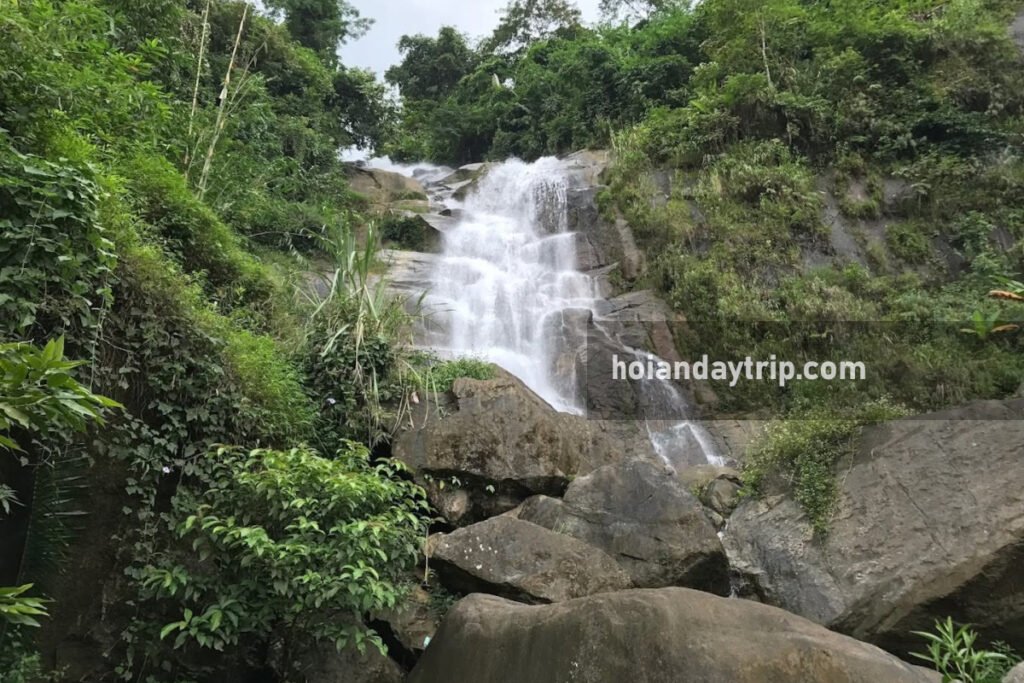
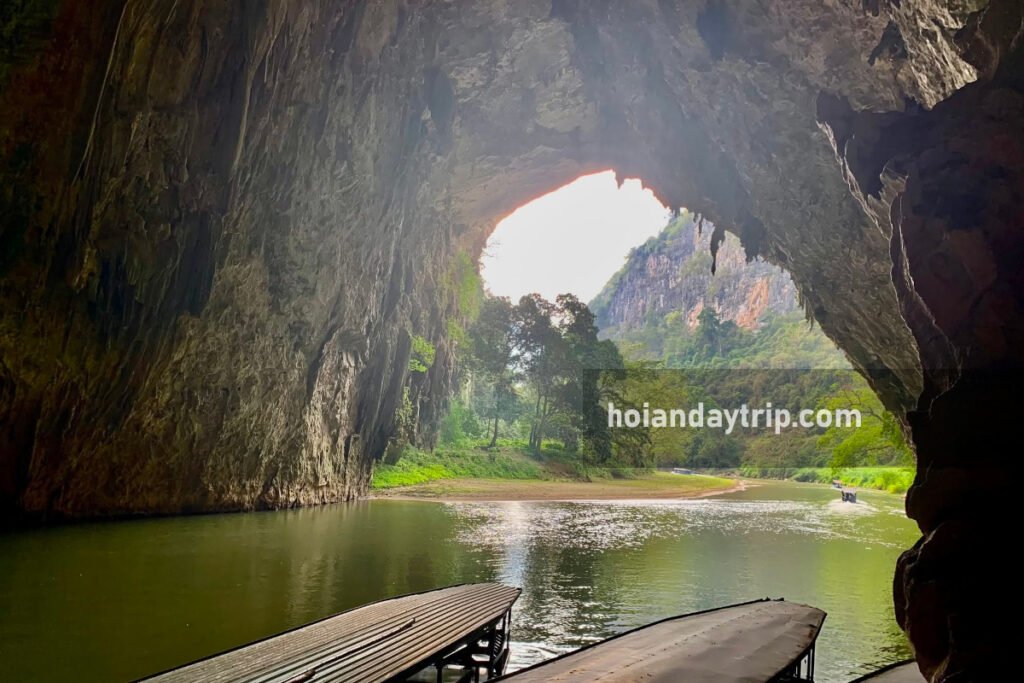
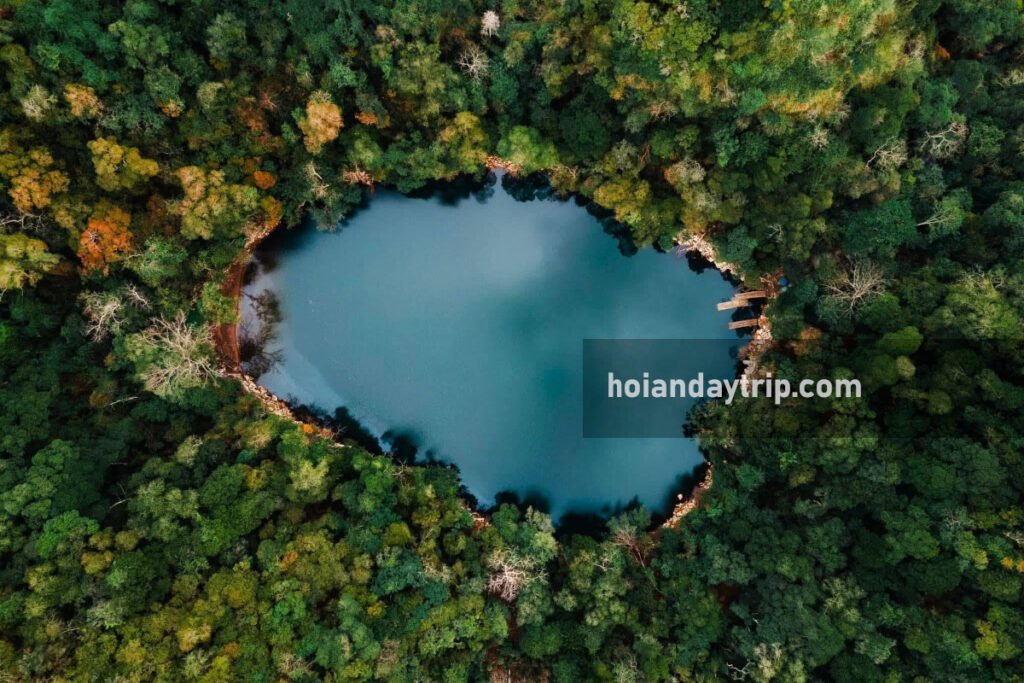
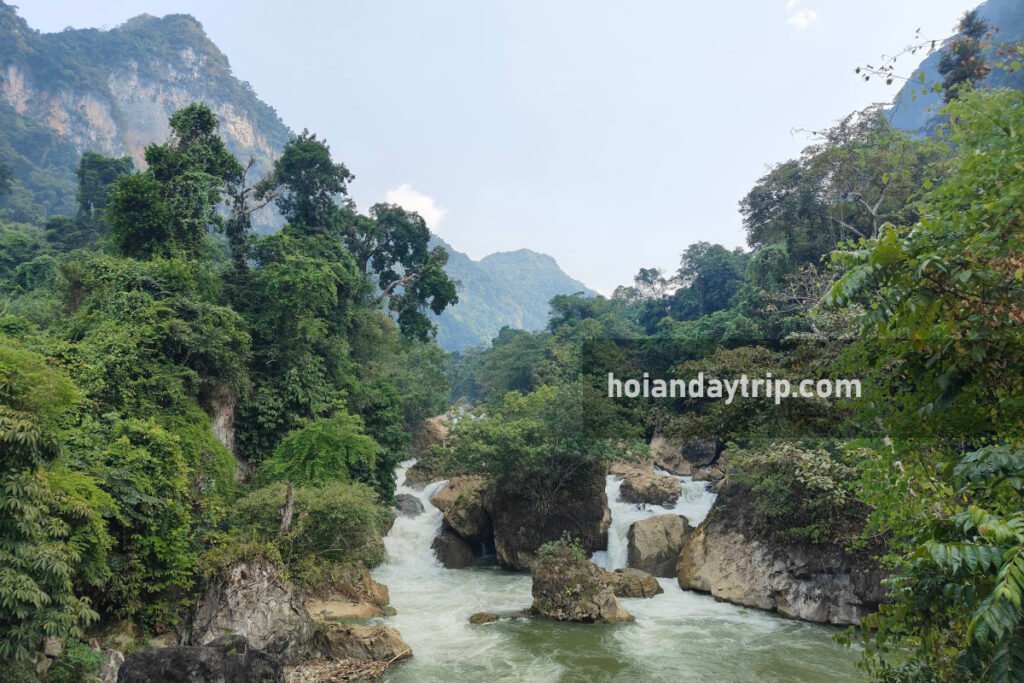
As part of Ba Be National Park, the area boasts a wealth of spectacular karst geology and thriving natural habitats. A voyage around the lake leads you to impressive subterranean wonders like Puong Cave, a massive cavern carved out by the Nang River that houses thousands of bats. Nearby, the multi-tiered Dau Dang Waterfall cascades over giant limestone boulders, while Ao Tien (Fairy Pond) sits secluded high on a hill fed by underground mountain springs. The national park also shelters hundreds of species of flora and fauna, including rare birds, primates, and giant native lake fish, making it a dream destination for nature lovers, wildlife enthusiasts, and photographers alike.
3. Authentic Ethnic Minority Culture and Stilt-House Homestays
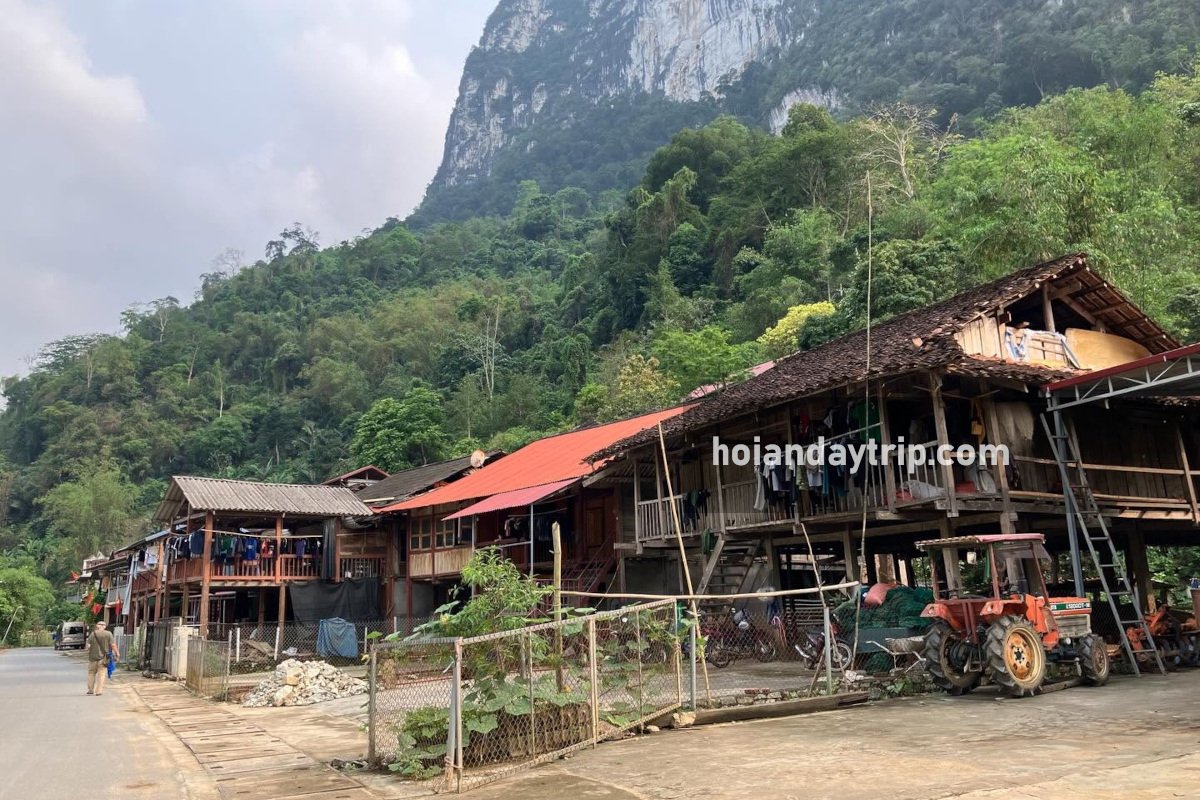
The shores around the lake are home to several peaceful Tay ethnic villages, such as Pac Ngoi, Bo Lu, and Coc Toc. Rather than staying in large commercial hotels, visitors can immerse themselves in the local way of life by staying in traditional wooden stilt houses built along the hillsides. These homestays offer an intimate glimpse into the everyday routines, farming, and fishing practices of the Tay people. Guests can witness traditional handicrafts like indigo handweaving, listen to soulful Then folk singing accompanied by the Dan Tinh lute, and experience the heartfelt, generous hospitality that defines the mountain communities of northern Vietnam.
4. Abundant Outdoor Activities and Adventures
For travelers who love active exploration, Ba Be Lake serves as an exceptional playground. The calm, sheltered waters are ideal for kayaking and stand-up paddleboarding, allowing you to explore hidden coves, islets, and limestone overhangs at your own gentle pace. On land, the extensive network of trails throughout the national park provides excellent trekking opportunities ranging from easy walks through village rice paddies to challenging hikes up steep karst mountains. Visitors can also rent motorbikes or bicycles to explore nearby caves, winding country roads, and remote hill-tribe settlements scattered across the surrounding valleys.
5. Unique Regional Specialties and Culinary Delights A trip to Ba Be Lake is also a journey through distinct northern mountain flavors. Local cuisine relies heavily on fresh, organic ingredients harvested directly from the lake, surrounding forests, and valley farms. One of the highlights is cá nướng, small lake fish grilled over glowing coals until crispy and fragrant. You can also sample bamboo-cooked sticky rice (cơm lam), tender smoked pork, wild forest vegetables sautéed with garlic, and traditional cakes dyed with natural plant leaves. Paired with local corn wine, enjoying a home-cooked feast with a host family on an open wooden terrace overlooking the lake is an unforgettable culinary experience.
Where to Stay in Ba Be Lake Vietnam?
Visitors often choose to spend at least 1 night in/near Ba Be National Park and on the next day, take the boat tour to discover Ba Be Lake.
Here are the most popular places/areas to stay overnight:
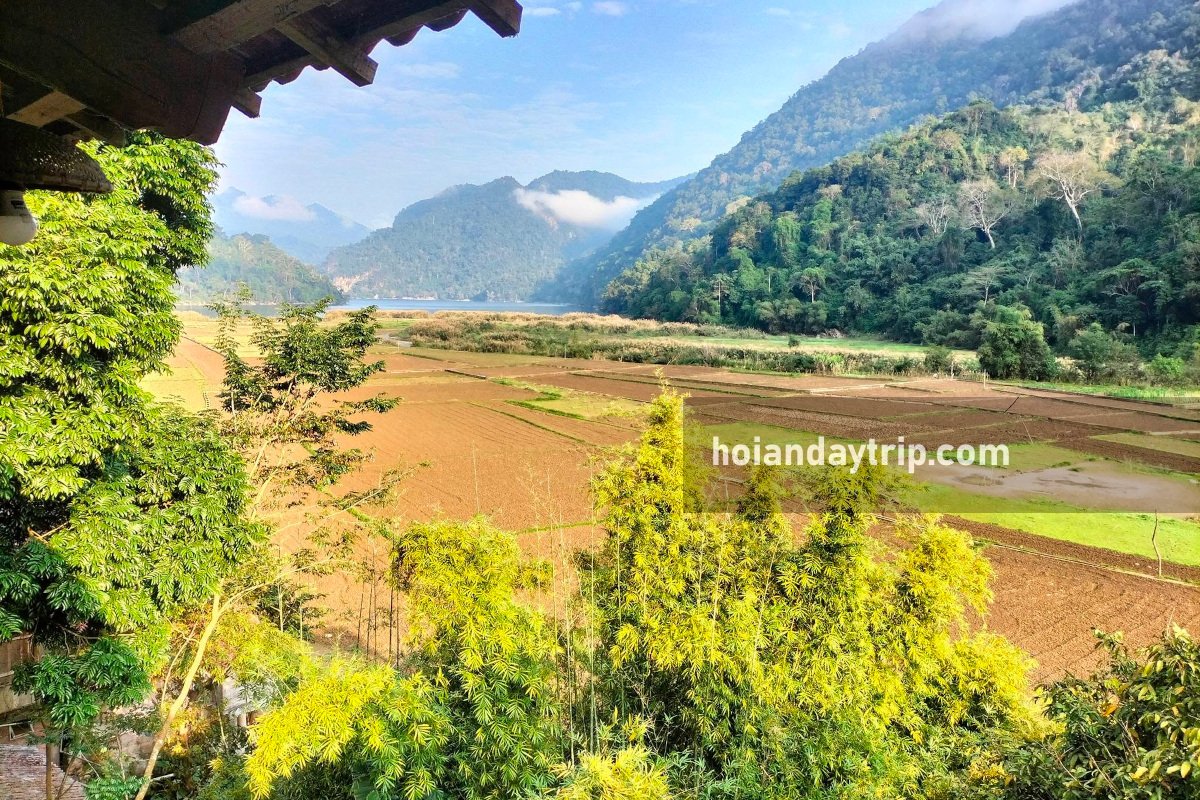
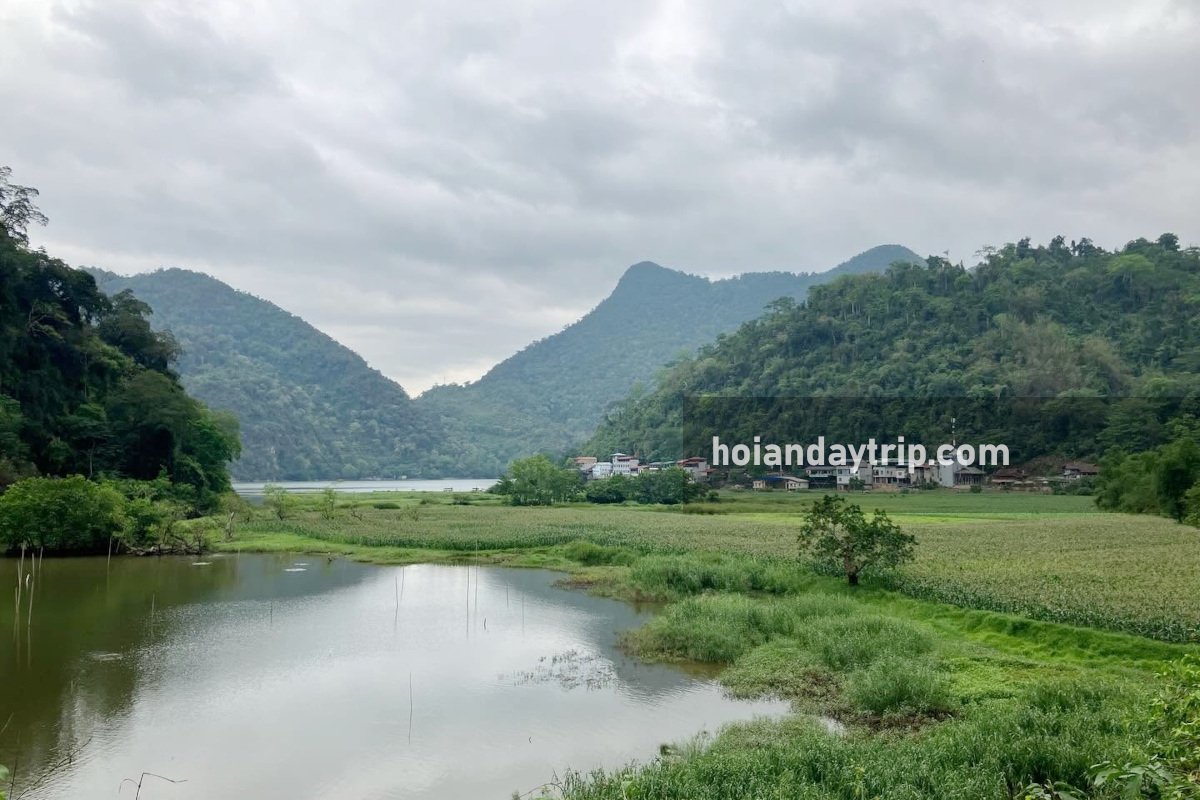
– Pac Ngoi Village: a Tay ethnic village has homestays at the foot of limestone cliffs (1 km away from Pac Ngoi pier on Ba Be Lake).
– Bo Lu Village: a Tay ethnic village has homestays at the foot of limestone cliffs (500 meters away from the South pier on Ba Be Lake).
– Coc Toc Village: a Tay ethnic village has homestays inside one peaceful limestone valley (1-1.5 km away from the South pier on Ba Be Lake).
– Hotels and resorts near the east entrance of Ba Be National Park (2.5-4 km away from the North station on Ba Be Lake)
How to Get to Ba Be Lake Vietnam
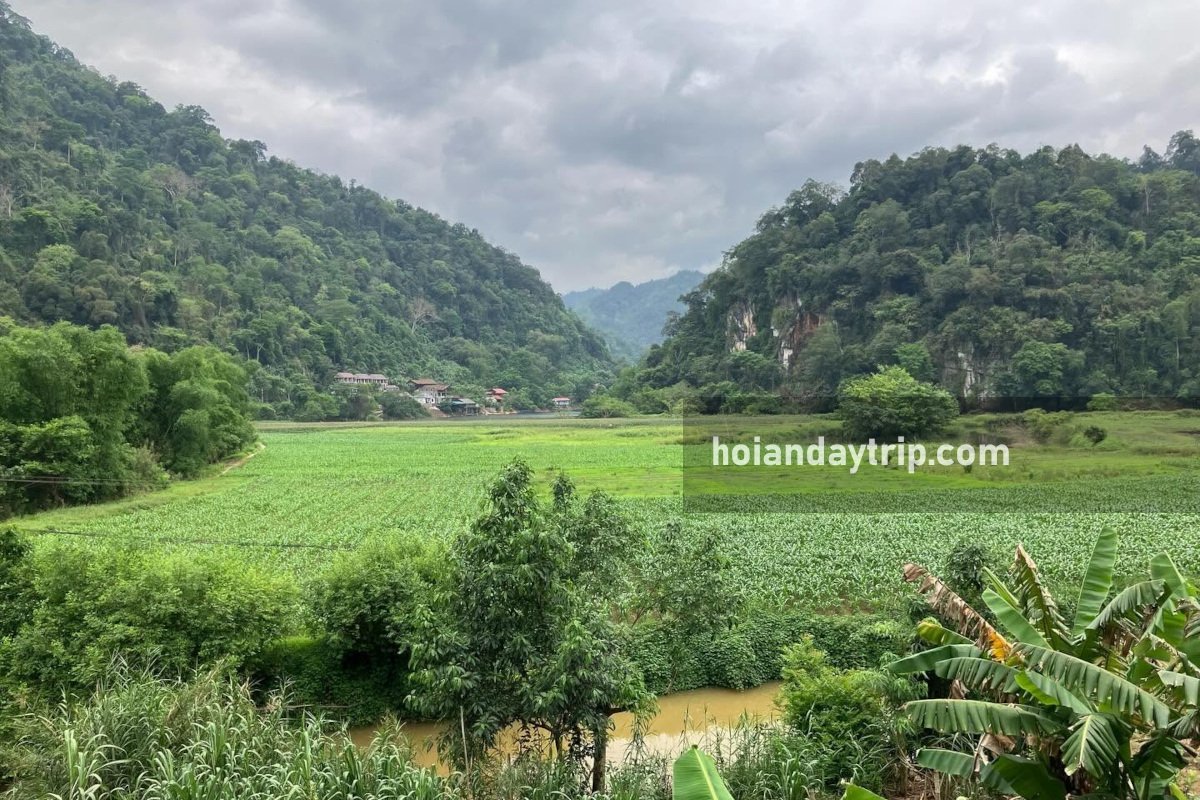
Ba Be Lake is in the heart of Ba Be National Park, Thai Nguyen province in nothern region of Vietnam.
– From Pac Ngoi, Bo Lu and Coc Toc villages: These villages are on Ba Be Lake shore, and visitors just need to have a short walk to see a station for the boat tour. If possible, stay at a homestay/hotel inside one of these villages is highly recommended.
– From Cho Ra town: Ba Be Lake is around 15 km from this town (capital of former Ba Be district). However, the nearest pier is Buoc Lom station, where visitors can take the boat to explore Ba Be Lake National Park, only 7 km from it. If like to have a private boat tour, we recommend choosing this station to save the time. If like a shorter or/and cheaper boat tour, going to the North station should be your choice. From Cho Ra, follow DT254 Road (towards the west) and after see the national park gate, keep going straight and at this spot 22°24’31.2″N 105°37’37.2″E on Google maps, turn left and go down to see the station.
– From Bac Kan city: From this city, the distance to Ba Be Lake is nearly 50 km via the new road Bac Kan – Ba Be (started at 22°08’35.6″N 105°48’44.0″E on DT257 Road). Visitors can take a taxi, rent a private car/van, or ride the motorbike. If travel by car, the drive is 1 to 1.5 hours (and 2 to 3 hours for a round trip). If go by motorbike, it will be longer but not too much because the road is new and modern. It means that it’s needed to spend a full-day for reaching Ba Be Lake and enjoying the boat tour on it.
– From Hanoi: The distance from this city to Ba Be Lake is around 200km via the expressways (Noi Bai – Cho Moi,….). To get there, visitors often rent a private car/van, book a tour, take a local bus, or ride the motorbike. Travel time is 4.5 to 5.5 hours. Therefore, staying overnight near the lake is needed (and on the next day, do the boat tour). If spend the night in Bac Kan city and then have a day trip, that’s also feasible. However, sleeping at local house/homestay/village is always a better way to travel.
– From Ha Giang: From this limestone highlands, the distance to Ba Be Lake is around 200 km. To get there, visitors often rent a private car/van, book a tour, or ride the motorbike. Travel time is 6 to 7 hours, depending on traffic and weather. From Ha Giang city, go to Bac Me by QL34 highway and then follow DT176 road. At this point on map 22°28’22.0″N 105°31’53.5″E, turn left to enter QL279 highway and keep going to see Cho Ra town.
– From Cao Bang: From this limestone highlands, the distance to Ba Be Lake is around 195 km. To get there, visitors often rent a private car/van, book a tour, or ride the motorbike. Travel time is 3.5 to 4 hours, depending on traffic and weather. From Cao Bang city, follow DT212 road or QL3 highway to see QL279 highway. By QL279 highway, can go to Cho Ra town and then Ba Be Lake.
– From Sapa: From this town, the distance to Ba Be Lake is around 330 km. To get there, visitors often rent a private car/van or ride the motorbike if like adventure. The drive will be very long (8 to 9 hours).
Recommended Itinerary to Visit Ba Be National Park
Here is our recommeded itinerary to spend a day in Ba Be National Park:
– Go to Ba Be National Park from hotel in Bac Kan city, Cho Ra town or ethnic villages inside the park (such as Pac Ngoi, Bo Lu and Coc Toc).
– Go to one of 3 piers on the shore of Ba Be Lake. These piers are near homestays/hotels in Pac Ngoi, Bo Lu and Coc Toc ethnic villages.
– Take a boat tour on Ba Be Lake, and visit some of these places: Ba Goa Island (Widow Island), An Ma Temple, Ao Tien or Fairy Pond, Dau Dang Waterfall, and Puong Cave (depending on your linkings).
– Have a simple lunch at a convenient local eatery/restaurant.
– Visit Hua Ma Cave and see amazing rock formations (7.5 km from Ba Be Lake)
– Visit Tat Ma Waterfall and go swimming in cool clear water (5 km from Hua Ma Cave).
– Go back to the hotel.
Photos, Videos about Ba Be Lake Vietnam
Here are beautiful photos and videos about Ba Be Lake Vietnam: